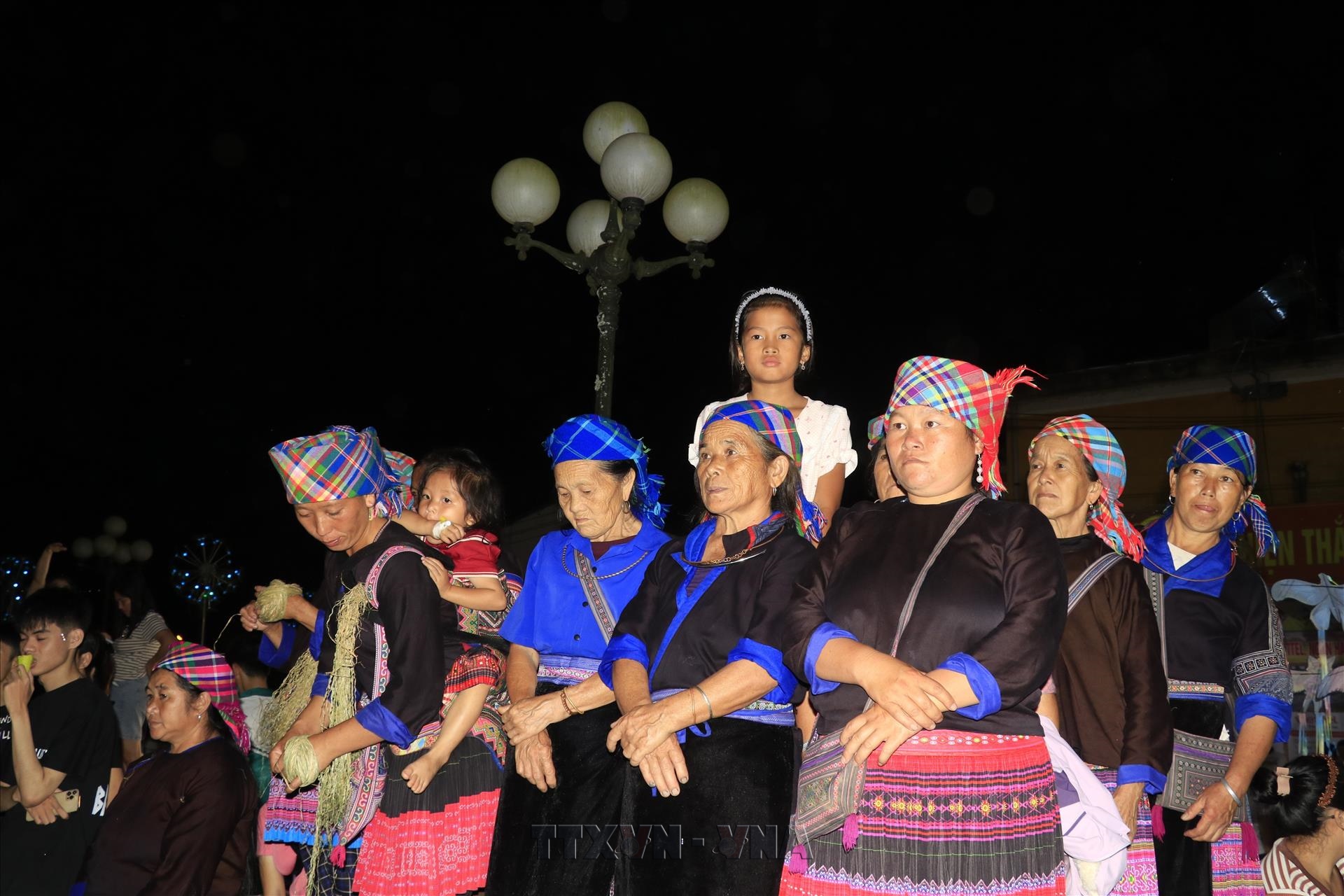
Hmong ethnic people from the mountainous areas enthusiastically attend a cultural performance at the opening ceremony of the 2026 Golden Season Festival. Photo: Dinh Thuy/VNA.
The festival is not only an opportunity to promote the natural beauty and people of Mu Cang Chai, but also serves as a bridge for connectivity and the development of a professional and sustainable tourism ecosystem, opening up new opportunities for cooperation in the locality.
Running through October, it features a wide range of distinctive experiential activities, including a Mong flute performance contest, ethnic costume displays, a competition to create traditional patterns using beeswax, banh day (glutinous rice cake) pounding and lively street parades.
Sports enthusiasts can also take part in the marathon Mu Cang Chai Ultra Trail 2026, which is expected to attract thousands of domestic and international athletes to compete along spectacular mountain routes.
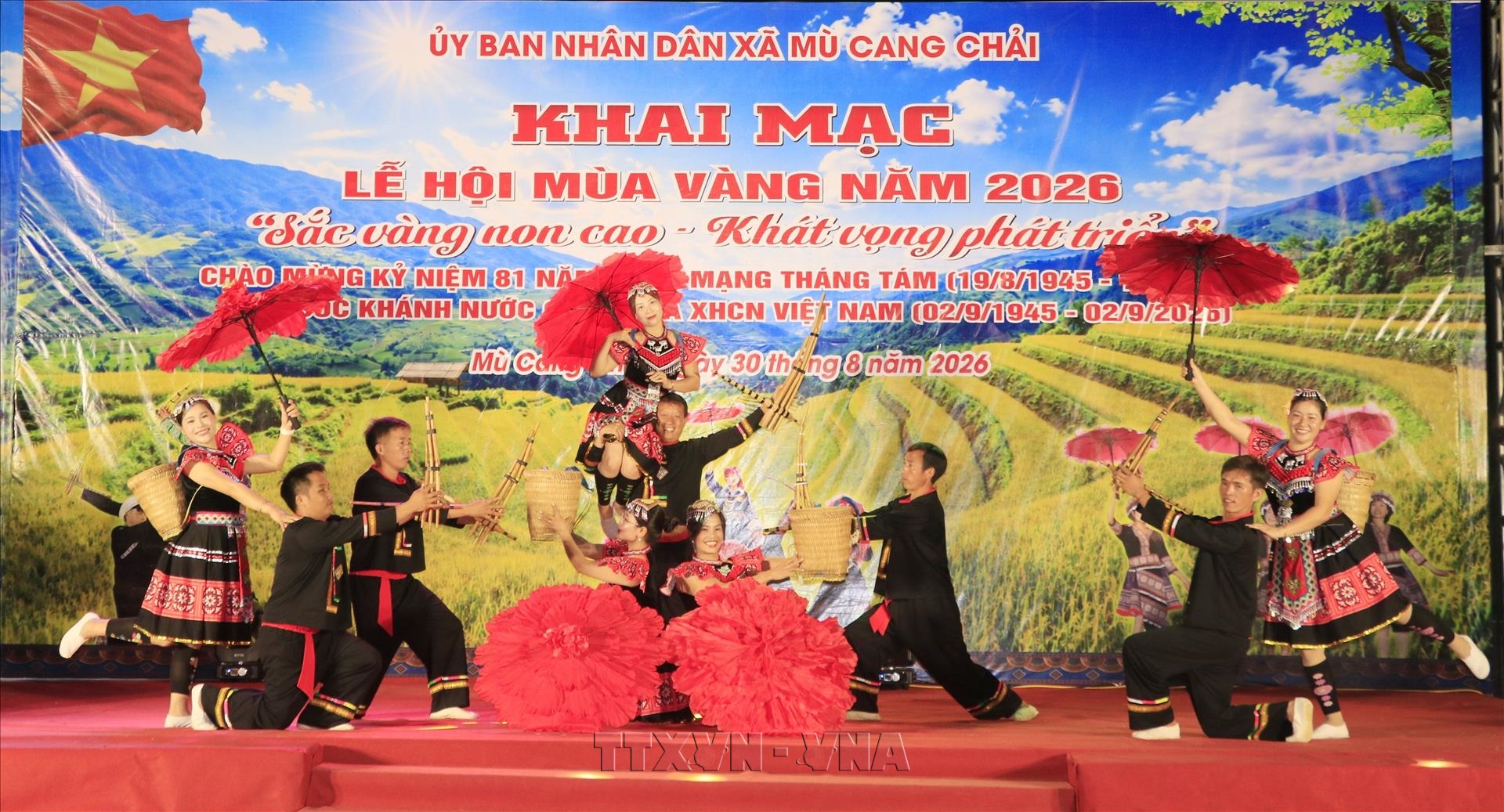
A cultural performance highlights the aspirations for development among Hmong people in the highlands. Photo: Dinh Thuy/VNA.
Visitors to the commune can also explore a traditional market featuring stalls selling local agricultural products, medicinal herbs and distinctive One Commune, One Product (OCOP) goods. On the occasion, Mu Cang Chai also launched a smart street integrated with a digital tourism map.
Vice Chairman of the Mu Cang Chai People's Committee Giang A Tang emphasised that its terraced rice fields, recognised as a national special relic, were shaped by the sweat, ingenuity and deep love for their homeland of generations of local people.
The terraced fields are not merely the fruits of labour but also a vivid symbol of the spirit of turning hardships into opportunities and rocks and barren land into rice, he said.
Vice Chairman of the Mu Cang Chai People's Committee Giang A Tang emphasised that its terraced rice fields, recognised as a national special relic, were shaped by the sweat, ingenuity and deep love for their homeland of generations of local people.
The terraced fields are not merely the fruits of labour but also a vivid symbol of the spirit of turning hardships into opportunities and rocks and barren land into rice, he said.
Alongside its spectacular natural landscapes, the commune is also proud to preserve nationally recognised intangible cultural heritage, including the Mong flute, the traditional new-rice thanksgiving ritual expressing gratitude to heaven and earth, and the art of creating beeswax patterns on fabric.
Located more than 300km to the northwest of Hanoi and 1,000 metres above sea level, Mu Cang Chai is now a familiar destination for tourists. The local terraced fields are beautiful year-round and have long been well-known and considered a must-visit place in the northwestern region.
Located more than 300km to the northwest of Hanoi and 1,000 metres above sea level, Mu Cang Chai is now a familiar destination for tourists. The local terraced fields are beautiful year-round and have long been well-known and considered a must-visit place in the northwestern region.
Visitors can see glittering ponds in March before locals transplant rice seedlings from April to May. After May, the hills are covered in green until the fields start to turn yellow with ripe rice in early September. During the harvest in October, the golden rice fields stand out amidst green forests./.