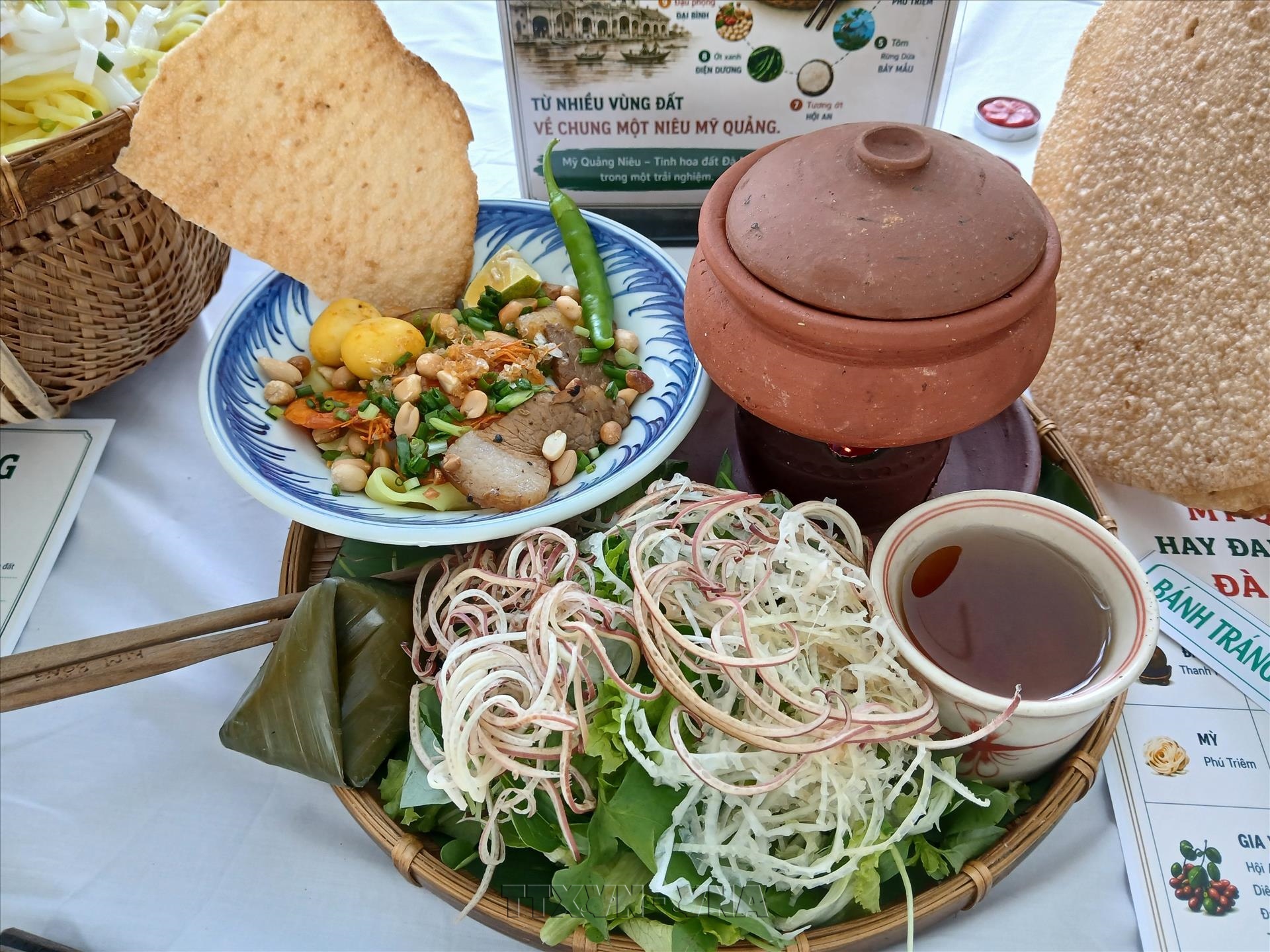
From a traditional dish to a recognized part of Vietnam’s intangible cultural heritage, Mi Quang has become a cultural symbol of Quang Nam. Photo: My Ha/VNA
One of the city’s priorities is to enhance the value of Quang-style cuisine, particularly Mi Quang (Quang noodles), a signature dish that was recognised as part of Vietnam’s intangible cultural heritage in 2024. Beyond being a traditional food, Mi Quang embodies the culinary culture and history of the Quang land, with diverse ingredients, preparation methods and flavours.
The dish is now being positioned as a culinary ambassador for Da Nang. Instead of simply taking visitors to eat Mi Quang, the city aims to offer them a deeper cultural experience centred on the dish, including its history, traditional knowledge and the stories of local artisans and communities.
Ly Dinh Quan, Chairman of the Da Nang Culinary Culture Association, said the city needs to build a comprehensive value chain around Mi Quang, preserving traditional knowledge while harnessing the skills of artisans to develop the dish into a Vietnamese brand with global reach.
Start-up Cathifoof Co., Ltd. has applied technology to produce instant Mi Quang, allowing visitors to enjoy the dish conveniently while retaining its distinctive flavour. Its founder Truong Van An said the company is developing nutritious and safe products using fresh, real ingredients without preservatives, while investing in technology and ISO-standard production facilities to serve export markets.
The municipal Department of Culture, Sports and Tourism is also working to develop a “Da Nang Mi Quang Standard” accompanied by a certification mark, with criteria covering ingredient origins, traditional preparation techniques, food safety, service quality and the ability to convey the dish’s cultural story.
Nguyen Thi Hoai An, deputy director of the department, said the city will identify and preserve traditional culinary knowledge within communities, and support long-established artisans, families and producers of Mi Quang. The dish is also being incorporated into food tours, community-based tourism, rural tourism and craft-village tourism programmes.
Meanwhile, Da Nang is seeking to develop broader culinary tours that combine local food with cultural experiences. The city’s cuisine reflects both the distinctive flavours of the central region and influences from other parts of Vietnam and the world. The recognition of several Da Nang eateries by the Michelin Guide has provided additional momentum for developing high-quality culinary tourism products.
Cao Tri Dung, Chairman of the Da Nang Tourism Association, believes cuisine should be one of the city’s main tourism highlights. With an abundance of local specialties and a variety of international dishes, Da Nang is well-positioned to create diverse culinary tourism experiences and boost its charm for visitors from around the world.
The association is encouraging hotels, restaurants and attractions to incorporate local cultural elements into culinary experiences, while travel businesses are urged to work with relevant partners to develop specialised food tours.
By connecting restaurants, food markets, cultural sites and surrounding destinations into integrated itineraries, Da Nang aims to build a comprehensive culinary tourism ecosystem, enhance the visitor experience, encourage longer stays and increase tourist spending./.
The association is encouraging hotels, restaurants and attractions to incorporate local cultural elements into culinary experiences, while travel businesses are urged to work with relevant partners to develop specialised food tours.
By connecting restaurants, food markets, cultural sites and surrounding destinations into integrated itineraries, Da Nang aims to build a comprehensive culinary tourism ecosystem, enhance the visitor experience, encourage longer stays and increase tourist spending./.