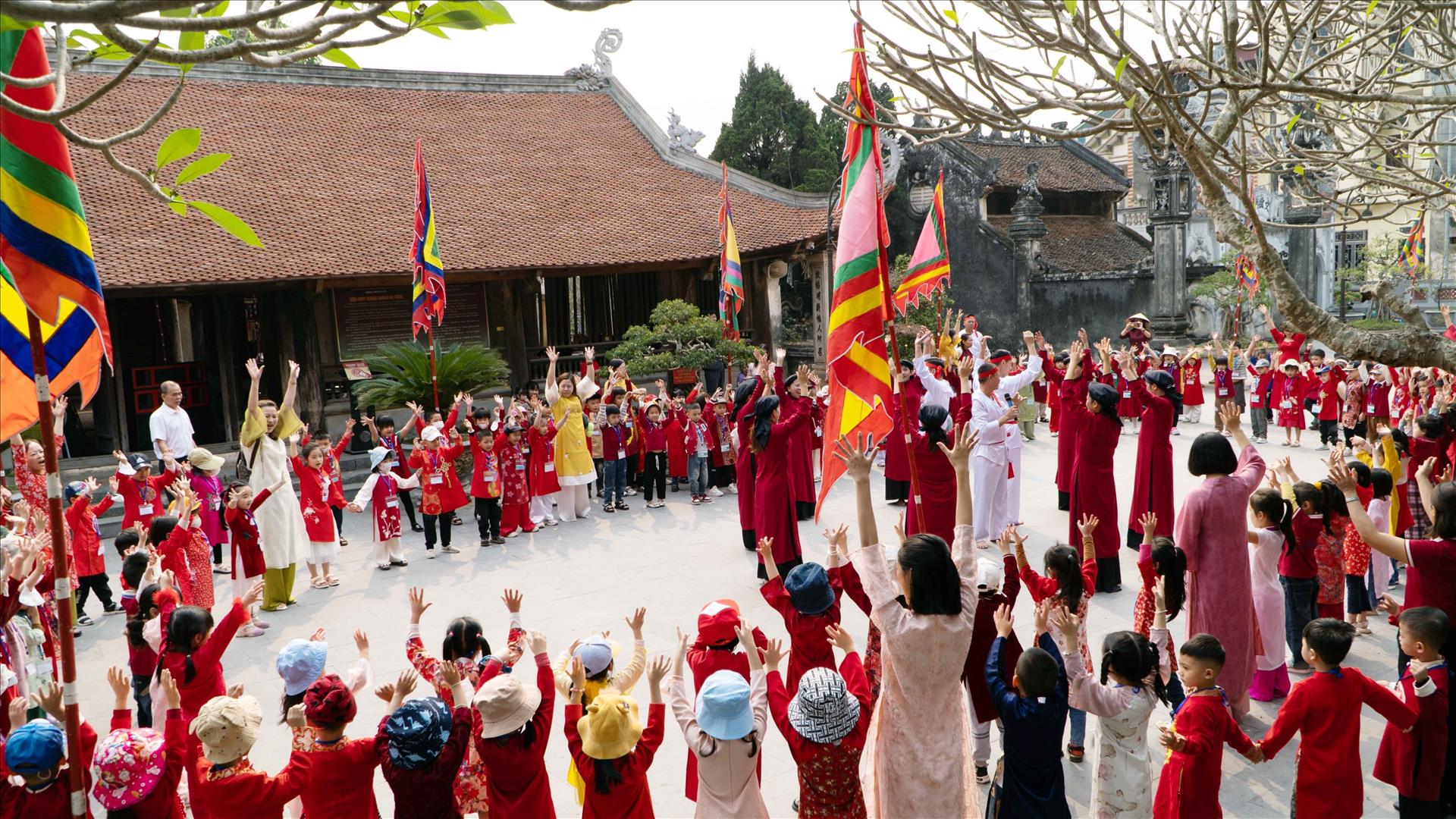
With its rustic melodies and profound lyrics, Xoan singing is more than just a musical performance; it is a living chronicle of the spiritual life and cultural identity of the Vietnamese people in the "Ancestral Land" of Phu Tho.
Dating back thousands of years, Xoan singing traditionally accompanies spring festivals, serving as a spiritual bridge to pray for bountiful harvests, favourable weather, and national peace. Often referred to as “hat cua dinh” (singing at the communal house), the art form reflects the tight-knit relationship between ancient beliefs and community life.
According to cultural researcher Pham Ba Khiem, Xoan singing serves as a precious archive of the labour, emotions, and customs of agricultural residents in the northern midland region. Through every rhythmic beat and vocal nuance, listeners can feel a deep-seated love for the homeland and a collective aspiration for a prosperous, harmonious life.
The global community recognised Xoan singing's unique value and enduring vitality in 2011 when UNESCO inscribed Phu Tho’s Xoan singing as an Intangible Cultural Heritage in Need of Urgent Safeguarding. Remarkably, following a swift and intensive six-year campaign involving the entire political system, the community and local artisans, it was moved to the Representative List of the Intangible Cultural Heritage of Humanity in 2017. This transition remains a rare achievement in heritage conservation and a point of immense national pride.
Today, the four original Xoan guilds - Phu Duc, Thet, Kim Doi, and An Thai - remain the beating heart of this legacy. Preservation efforts have moved beyond mere documentation; elder artisans are actively mentoring younger generations to ensure the "Xoan rhythm" never fades.
Furthermore, the art form is being revitalised through contemporary creative lenses. Many young artists are experimenting with modern arrangements, blending traditional melodies with light shows, dance, and drama to appeal to younger audiences. Educational initiatives have also integrated Xoan singing into provincial school curricula, establishing a steady stream of young successors.
Looking ahead, Phu Tho is strategically weaving heritage into its tourism development. The "Xoan Singing in Ancient Villages" project allows international visitors to experience the art in its original, sacred setting. By linking these performances with key historical landmarks, the province aims to transform Xoan singing into a signature tourism product, boosting the local economy while promoting the image of the Ancestral Land to the world.
As these ancient chants continue to resonate across communal houses and modern stages alike, they reaffirm the enduring strength of Vietnamese cultural identity. The "flow" of Xoan singing remains a vital artery, enriching the nation’s spiritual life and asserting Vietnam's cultural standing on the global stage./.