
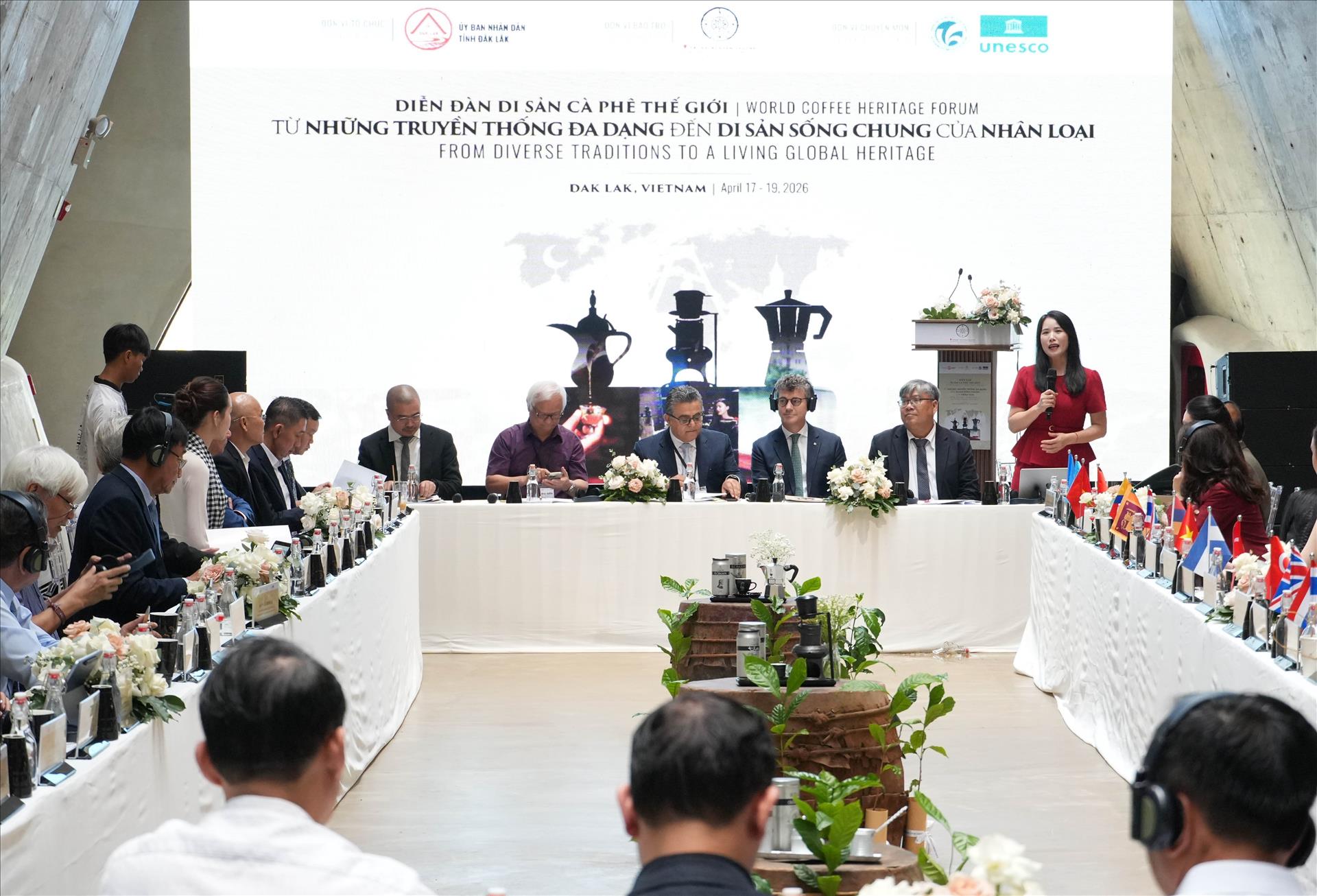
An overview of the forum. Photo: VNA
The forum, co-organised by the provincial People’s Committee, UNESCO, the Ho Chi Minh City University of Culture, and Trung Nguyen Legend Group, under the theme “From Diverse Traditions to a Living Global Heritage,” brought together policymakers, scholars and industry leaders to explore coffee as a shared cultural legacy of humanity.
It also attracted a wide array of participants, including representatives of ministries, ambassadors and consuls general from major coffee-producing nations, representatives from international organisations, and cultural experts.
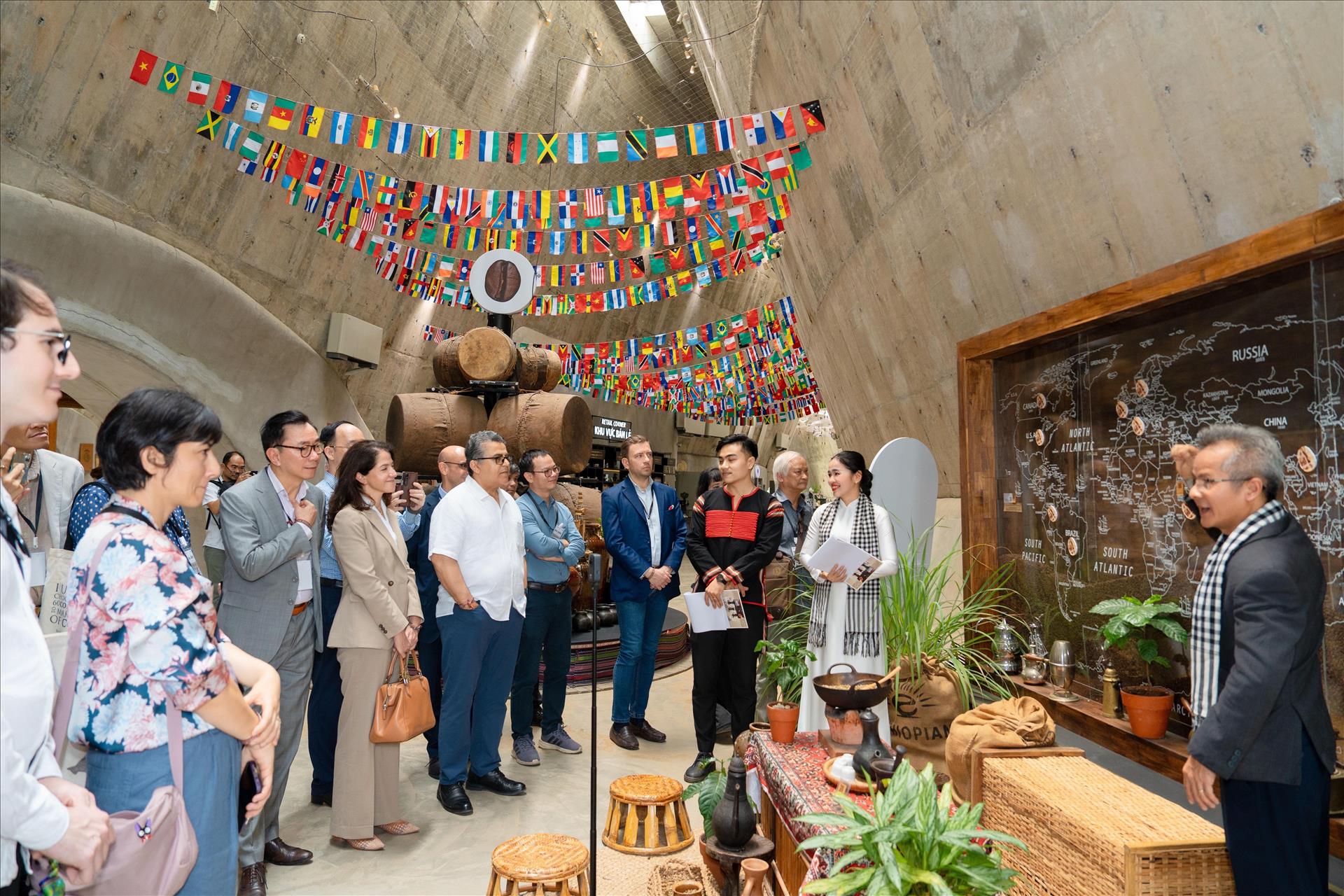
Delegates from Vietnam and abroad visit the World Coffee Museum. Photo: VNA
According to Dao My, Vice Chairman of the Dak Lak People's Committee, the province is known as the 'capital' of Vietnamese coffee, with rich, fertile basalt red soil ideal for agriculture.
The coffee provides livelihoods for thousands of locals and has developed a unique cultural space, closely tied to the socioeconomic life, customs and identity of local communities.
The recognition of "The knowledge of coffee cultivation and processing in Dak Lak” as a National Intangible Cultural Heritage marks an important milestone. It affirms the value of indigenous knowledge, creative labour, and the harmonious connection between local livelihoods, culture and nature in the Central Highlands.
The event provided an opportunity to support the province in guiding the development of a UNESCO nomination dossier for the region's coffee cultivation and processing knowledge, fostering cross-sector cooperation and promoting the development of a coffee brand with a distinct local identity.
Addressing the forum, Permanent Deputy Minister of Foreign Affairs Nguyen Minh Vu commended Dak Lak for its efforts to promote the traditional values and coffee culture of the locality as a resource for national sustainable development. He noted that introducing Dak Lak’s knowledge of coffee cultivation and processing to the international community not only helps showcase the land and people of the Central Highlands, but also fosters intercultural dialogue and enhances the added value of Vietnam’s coffee industry. This, he added, will gradually contribute to establishing a distinct position for Vietnamese coffee on the global coffee map.
Jonathan Baker, UNESCO Representative and Head of Office in Vietnam, affirmed that Vietnam holds a distinctive position, not only as one of the world’s leading producers and exporters of coffee, but also as a place where the conditions are uniquely suited to the formation and development of a rich and distinctive coffee culture.
In particular, in Dak Lak's Buon Ma Thuot, coffee is deeply intertwined with indigenous knowledge systems encompassing cultivation, care, harvesting, processing, enjoyment, cultural practices and community life organisation. These elements converge to embody the values of a “living heritage,” one that calls for preservation, safeguarding, and continued revitalisation in contemporary life.
In March 2025, the Ministry of Culture, Sports and Tourism officially recognised “Dak Lak coffee cultivation and processing knowledge” as a national intangible cultural heritage, affirming the value of coffee through indigenous knowledge, community creativity, and the harmonious relationship between humans, nature and culture./.
The coffee provides livelihoods for thousands of locals and has developed a unique cultural space, closely tied to the socioeconomic life, customs and identity of local communities.
The recognition of "The knowledge of coffee cultivation and processing in Dak Lak” as a National Intangible Cultural Heritage marks an important milestone. It affirms the value of indigenous knowledge, creative labour, and the harmonious connection between local livelihoods, culture and nature in the Central Highlands.
The event provided an opportunity to support the province in guiding the development of a UNESCO nomination dossier for the region's coffee cultivation and processing knowledge, fostering cross-sector cooperation and promoting the development of a coffee brand with a distinct local identity.
Addressing the forum, Permanent Deputy Minister of Foreign Affairs Nguyen Minh Vu commended Dak Lak for its efforts to promote the traditional values and coffee culture of the locality as a resource for national sustainable development. He noted that introducing Dak Lak’s knowledge of coffee cultivation and processing to the international community not only helps showcase the land and people of the Central Highlands, but also fosters intercultural dialogue and enhances the added value of Vietnam’s coffee industry. This, he added, will gradually contribute to establishing a distinct position for Vietnamese coffee on the global coffee map.
Jonathan Baker, UNESCO Representative and Head of Office in Vietnam, affirmed that Vietnam holds a distinctive position, not only as one of the world’s leading producers and exporters of coffee, but also as a place where the conditions are uniquely suited to the formation and development of a rich and distinctive coffee culture.
In particular, in Dak Lak's Buon Ma Thuot, coffee is deeply intertwined with indigenous knowledge systems encompassing cultivation, care, harvesting, processing, enjoyment, cultural practices and community life organisation. These elements converge to embody the values of a “living heritage,” one that calls for preservation, safeguarding, and continued revitalisation in contemporary life.
In March 2025, the Ministry of Culture, Sports and Tourism officially recognised “Dak Lak coffee cultivation and processing knowledge” as a national intangible cultural heritage, affirming the value of coffee through indigenous knowledge, community creativity, and the harmonious relationship between humans, nature and culture./.