A report urging stronger policy support to foster sustainable agriculture in Vietnam was announced in Hanoi on March 20, offering an in-depth assessment of environmental, social and governance (ESG) practices across the sector.
Released by the Management and Sustainable Development Institute (MSD)under the Vietnam Union of Science and Technology Associations, in partnership with Oxfam in Vietnam, the report is part of the “Promoting Green Investment and Credit for Agribusinesses towards Sustainable Development” (AGREEN) project, which aims to foster green investment and credit for agricultural enterprises.
The report draws on a survey of 97 enterprises and cooperatives operating in agricultural value chains, alongside 15 in-depth interviews with experts and relevant stakeholders. It aims to assess the current state of environmental, social and governance (ESG) practices, as well as access to sustainable finance among small- and medium-sized actors in the sector.
In her remarks, Nguyen Phuong Linh, MSD Director, noted that most agricultural enterprises have already adopted ESG practices. However, the greatest challenge lies not in awareness but in implementation capacity and the ability to translate these practices into effective and substantive transformation.
She also pointed to a paradox in which businesses with stronger ESG performance do not necessarily have better access to appropriate support resources, including sustainable finance.
Presenting policy recommendations, Hoang Thu Trang, an independent consultant and representative of the research team, suggested that local-level management agencies should promote value chain linkage models that integrate ESG frameworks, while supporting the certification of raw material areas and monitoring contract compliance.
Banks, she added, Banks should develop green credit products in tandem with inclusive finance tailored to the agricultural sector. Meanwhile, large enterprises and lead firms should maintain close linkages through long-term, transparent commitments, while sustaining mechanisms for dialogue and shared responsibility.
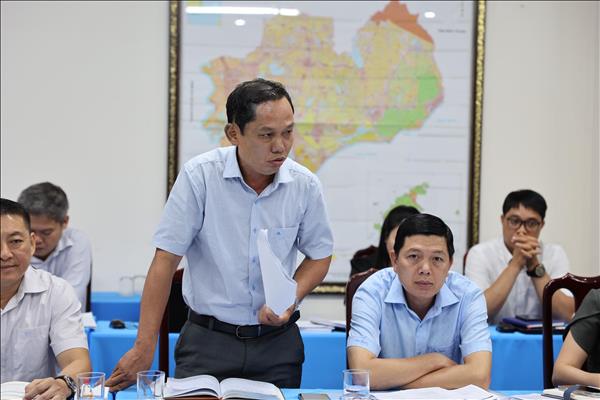
A multi-stakeholder seminar “Enhancing access to green finance for ESG-practicing agricultural enterprises” was also held in the framework of the event.
Participants highlighted several key bottlenecks in promoting green finance for agriculture, particularly the gap between policy and practice, limited access to capital for cooperatives and small enterprises, and the demand to strengthen value chain linkages and responsibility-sharing in ESG practices./.