
The Politburo’s Resolution 57-NQ/TW dated December 22, 2024 clearly affirms the breakthrough role of sci-tech and innovation as a foundation to improve productivity, quality, efficiency, and economic competitiveness in the nation's next development stage.
To bring the resolution into life, numerous new models have emerged, innovative approaches have proven effective, and highly feasible apps have been embraced by the community. All efforts are directed toward the overarching goal of ensuring that no one is left behind in the era of innovation and digital transformation.
A strong shift from a management mindset to a facilitative one
As a key state regulator, the Ministry of Science and Technology (MoST) bears the responsibility of “paving the way”, guided by a consistent spirit of transitioning from a management-oriented mindset to a facilitative one, from “input-based management” to “output-based evaluation”, and from fragmented investment to a focused approach centred on strategic technologies.
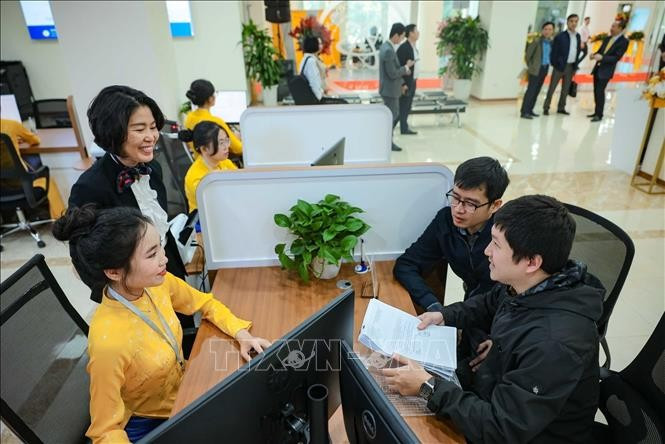
In line with the Party and State’s guidelines on building a professional, modern, open, and transparent public administration that places citizens and businesses at the centre of service delivery, the MoST on December 19 launched a centralised one-stop-shop unit. This unit serves not only as a place for receiving administrative procedures and returning results, but also as a unified focal point that contributes to process standardisation, shorter processing times, and enhanced accountability across ministerial departments.
A key feature is full digital integration for dossier submission, processing and tracking, with the ministry's system linked to the National Public Service Portal and specialised databases. Procedures are standardised and publicised, allowing users to monitor progress in real time.
Another highlight lies in its capacity to monitor, supervise, and measure accountability in handling administrative procedures.
Riding the wave of national digitalisation, the Vietnam Women's Union (VWU) Central Committee has modernised operations by prioritising technology and member-centric services. This led to the rollout of the "Vietnamese Women" app, a digital platform providing women anytime access to information, skills and knowledge.
In its pilot, the app focuses on practical, everyday features: real-time VWU updates, skill building content and a digital library tied to the "Digital Literacy for All" campaign. Interactive tools like Q&A, consultations and chats foster community support, experience sharing and collective growth.
The platform is also gradually developing a unified membership management system to standardise data and build a connected digital ecosystem from central to grassroots levels. It is now available on Google Play (Android) and the App Store (iOS).
Innovation – key to transform localities in digital era
The Mekong Delta city of Can Tho continues to affirm its determination to accelerate sci-tech, innovation, and digital transformation, closely tying efforts to the private sector and placing businesses at the core of its ecosystem. The goal is to enable firms to drive research, tech adoption and transformation for higher productivity, quality and competitiveness.
At the Can Tho Science, Technology, Innovation and Digital Transformation Week 2025 (CASTID 2025), eight strategic memoranda of understanding on cooperation were signed, unlocking opportunities in research, tech transfer and commercialisation while bolstering state-scientist-enterprise ties. The event also generated over 500 business matches, paving the way for joint projects and real-world application of research.
CASTID outcomes will further refine mechanisms and policies, strengthen tripartite linkages, nurture startups and advance sectoral digitalisation, establishing Can Tho as a sci-tech and innovation hub in the Mekong Delta.
In the southern province of Tay Ninh, authorities have responded to Resolution 57 by issuing support policies for enterprises and entities to advance sci-tech and innovation through 2030./.