

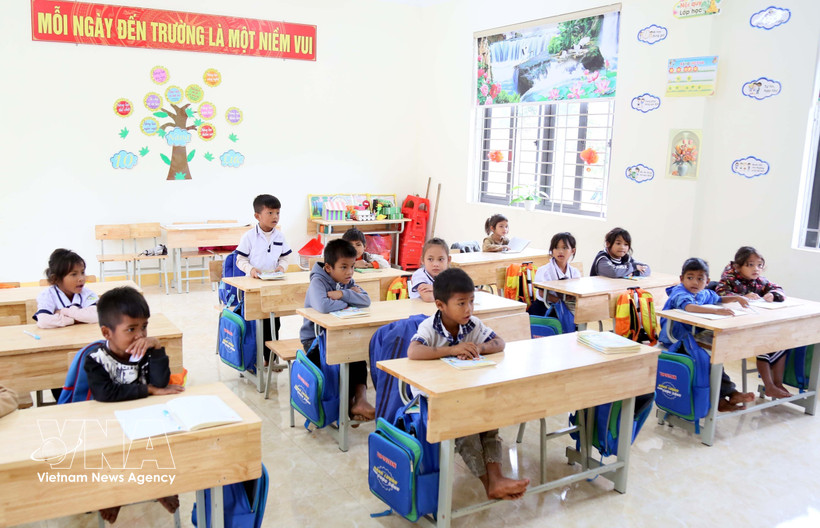
Vietnam is among the countries that have achieved impressive results in reducing the proportion of out-of-school children by at least 80% since 2000, according to the 2026 Global Education Monitoring Report released by the United Nations Educational, Scientific and Cultural Organisation (UNESCO) on March 25.
The report also noted that since 2000, the number of students worldwide has increased by 327 million, reaching 1.4 billion in 2024. On average, more than 25 additional children have been able to attend school every minute.
The number of children and adolescents out of school has risen for the seventh consecutive year, reaching 273 million, due to the combined impact of population growth, crises, and funding shortages.
Globally, one in six school-age children is excluded from the education system, and only two-thirds of students complete secondary education. Notably, progress in improving education has slowed since 2015, particularly in sub-Saharan Africa, which faces strong pressure from rapid population growth. In addition, more than one in six children worldwide are living in conflict-affected areas, adding millions more out-of-school children beyond the existing statistics.
The report result announcement ceremony saw the presence of more than 20 ministers in charge of education from various countries, along with numerous experts and representatives of international and regional organisations.
In his remarks, UNESCO Director-General Khaled El-Enany stressed that the report confirms a worrying trend, with an increasing number of young people around the world being deprived of educational opportunities. However, there are still reasons for hope.
UNESCO is committed to working closely with governments and partners to expand learning opportunities for all, adapt to local realities, and ensure that every learner has a fair chance to build their future, he added./.