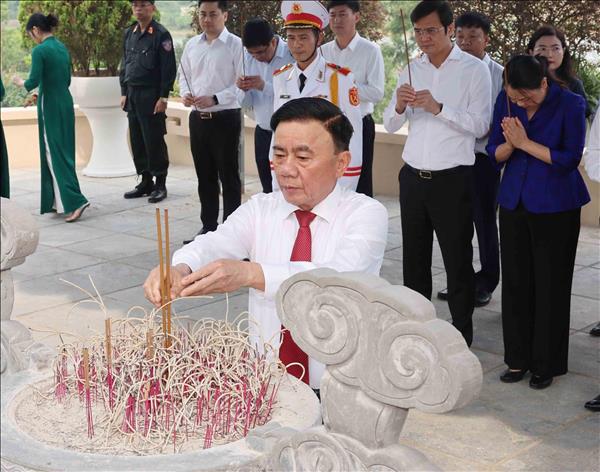
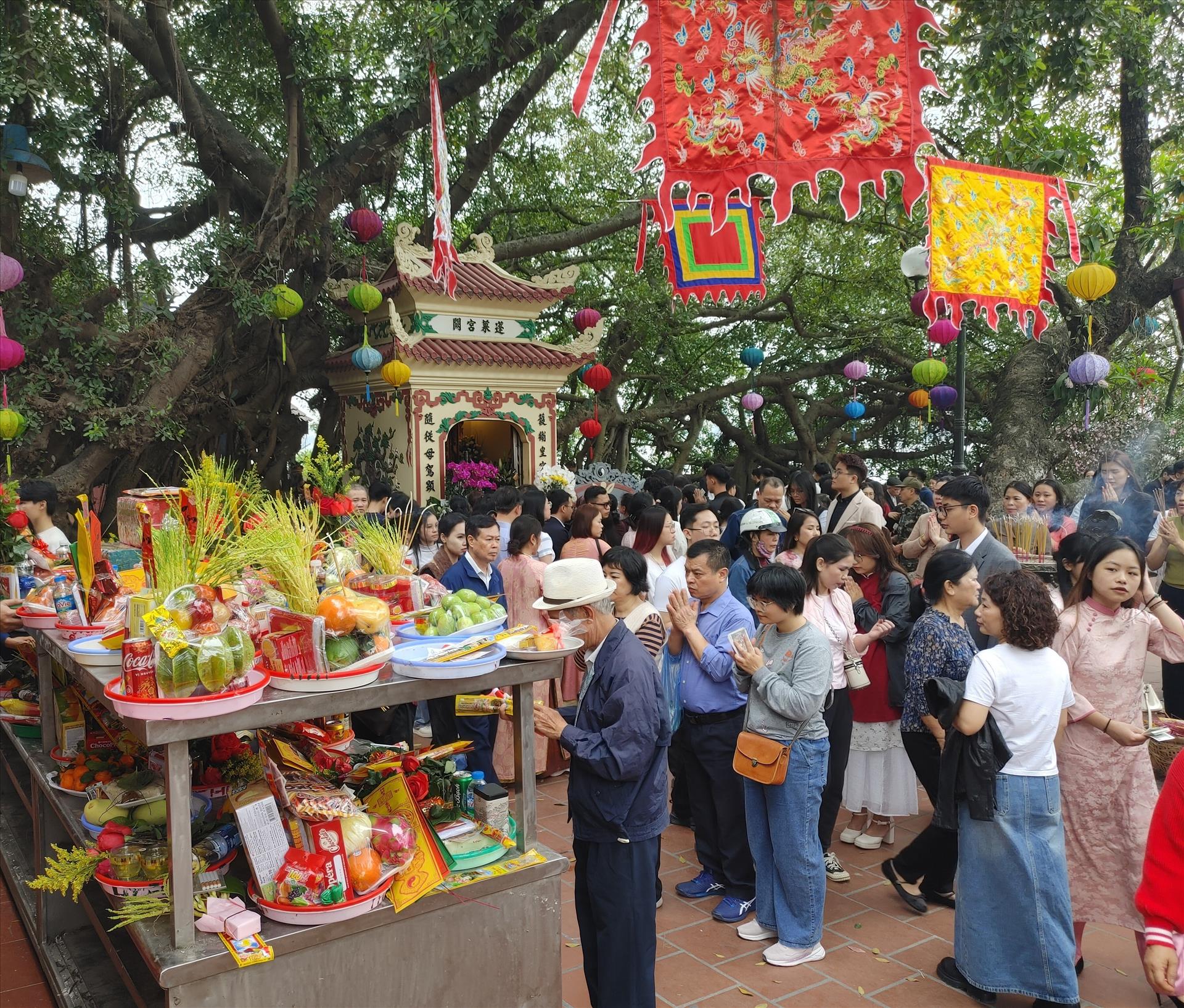
Phu Tay Ho draws large crowds on the morning of the first day of the Lunar New Year. Photo: VNA
The ritual has long formed part of Vietnam’s spiritual tradition, reflecting a shared wish for a year of good fortune.
Phu Tay Ho drew large crowds on the morning of the first day of the Lunar New Year.
To ease congestion during the Tet holiday, Tay Ho ward arranged free parking from Lunar New Year’s Eve through the sixth day of the first lunar month. The large, systematically organised parking area has helped reduce traffic pressure while maintaining public order, reinforcing the image of one of the capital’s best-known spiritual destinations.
Bui Thi Hoa, a resident of Tan Phong hamlet in Thuong Cat ward, Hanoi, said her family makes it a point every year to visit pagodas, temples and shrines on the morning of the first day of the Lunar New Year.
The tradition dates back to her childhood, she said, and after starting her own family she has continued the practice, taking her children along not only to pray for luck and peace, but also to help them understand and appreciate the spiritual customs passed down through generations.
At Ha Pagoda in Cau Giay ward, alongside multi-generation families offering incense for peace and good fortune, large numbers of young people also gathered to pray and make their wishes.
While each visitor carried a different hope, the prayers shared a common sincerity — for family harmony, the chance to meet a kindred spirit, and the nurturing of meaningful relationships in the Year of the Horse.
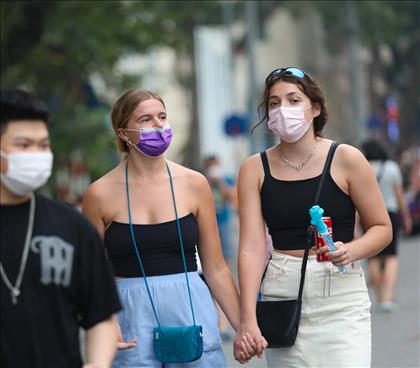
Not only Vietnamese residents flock to places of worship on the first day of the Lunar New Year, many international visitors also stop by to observe rituals and learn about local spiritual life.
Johannes Müller, a visitor from Germany, said he arrived in Hanoi during the Lunar New Year and was struck by the sight of families heading to temples from the early morning.
Although he did not fully understand the tradition, he said the sense of reverence was unmistakable. Joining others in pressing his palms together, he offered a quiet wish for peace for all./.