

Foreign direct investment (FDI) inflows into Vietnam’s southern key economic region are poised for continued strong growth as a series of major strategic infrastructure projects are set to come into operation, ushering in a new development cycle for the entire region.
The recent mergers of provinces and cities have opened up new development space and provided a strong boost to FDI attraction across the region. In the first 11 months of 2025, FDI inflows recorded particular surge in Ho Chi Minh City, Dong Nai, and Tay Ninh.
HCM City attracted 7.67 billion USD in FDI during the 11-month period, up 24.2% year-on-year. Following the mergers, the city has drawn increasing interest from international investors seeking cooperation opportunities. It has hosted and held working sessions with 55 domestic and foreign delegations coming to explore the investment environment and potential business partnerships.
A number of multinational corporations have chosen HCM City as a destination for investment expansion. While Techtronic Industries (TTI) has announced plans to expand production at its Milwaukee factory in the Saigon Hi-Tech Park, Japan’s AEON Group has unveiled plans to develop three additional large-scale shopping centres in the city, with total investment running into trillions of Vietnamese dong.
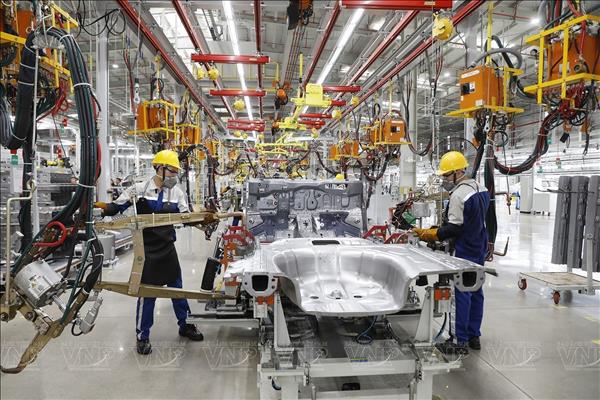
In the high-tech sector, the US-based Smart Tech Group has proposed investing between 340–850 million USD in an energy storage battery manufacturing plant here. Meanwhile, data centre projects have grabbed attention from major players such as Eaton (the US), Evolution under Warburg Pincus (the US), and Hyosung (the Republic of Korea).
Dong Nai has also seen an FDI influx following the mergers. Its Department of Finance reported that total foreign investment reached 2.95 billion USD in the first 11 months of 2025. Investment into industrial parks alone exceeded the annual plan by more than 32%, hitting 2.5 billion USD.
Notably, FDI disbursement in Dong Nai has delivered positive results. By mid-November 2025, disbursed capital at FDI projects in local industrial parks and economic zones exceeded 1.6 billion USD, surpassing the target of 1.5 billion USD, set to support the province’s double-digit growth objective. Outside industrial parks, major projects include Aeon Mall Bien Hoa with total investment of over 6 trillion VND (227.76 million USD).
Tay Ninh also reported robust growth, with 163 newly licensed projects and 151 others receiving additional capital in the first 11 months of 2025. Total newly registered and additional capital reached 589.4 million USD, up 111.9 million USD year-on-year.
Tran Van Tuoi, Deputy Director of the Tay Ninh Finance Department, stressed that the province is pursuing selective FDI attraction, prioritising high-tech, energy-efficient, and environmentally friendly projects.
Ample room for growth
FDI inflows into southern localities are forecast to keep booming as key infrastructure projects are put into use. Most notably, Long Thanh International Airport welcomed its first flight on December 19 and is expected to begin commercial operations in the first half of 2026.
Once operational, the airport will significantly improve the connectivity with global markets, reduce logistics costs, and enhance import – export capacity, making Dong Nai and neighbouring provinces increasingly attractive to multinational corporations that operate in manufacturing, processing, supporting industries, electronics, logistics, and high-tech sectors.
Additional momentum will come from HCM City's Ring Road 3, scheduled to open its first phase in June 2026, and Ben Luc – Long Thanh Expressway, expected to be fully completed by September 2026. These projects will strengthen inter-regional connectivity, link industrial parks with seaports and airports, and cut logistics costs.
Meanwhile, proposed free trade zones at Cai Mep Ha in HCM City and in Dong Nai are emerging as major investment magnets. With streamlined administrative procedures and improved connectivity, these projects are expected to significantly enhance the region’s competitiveness.
Together, these strategic infrastructure developments are not only improving connectivity but also expanding development space and reinforcing the southern key economic region’s appeal to high-quality FDI, paving the way for a new growth cycle./.