The growth rate was higher than the 7.07% recorded in the same period last year, reflecting the economy’s resilience, enterprises’ adaptability and providing a solid foundation to achieve full-year growth targets, said Nguyen Thi Huong, director of the National Statistics Office (NSO) under the Ministry of Finance.
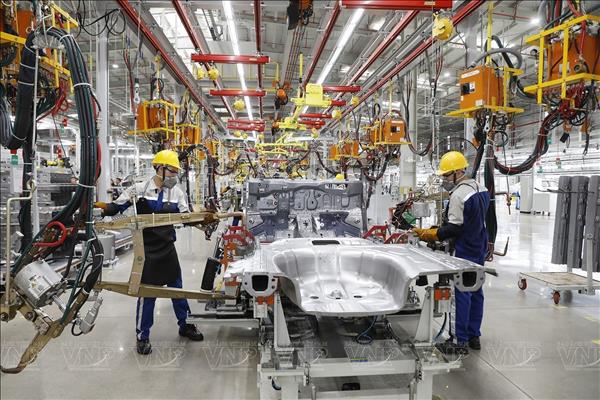
The agro-forestry-fishery sector grew by 3.58%, contributing 5.6% to total value added. Industry and construction expanded 8.92%, accounting for 44.08%, while services rose 8.18%, contributing the largest share of 50.32%, she stated.
The services sector continued to dominate the economic structure, making up 43.45% of GDP, followed by industry and construction at 37.15%, and agro-forestry-fishery at 10.89%.
Domestic demand showed clear signs of recovery, with final consumption increasing 8.45% and asset accumulation up 7.18%. External trade also remained vibrant, with exports of goods and services surging 19.85% and imports rising 24.27%, indicating stronger demand for production inputs in a new manufacturing cycle.
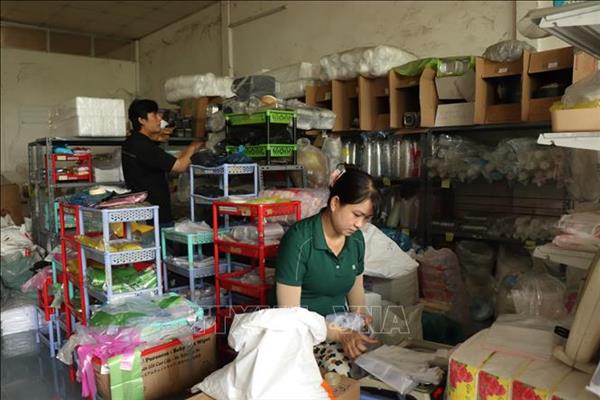
Business activity improved markedly, with more than 57,400 newly established enterprises registered in the first quarter of 2026, up 57.8% year-on-year. Their total registered capital reached nearly 538.6 trillion VND (20.4 billion USD), an increase of 51%, while registered employment rose 16.5% to over 265,900 workers.
Meanwhile, over 38,600 firms resumed operations, up 5.7%, bringing the total number of newly established and those resumed operations to 96,000, a rise of 31.7% compared to the same period last year.
“These positive figures reflect not only effective and timely policy management, but also the resilience and adaptability of businesses and the broader economy,” Huong noted.
However, she cautioned that growth pressures could intensify in the second quarter as the impacts of geopolitical tensions, particularly in the Middle East, become more evident through rising energy prices, input costs, and potential supply chain disruptions.
At the Government’s regular press conference held on April 4, Minister-Chairman of the Government Office Tran Van Son said Prime Minister Pham Minh Chinh has instructed ministries, sectors and localities to implement synchronised and effective measures to sustain growth momentum.
The Government remains committed to a growth target of 10% or higher in 2026, alongside maintaining macroeconomic stability, controlling inflation, and ensuring major economic balances.
Priority will be given to revitalising traditional growth drivers such as investment, consumption and exports, while accelerating new ones, including the digital economy, innovation, and science and technology.
Efforts will focus on fully disbursing public investment, accelerating key national projects, and operating an international financial centre. It is necessary to stimulate domestic consumption, expand e-commerce ecosystems, and promote cashless payments, he added.
In addition, Vietnam aims to boost 5G coverage nationwide, develop large-scale data centres, and enhance the application of artificial intelligence.
The PM said that ministries, departments, and localities should focus on ensuring national energy security both in the short and long term, especially the supply of crude oil and natural gas.
Deputy Minister of Industry and Trade Nguyen Sinh Nhat Tan said that domestic fuel supply is stable, with sufficient reserves to meet demand through April.
The Government has reiterated its determination to avoid power shortages under any circumstances, particularly during peak periods in the dry season, as electricity demand is projected to rise sharply in 2026, Tan noted./.