Situated along the banks of the Thao River, Sai Nga conical hat village in Cam Khe commune, the northern province of Phu Tho, remains one of the few traditional craft villages that still preserve and develop a long-standing trade across generations.
Hat-making has become a means of livelihood for many local families, helping them earn additional income and improve living standards.
A walk through Sai Nga village reveals the quiet persistence of tradition: in hamlets and on small lanes, elderly women, mothers and daughters could be seen deftly stitching hats with practised hands.
The craft first appeared in the village in the 1950s and, despite decades of historical ups and downs, has been sustained and developed by local residents.
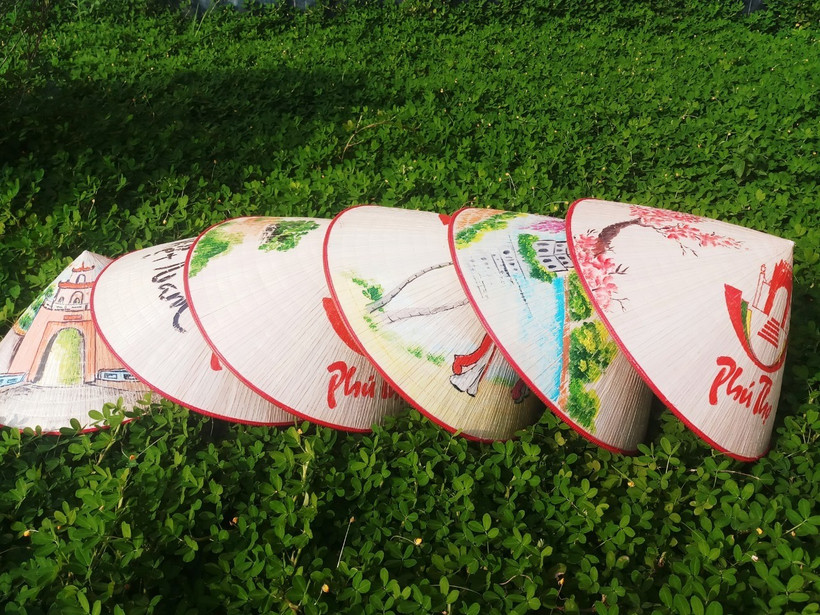
Sai Nga conical hats have long been recognised for their delicate beauty and remarkable durability. Crafted by skilled artisans, the pure white hats, with their neat stitching and elegant lines, bear the distinctive identity of Sai Nga village. Today, the products remain part of everyday life while meeting diverse demand of the modern market.
In 2004, Sai Nga was officially recognised by the provincial People’s Committee as a traditional craft village, with hat-making generating around 40% of local household income. In 2021, its conical hats were certified as a three-star OCOP (One Commune, One Product) item before being upgraded to four-star in 2024.
Amid economic restructuring and growing market competition, the village has moved to adapt and thrive. In 2020, the craft of Sai Nga conical hat-making was named by the Ministry of Culture, Sports and Tourism as part of the national intangible cultural heritage, marking an important milestone that affirms the cultural value and social significance of this traditional craft in the ancestral land of Phu Tho.
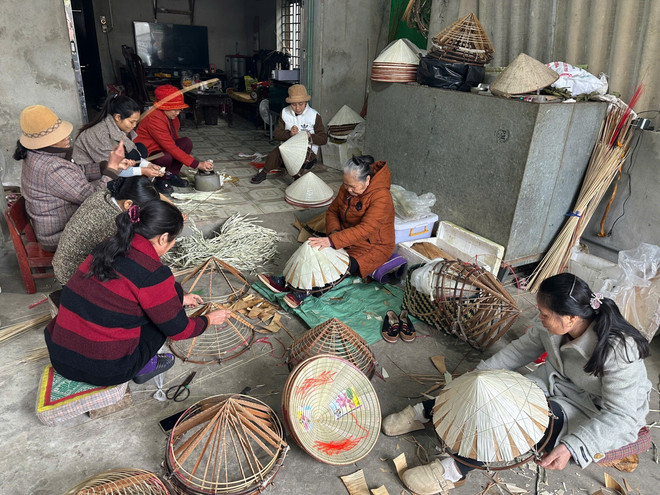
With a desire to preserve the heritage passed down through generations, Pham Thi Tuyen and skilled artisans in the village established the Sai Nga Conical Hat Services Cooperative earlier this year. The cooperative currently brings together 26 households, supporting members with technical knowledge and coordinating both material supply and product distribution.
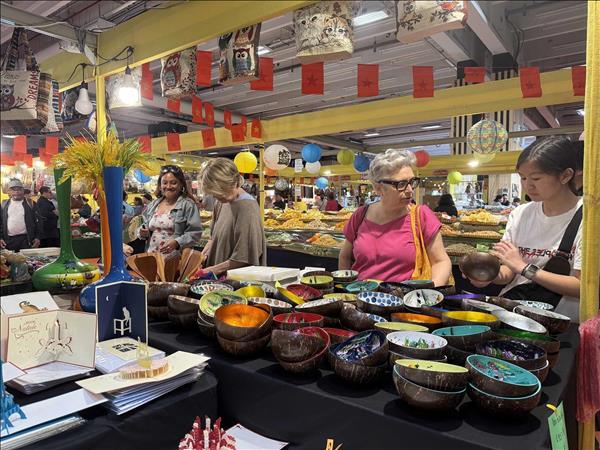
Their finished products are purchased directly by traders or sold at trade fairs, the Hung Kings Temple Festival, and markets in provinces such as Lao Cai, Yen Bai and Thai Nguyen, while some are exported to China.
Despite various distribution channels available, Sai Nga artisans still prefer bringing their hats to traditional rural markets, considering this an enduring cultural feature of their village.
Dinh Anh Tuan, an official from Cam Khe commune’s cultural and social affairs office, said local authorities have stepped up efforts to preserve the heritage. These include encouraging residents to diversify conical hat designs, improve product quality for daily use, develop items for tourism and commerce, and promote the craft at tourist destinations both in and outside the province.
The commune has also coordinated with the education sector to introduce conical hat-making activities in schools, enabling students to learn the craft while helping to keep the village's traditional identity alive, he noted./.