In the News
Party Central Committee’s Secretariat urges innovating working styles across political system
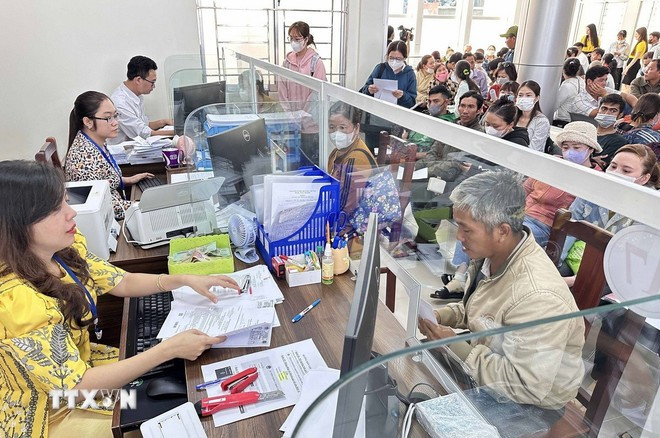
The Party Central Committee’s Secretariat has issued a conclusion calling for a fundamental overhaul of working styles across the political system, with digital transformation identified as a key driver to improve efficiency, coordination, and public service delivery.
The conclusion, signed by standing member of the Secretariat Tran Cam Tu, acknowledges that recent efforts to streamline organisational structures have produced positive results, making the political system more compact, effective, and closer to the people. However, it also points out persistent shortcomings, including excessive paperwork, overlapping meetings, weak inter-agency coordination, fragmented reporting mechanisms, and limited application of information technology and digital tools.
To address these issues, the Secretariat requests Party committees, agencies, and local authorities at all levels to accelerate reforms centred on simplification, standardisation, and digitalisation.
A major focus must be placed on reducing administrative documents and meetings through digital means. Agencies are instructed to cut at least 15% of administrative documents annually, avoid duplicative or unnecessary regulations, and ensure all issued documents are concise, practical, and feasible. Meetings are to be reduced by 10% each year, with online conferences accounting for at least 60% of total meetings, thereby saving costs and time while enhancing operational efficiency.
Crucially, the conclusion underscores digital transformation as a strategic solution to modernise governance. Authorities are tasked with investing in and upgrading digital infrastructure, shared data platforms, and secure information systems to ensure seamless connection from the central to grassroots levels. The goal is to standardise data, eliminate duplication, and enable automatic data sharing across agencies.
In the coming time, at least 95% of administrative procedures are to be processed in digital environments, while 100% of official documents and periodic reports must be exchanged online. Public services are to be expanded on digital platforms to better serve citizens and businesses, with satisfaction levels becoming a key metric for evaluating performance.
The Secretariat also calls for capacity building in digital skills, leadership, and management, including the application of artificial intelligence (AI) in professional operations. Reporting systems must be standardised, simplified, and quantifiable, significantly reducing reporting burdens while improving accountability. Heads of agencies are held directly accountable for implementation outcomes, particularly in advancing digital transformation and improving efficiency.
Provincial and municipal Party committees are required to concretise and strictly implement the conclusion, reporting regularly on progress in reducing paperwork, meetings, and advancing digital transformation./.