
After celebrating the Lunar New Year (Tet) with family, many people like to start travelling on the third day of the holiday, with early-spring festivals being popular and meaningful spots to visit to start a new year.
Starting from the third day of Tet, locals and travellers from all over the country heading to the North can check out a variety of unique festivals in different areas to enjoy spring trips, go on pilgrimages, and experience the vibrant cultural traditions that are part of Vietnam’s rich heritage.
Dong Da Mound Festival
Located in Hanoi, the Dong Da Mound Festival is a jubilant reenactment of Emperor Quang Trung’s historic victory over foreign invaders in 1789. Celebrated on the fifth day of Tet, the festival features a variety of vigorous games highlighting a strong spirit of martial tradition.
Huong Pagoda Festival
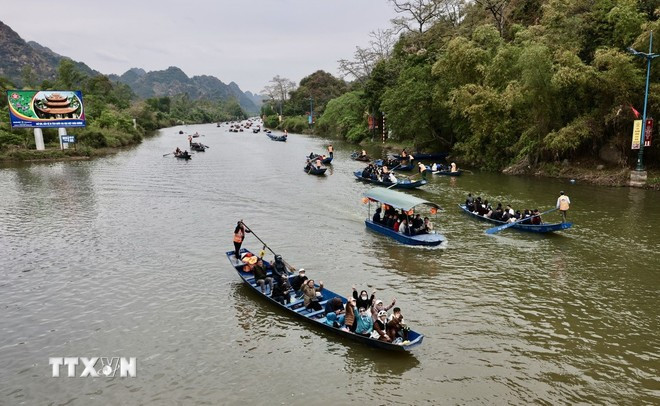
The Huong Pagoda Festival takes place from the sixth day of the Lunar New Year until the end of the third lunar month in Huong Son commune, Hanoi. This spiritual and cultural event attracts thousands of pilgrims seeking peace and prosperity. Here, visitors can also immerse themselves in the vast landscape of mountains and water by spending hours on boats admiring the poetic scenery. All make this place an ideal destination for sightseeing and spiritual reflection.
Tan Vien Son Thanh Festival
The annual festival is held to commemorate Tan Vien Son Thanh (the Saint of Tan Mountain), one of the “Four Immortals” in traditional Vietnamese mythology who is revered for pioneering land reclamation, flood control, and teaching agriculture to the people. The Tan Vien Son Thanh worship practice was listed as national intangible cultural heritage in 2018.
The main festival day is the 14th day of the first lunar month. Main rituals are performed at the Ha (lower) Temple, a national historical and cultural relic site, along with incense offering at the Thuong (upper) and Trung (middle) temples in Ba Vi commune, Hanoi.
Doi Son Ploughing Festival
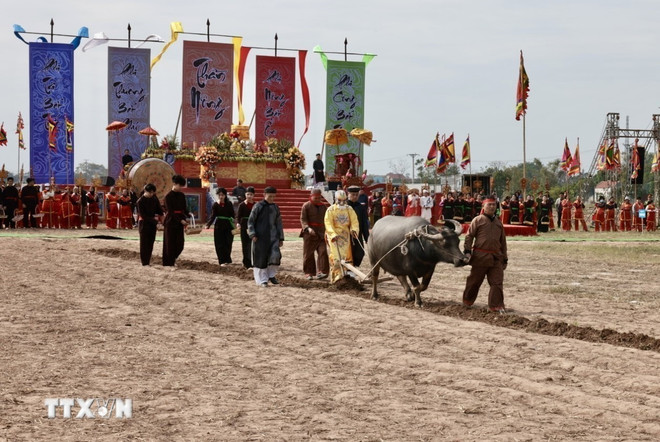
Rooted in Vietnam’s agricultural heritage, the Doi Son Ploughing Festival in Ninh Binh province prays for favourable weather and bountiful harvests. Held from the fifth to the seventh day of Tet, the tradition dates back to the 10th century and was revived in 2009 after years of dormancy. Visitors can witness ceremonial ploughing rituals and experience rural cultural activities.
Giong Temple Festival
The Giong Temple Festival in Soc Son commune, Hanoi, commemorates Saint Giong, a mythical hero who defeated foreign invaders before ascending to heaven. Inscribed by UNESCO on the Representative List of the Intangible Cultural Heritage of Humanity, the three-day festival begins on the sixth day of Tet and includes sacred rituals, processions, and the offering of symbolic bamboo flowers at Thuong Temple. The seventh day is believed to mark Saint Giong’s deification.
Vieng Market Festival
At midnight on the seventh day of Tet, the Vieng Market Festival in Vu Ban commune, Ninh Binh province, attracts thousands of visitors seeking good fortune for the year ahead. The event reflects a unique cultural tradition rooted in community belief and hope. On the following day, visitors often continue to the nearby Phu Day Festival, dedicated to Princess Lieu Hanh, one of the “Four Immortals” in Vietnam’s folk belief.
Yen Tu Spring Festival
The Yen Tu Spring Festival begins on the 10th day of the first lunar month and lasts until the end of the third lunar month. Visitors flock to Yen Tu in Quang Ninh province to make pilgrimages to Dong (bronze) Pagoda atop the sacred mountain.
The festival also features associated events such as the Yen Tu Cherry Blossom and Yellow Apricot Festival, the Hang Son Temple and Pagoda Festival, and the Ba Vang Pagoda Spring Festival.
Lim Festival
The Lim Festival is a major cultural event in Tien Du commune, Bac Ninh province, with its main day held annually on the 13th day of the first lunar month. It derived from pagoda fairs and folk singing gatherings.
During the festival, a wide range of traditional folk games are organised, including martial arts performances, wrestling, chess, swing riding, loom weaving, and rice-cooking competitions. The highlight of the festival is performances of Quan ho Bac Ninh folk songs, included in the Representative List of the Intangible Cultural Heritage of Humanity in 2009.
Tran Temple Seal-Opening Festival
Held at the Tran Temple complex in Ninh Binh province, the Tran Temple Seal-Opening Festival is among the largest spring festivals in the country, taking place from the 11th to the 16th day of the first lunar month.
In addition to the seal-bestowing ceremony held at midnight on the 14th day and early on the 15th day of the first lunar month, the festival features lion and dragon dances, cheo (traditional opera), chau van (ceremonial singing), human chess, and wrestling, among others.
The seal-opening ritual reflects a humane cultural practice in which the king offered sacrifices to heaven, earth and ancestors to express gratitude. It also symbolises the end of the Tet holiday and the return to work. In recent years, the number of people attending the festival has increased to pray for success and prosperity in the New Year.
Ba Chua Kho Festival
The Ba Chua Kho Festival is organised on the 14th day of the first lunar month, but from the start of the year, Ba Chua Kho Temple in Vu Ninh ward, Bac Ninh province, draws large crowds of visitors seeking good fortune. Many businesspeople come early in the year, hoping for blessings that will bring smooth and successful business ventures.
Through these traditional early-year festivals in northern Vietnam, residents and visitors can explore distinctive cultural values and participate in festive activities, fostering deeper appreciation of the nation’s rich cultural heritage and identity./.