Buses, metro lines and green mobility solutions such as electric vehicles and bicycles are increasingly becoming a civilised travel habit for residents in Hanoi, particularly amid fluctuating fuel prices.
Building public transport habits
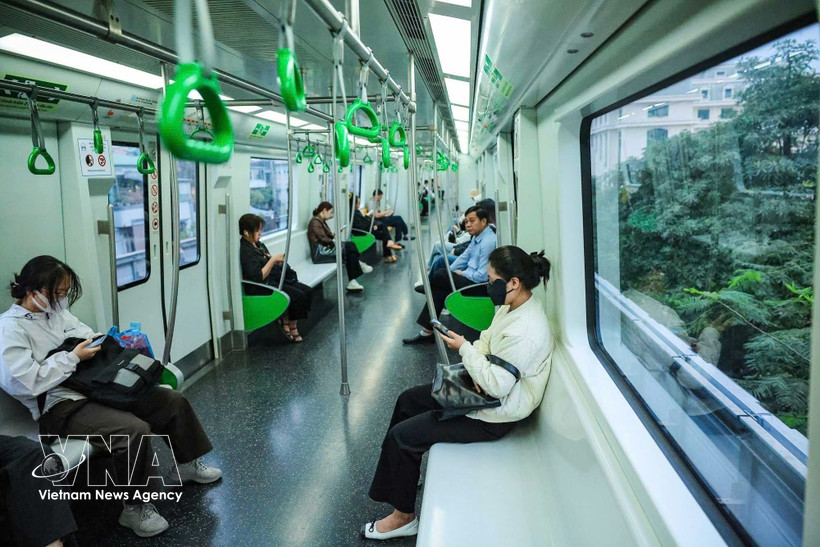
For young people today, transport is no longer merely about moving from one place to another but also about comfort and emotional experience. Modern metro lines and smooth electric buses have largely met these expectations. Elevated metro stations with minimalist, contemporary designs have become popular “check-in” spots, while images of young commuters enjoying coffee and music as they overlook the city from train windows have become familiar on social media.
Nguyen Huu Anh, a student at the University of Medicine and Pharmacy under Vietnam National University, Hanoi, said travelling by metro is both fast and relaxing. Instead of navigating traffic congestion, noise and pollution, commuters can spend valuable time listening to music or editing photos, while the experience evokes the atmosphere of modern cities such as Seoul or Tokyo.
Meanwhile, Tran Nguyen Thai An, a student at the Vietnam National University of Agriculture, has switched from motorbike travel to buses for a daily commute of more than 20 kilometres. Rising fuel prices, he said, make buses a more economical and comfortable option, with reliable schedules, clean vehicles and reduced exposure to pollution.
While young commuters increasingly favour public transport, older residents are turning to electric vehicles as a cost-effective alternative. Duong Thi Doan, 63, a resident of Vinhomes Smart City urban area, said convenient charging infrastructure makes electric motorbikes practical for daily activities, eliminating the need to queue at petrol stations while contributing to environmental protection.
In recent years, Hanoi has accelerated what many describe as a transport infrastructure “transformation”. The introduction of urban railways alongside modern electric bus systems has revitalised the city’s public passenger network. Data from the Hanoi Department of Construction show a notable rise in public transport usage, expanding beyond office workers to younger groups that value speed and technological convenience.
Public transport gains momentum through synchronised development
Nguyen Minh Tuan, Deputy Director of the Hanoi Transport Management and Operation Centre, said bus passenger volume reached 68.3 million trips in the first two months of 2026, equivalent to 99% of the same period in 2025. Urban railway ridership totalled 3.1 million passengers, up 4.6% year-on-year.
Notably, passenger numbers on metro lines and buses increased following fuel price adjustments in early March. Average metro ridership reached about 71,000 passengers per day, up 5.3% compared to the period before fuel price changes, while daily single-ticket bus passengers rose by around 1.2%.
Experts noted that further expansion of the metro network and improved first- and last-mile connectivity, including public bicycle systems, are essential to making public transport the primary travel choice. This transition requires both continued investment and behavioural change among residents.
According to Standing Vice Chairman of the Hanoi People’s Committee Duong Duc Tuan, the city plans to complete five metro lines totalling 100km during 2026–2030 and expand to eight lines with a combined length of 301km in the 2031–2035 period. Alongside railway development, Hanoi will continue expanding bus networks and integrating shared and non-motorised transport, aiming for public transport to meet at least 30% of travel demand by 2030 and 40% by 2035.
The shift toward public transport reflects not only changing travel patterns but also a broader move toward a greener, cleaner and more modern Hanoi, stated the official./.