
Making news
Humanistic exchange key to stable, future-oriented Vietnam-China relationship: Chinese scholar
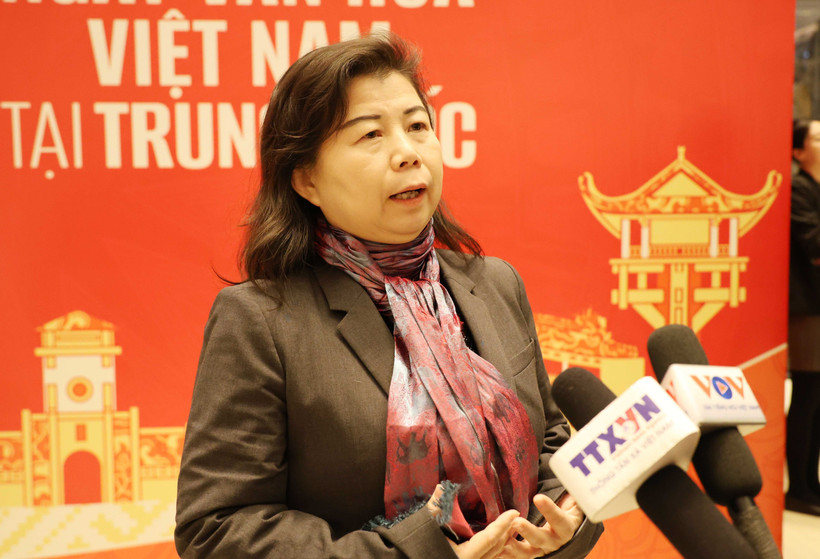
Humanistic exchanges that truly build empathy, trust, and bottom-up bonds provide the most enduring social foundation for a stable and future-oriented China-Vietnam relationship, Liu Ying, a researcher from the Chongyang Institute for Financial Studies under the Renmin University of China, has said.
Looking back on 2025 that marks the 75th founding anniversary of Vietnam-China diplomatic relations, Liu described it as a year of strong bilateral cooperation, with humanistic exchanges standing out. 2025 is a landmark year for humanistic exchanges, underpinned by the strong high-level leadership, extensive scope of activities, and increasingly substantive cooperation mechanisms, she said.
The researcher noted that the exchange of greetings by the two countries’ leaders on the occasion of the 75th anniversary of diplomatic relations provided a solid political foundation for humanistic exchanges. At high-level meetings in April 2025, the two sides emphasised using the Year of Vietnam-China Humanistic Exchange as an opportunity to organise initiatives “close to the people and welcomed by the public,” setting a consistent direction for programmes throughout the year.
A highlight was youth exchanges. China invited Vietnamese youth to participate in the large-scale “Red Study Tours,” conducted in many phases throughout the year. Through visits to revolutionary sites and Party history education centres, the Vietnamese participants gained a deeper understanding of the Communist Party of China (CPC)’s history and the path to socialism with Chinese characteristics.
Additionally, initiatives such as the Vietnam – China Youth Friendship Meeting and the Vietnam-China People’s Forum formed a foundation for regular dialogue, making youth exchanges a “highlight among highlights” of the year.
Cultural and publishing cooperation was also strengthened in 2025. The two sides maintained translation and publication projects covering classical literature, philosophy, and policy works. The 2025 China-ASEAN Book Cultural Week, held in Nanning and Vietnam, highlighted Vietnamese cultural heritage through books, traditional dress, and handicrafts, while Chinese literature and creative products were widely exhibited in Vietnam. The joint China-Vietnam youth reading initiative attracted thousands of students from both countries.
In media, cinema, and television, the two countries advanced their cooperation through a memorandum of understanding on digital communication cooperation, facilitating translation and broadcast of notable productions. Vietnamese films and documentaries appeared on leading Chinese video platforms, while Chinese documentaries and shows were aired on Vietnam’s national and local networks, deepening mutual cultural understanding.
Liu pointed out that tourism exchanges surged in 2025. Between January and November, Vietnam welcomed over 480,000 Chinese tourists per month on average, marking a record total for the year. Vietnamese tourists also increasingly visited China, signaling the growing mutual appeal of both countries.
Significantly, cooperation between localities, including border areas, has become more structured, combining concrete activities with formal mechanisms. Regular New Year meetings between the Secretary of the CPC Committee of the Guangxi Zhuang Autonomous Region and leaders of Quang Ninh and Lang Son provinces, along with Yunnan’s annual talks with Lao Cai and Ha Giang provinces, are maintained regularly, Liu said.
Practical projects such as cultural markets, border community exchanges, and cross-border trade initiatives have brought direct benefits to hundreds of thousands of residents, she added.
According to Liu, the year 2025 saw educational activities, scholarships, and livelihood support programmes run by the Chinese Embassy in Vietnam in partnership with local agencies, reflecting a move in humanistic exchanges from the macro level to specific groups, particularly students and families facing hardship.
In 2025, initiatives connecting citizens, youth exchanges, cultural programmes, and tourism activities contributed to strengthening mutual understanding and friendship between the peoples of Vietnam and China, especially among young people, she said, viewing the Year of Vietnam-China Humanistic Exchange not merely as a collection of events, but as a “people-centred” effort that touched hearts.
Scenes of Vietnamese students exploring history in Yan’an, Chinese scholars paying tribute to President Ho Chi Minh in Hanoi, and children from both countries performing bamboo dances at border exchanges vividly brought the concept of a China-Vietnam community with a shared future to life, far more effectively than any official document, the Chinese scholar said.
Liu noted that the vibrant Vietnam-China cultural exchanges in the anniversary year should evolve into enduring mechanisms, moving from isolated activities to sustainable projects.
She proposed turning youth exchanges into long-term programmes linked to education, tourism, internships, and innovation, while optimising media and digital platforms to share stories of friendship. She also recommended expanding scholarships and joint school programmes, and enhancing language education and cultural exchanges.
In the long term, a “three-way linkage” of youth, localities, and digital spaces could make Vietnam-China humanistic exchanges a natural part of social life, she said./.