
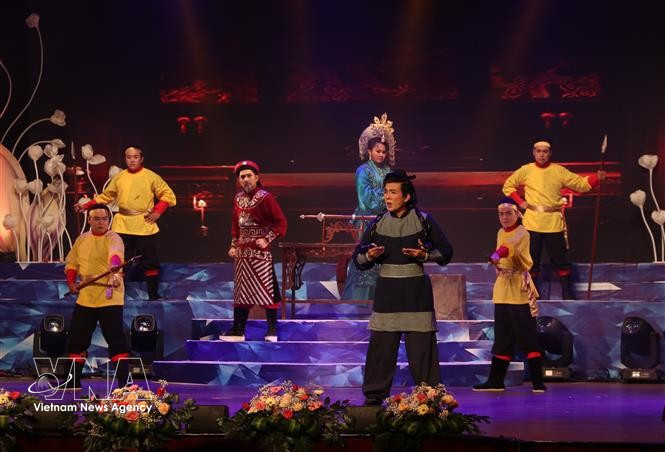
By removing institutional barriers, accelerating heritage digitalisation, and forging stronger links with tourism, Ho Chi Minh City is moving beyond preservation to transform traditional theatre into a competitive cultural industry, leveraging the “soft power” of culture as Vietnam deepens integration into the world.
Building a sustainable ecosystem
Viewing cultural industries as a cornerstone of sustainable development, the city is working to establish a comprehensive ecosystem supporting traditional performing arts.
Authorities aim to elevate traditional theatre into a leading cultural industry by simultaneously upgrading infrastructure and nurturing high-quality human resources. A professional creative environment, combined with tailored incentive policies, is considered essential to encouraging artists to stay dedicated to their careers and renew the value of heritage.
Tran The Thuan, Director of the municipal Department of Culture and Sports, said Politburo Resolution No. 80 has created fresh momentum, allowing the city to allocate appropriate funding and attract investment into cultural facilities.
Tran The Thuan, Director of the municipal Department of Culture and Sports, said Politburo Resolution No. 80 has created fresh momentum, allowing the city to allocate appropriate funding and attract investment into cultural facilities.
However, concerns remain over the shortage of successor talent. People’s Artist Tan Giao of the Tran Huu Trang Cai Luong (reformed opera) Theatre said limited investment in cultural facilities and modest benefits for artists have forced many performers to leave the profession due to financial pressures, resulting in a shrinking talent pipeline.
Meritorious Artist Le Nguyen Dat, Party Secretary of the University of Theatre and Cinema Ho Chi Minh City, stressed that workforce development must move beyond expanding enrolment towards high-quality training aligned with the realities of cultural industries.
He highlighted the need for closer cooperation between training institutions and professional art organisations so students can gain real stage experience during their studies. Training programmes, he added, should combine professional expertise with modern creative thinking, enabling young artists to preserve national identity while adapting traditional arts to contemporary audiences.
Such an approach, he said, is vital to cultivating a new generation of artists capable of carrying Vietnamese traditional arts onto the global cultural map.
People’s Artist Ho Van Thanh of the Ho Chi Minh City College of Culture and Arts proposed expanding performances to public spaces. By utilising parks as venues for community-based clubs, traditional arts could thrive in vibrant and low-cost environments with strong public engagement.
The combination of modern infrastructure, improved incentive policies, and systematic training strategies is expected to provide a solid foundation for traditional theatre to strengthen both its cultural vitality and economic contribution.
Positioning Vietnamese identity on global stage
By 2030, Ho Chi Minh City aims to become a regional hub for cultural industries in Southeast Asia, with traditional theatre identified as a defining cultural brand.
To achieve this ambition, the city is implementing priority support programmes under Resolution 80, directing resources toward high-quality productions capable of competing internationally while promoting Vietnam’s cultural image abroad.
New governance models and expanded international cooperation are expected to help traditional art products access tourism markets and integrate into regional cultural industry value chains.
People’s Artist Tran Ngoc Giau, Chairman of the Ho Chi Minh City Theatre Association, emphasised that global expansion requires more than individual artistic efforts, calling for a comprehensive professionalisation strategy.
Traditional theatre, he said, must balance authenticity with modern theatrical language to appeal to international audiences. State-commissioned productions of sufficient scale and artistic quality will be essential, combining compelling storytelling and strong visual presentation while preserving the essence of traditional art forms.
At the same time, sending artists abroad for training and participation in regional festivals is emerging as a crucial pathway to international engagement.
Digital technology and social platforms are also becoming powerful tools for cultural export. Meritorious Artist Nguyen Thanh Binh, head of performance organisation at the Ho Chi Minh City Theatre of Hat Boi (classical drama), said the theatre is preparing a comprehensive digitalisation plan in 2026, including virtual performance spaces and 3D archives that will allow heritage to transcend geographical boundaries and reach global audiences more effectively.
Similarly, the Tran Huu Trang Cai Luong Theatre is prioritising the development of a tourism-oriented performance model aimed at attracting international visitors./.