Making news
Ho Chi Minh City book street – An "undercurrent” sustains reading culture in digital age
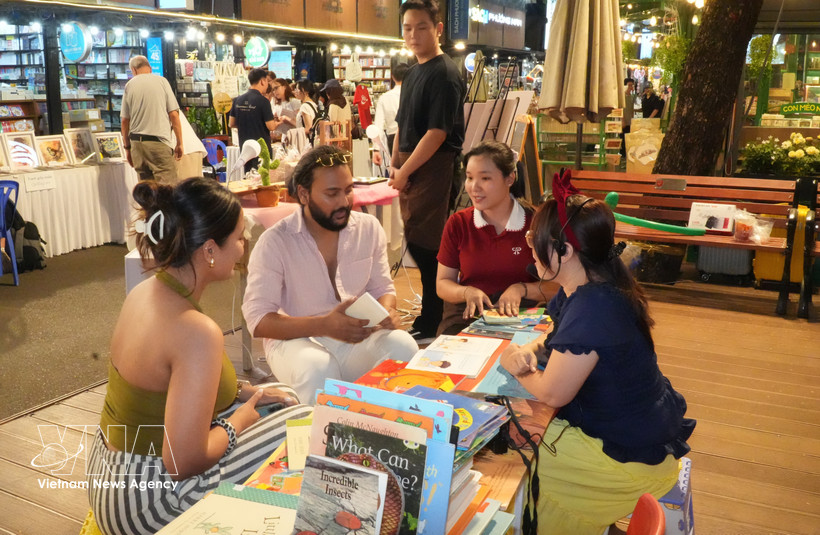
Located in the heart of Ho Chi Minh City, beside two iconic heritage landmarks of the Saigon Notre-Dame Cathedral and the Saigon Central Post Office, Nguyen Van Binh Book Street has, over a decade of formation and development, become an “undercurrent” nurturing reading culture and shaping the humanistic urban identity of the southern largest hub.
Launched on January 9, 2016, the street started as a modest 140-metre stretch that few expected would have such a big impact on Vietnam’s publishing scene. As the country’s first dedicated book street, it came to life through a mix of passionate publishers’ visions and supportive municipal policies.
From 19 initial booths, the street has expanded to 30, featuring more than 20 reputable publishers and distributors nationwide. Over the past decade, it has welcomed millions of visitors, circulated nearly 7 million books, and generated over 433 billion VND (16.4 million USD) in revenue.
According to Le Hoang, Director of the Ho Chi Minh City Book Street Company, the establishment of this street was never solely about book sales but about creating a cultural anchor for the community. Over the years, it has evolved into a sustainable knowledge ecosystem.
Tran The Thuan, Director of the municipal Department of Culture and Sports, described the book street as a milestone in cultural development and a pioneering model of socialised reading culture operating effectively in a friendly and distinctive space.
Publishers also regard it as a special “red address” for book lovers. Hosting book launches and author-reader exchanges here has become a top choice, helping bridge the gap between publishers, authors, and readers in a uniquely engaging environment.
Amid the rapid rise of audiovisual entertainment and digital reading, the book street continues to assert itself as a “fortress” preserving the value of printed books. With over 3,000 events organised, averaging at least one cultural activity per day, it has blurred the lines between authors and readers.
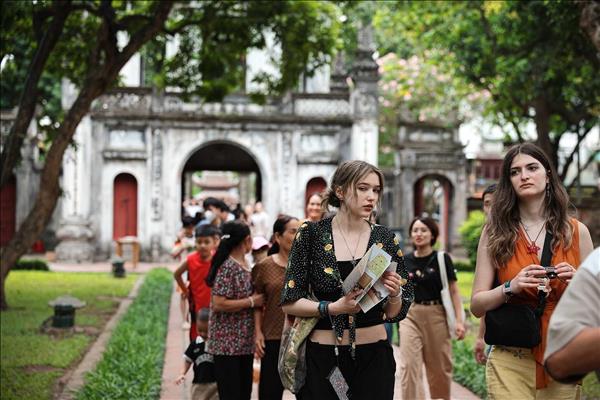
Beyond its role as a local cultural institution, Nguyen Van Binh Book Street has emerged as a “cultural ambassador” and a symbolic destination for international visitors. Its harmonious blend of knowledge and nature leaves a lasting impression.
International tourists, such as visitors from Australia, have praised the space for its thoughtful design and rich cultural atmosphere, noting that few book streets elsewhere offer such a unique and immersive experience.
Nguyen Nguyen, Director of the Authority of Publication, Printing and Distribution under the Ministry of Culture, Sports and Tourism, described the site as a “symbol of a knowledge city,” where books are no longer hidden away but vividly integrated into everyday urban life.
Beyond economic and tourism value, the street also promotes social good through initiatives such as donating books to remote areas and building libraries for border guards. In this sense, books become not only vessels of knowledge but also bridges of compassion and cultural values.
A decade may not be long for a cultural institution, but Nguyen Van Binh Book Street has already become a quiet sanctuary where people reconnect with core human values. With its solid foundation, it stands as a gateway to knowledge for generations to come, affirming the identity of a modern, compassionate, and culturally rich city./.