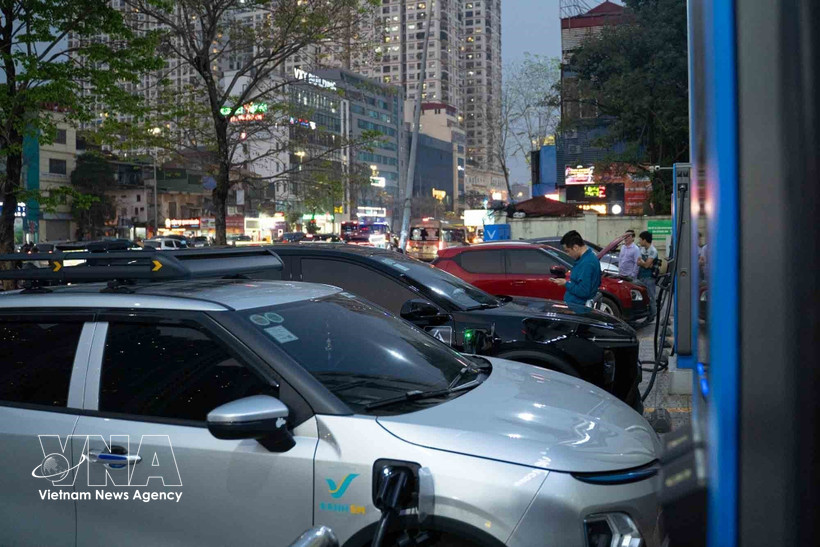
Volatile fuel prices are accelerating a notable shift in consumer behaviour among residents in Hanoi capital city, with many turning to electric vehicles (EVs) as a cost-effective and environmentally friendly alternative.
What was once a cautious consideration has now evolved into a more proactive transition as rising fuel costs prompt households to reassess their long-term transportation choices.
Recent surges in petrol prices have placed mounting pressure on household budgets, particularly for those who rely heavily on personal vehicles.
Nguyen Van Hung, a resident of Dong Da ward, said he spends nearly 2 million VND (76 USD) per month on fuel. However, with fuel prices fluctuating so much, he began recalculating his expenses. Switching to an EV could reduce his monthly costs to just a few hundred thousand VND for charging.
Hung’s case reflects a broader trend across Hanoi, where consumers are increasingly weighing cost-efficiency over initial purchase price. At several EV dealerships across the city, customer traffic has soared significantly, particularly during periods of sharp fuel price increases.
A representative from the VinFast Minh Khanh dealer on Giang Vo street reported that monthly sales have doubled from around 200 units to over 400 units in recent months.
Beyond economic considerations, growing environmental awareness is also shaping consumer preferences.
Le Thu Trang, a resident of Ba Dinh ward, shared that her decision to switch to an EV was motivated not only by savings but also by a desire to contribute to reducing air pollution.
Air quality in Hanoi has become a serious concern. Even small changes, like choosing a cleaner mode of transport, can make a difference, she said.
Experts note that for major urban centres like Hanoi, grappling with pollution and traffic congestion, the transition to electric mobility is an inevitable trend. While limited charging infrastructure was previously a barrier, recent improvements have expanded access, particularly in residential complexes, commercial centres, and public parking areas.
From market realities, it is evident that rising fuel prices have acted as a catalyst, accelerating Hanoi’s transition toward electric mobility. With both economic and environmental advantages becoming more apparent, EVs are no longer a niche alternative but are steadily emerging as a mainstream choice for the future./.