
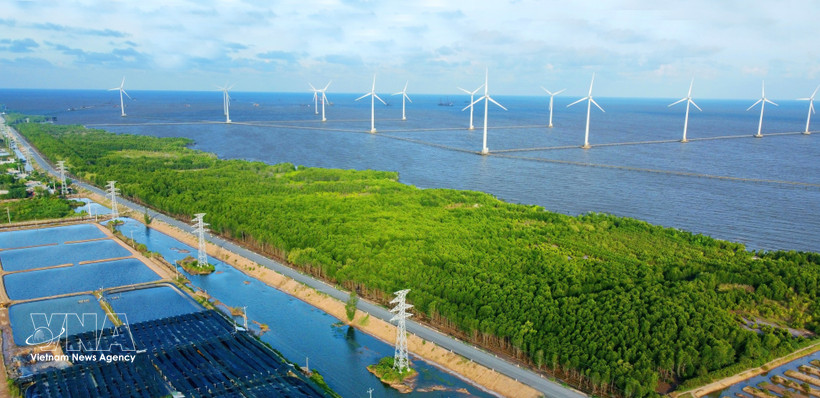
From the Politburo’s Resolution No. 70 on national energy security through 2030 with a vision to 2045, to Conclusion No. 14-KL/TW on ensuring stable fuel supply and prices, alongside the Government’s responses to rising Middle East tensions, Vietnam’s proactive and anticipatory approach to external energy shocks is increasingly evident.
However, recent developments have not only disrupted global energy prices and supply chains but also underscored the necessity of speeding up policy implementation and improving system resilience.
Structural risks from fossil fuel dependence
Vietnam’s energy system remains heavily reliant on fossil fuels, particularly coal-fired and gas-fired power generation, while emerging energy sources have yet to scale up quickly enough to compensate. As global supply disruptions intensify, these structural vulnerabilities are becoming more apparent.
Nguyen Quoc Trung, Deputy General Director of the National Energy Service of Vietnam (NSMO), said Middle East tensions have pushed up oil and gas prices due to disruptions along key transport routes, especially the Strait of Hormuz, which handles roughly a quarter of global oil and gas supplies. At the same time, coal-exporting countries such as Indonesia have shown signs of restricting exports to prioritise domestic demand.
With limited room for supply-side intervention, demand-side measures are emerging as the most viable short-term solution. Economist Nguyen Tri Hieu described energy conservation as a “regulatory valve” that helps stabilise economic activities during periods of price volatility. Cutting energy consumption by 8–10% could ease pressure on investment in new power capacity while creating additional space for economic growth, he noted.
The power system is also facing mounting pressure from rising electricity demand and the transition process itself. Trung warned that declining domestic gas output and constraints in LNG supply could lead to electricity shortages in southern Vietnam during evening hours, when renewable energy output declines. While impacts may not be significant in 2026, risks could become clearer during 2027–2028.
At a working session with Vietnam Electricity (EVN), Deputy Prime Minister Bui Thanh Son emphasised that electricity demand will continue rising sharply alongside the Government’s target of over 10% economic growth in 2026. EVN was urged to ensure stable electricity supply for key sectors such as high-tech manufacturing, semiconductors, artificial intelligence and data centres.
He also called for faster implementation of the revised Power Development Plan VIII, accelerated progress on major power and grid projects, coordinated development between generation and transmission infrastructure, expanded regional cooperation, and increased electricity imports to diversify supply sources.
Energy transition: From direction to acceleration
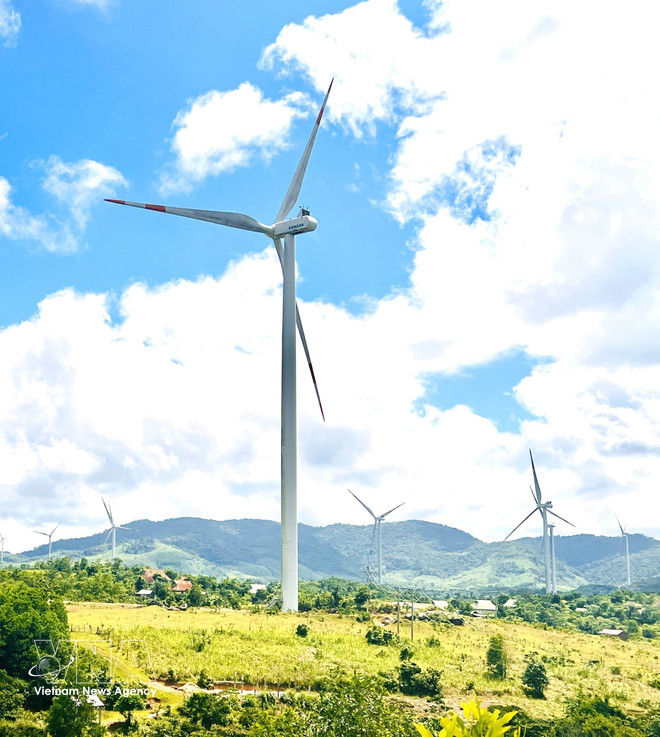
Vietnam has long pursued policies aimed at reducing fossil fuel dependence, diversifying energy sources and promoting clean energy development through planning frameworks and regulatory reforms. These strategies reaffirm that energy development must move ahead of economic growth, ensuring security, efficiency and alignment with global green transition trends.
Yet recent geopolitical shocks reveal a gap between strategic orientation and the actual resilience of the energy system, highlighting the need for faster and more substantive transition efforts.
According to Dr Phung Quoc Huy of the Asia Pacific Energy Research Centre (APERC), Vietnam’s dependence on imported energy could exceed 50% by 2060 without policy adjustments, but could fall to around 8% if transition measures are accelerated. Energy transition is not only essential for achieving net-zero emissions but also a core solution for long-term energy security, he noted.
The transition will require substantial investment, estimated at around 3.6 trillion USD by 2060, demanding appropriate financing mechanisms and policy frameworks. Middle East tensions further underline the necessity of diversifying supply sources.
Do Van Tuan, Chairman of the Vietnam Biofuels Association, stressed the need for a long-term national energy reserve strategy alongside accelerated development of alternative energy sources to reduce import dependence.
Other priorities include diversifying LNG supply, developing a competitive electricity market, expanding renewable energy integrated with storage systems, and building smart grids. In the short term, improving energy efficiency remains the most effective solution.
Nguyen Anh Dung, an energy expert at The Asia Foundation, emphasised focusing on sectors with significant efficiency potential such as transport, construction and industry through electric vehicles, green buildings and technological upgrades.
Over the long term, Vietnam aims to build a diversified energy ecosystem in which renewable energy plays a central role, gas serves as a transitional source, and hydrogen emerges as a future solution.
While Middle East tensions do not alter Vietnam’s strategic direction, they serve as a practical stress test for the country’s energy strategy. Ensuring sufficient electricity for growth, improving energy efficiency and accelerating policy implementation will be key to strengthening resilience against external shocks and maintaining long-term economic stability./.