As Hanoi accelerates the building of digital government, digital transformation is increasingly becoming a pillar in organising the election of deputies to the National Assembly and People’s Councils at all levels for the 2026– 2031 tenure, helping enhance transparency, accuracy and voter engagement throughout the process.
From voter data management and candidate registration to public communications and information disclosure, digital platforms are being applied across key stages of election preparation. The use of digital infrastructure enables more systematic and synchronised operations while ensuring voters access reliable and comprehensive information before casting their ballots.
Across the capital, technology applications have been deployed in a coordinated manner. Voter data are compiled on the basis of the National Resident Database, thus minimising errors, duplication and omissions. Candidate dossiers are processed through a combination of traditional and digital methods, ensuring legal compliance alongside efficient management and storage.
Accurate, complete and “live” data
In Giang Vo ward, Chairman of the People’s Committee and Standing Vice Chairman of the Election Committee of the ward Co Nhu Dung said resident data serves as the “backbone” of the election. Voter information is reviewed and updated through the electronic identification system, enabling accurate voter lists by polling area, while voter cards are generated directly from the system to ensure consistency and security. All candidate documents have also been digitised, shortening processing time and improving administrative coordination.
The overarching goal, he noted, is to organise a “democratic, lawful, safe and cost-efficient” election, with technology playing a crucial supporting role in reducing manpower while maintaining strict legal compliance.
In Cua Nam ward, QR codes have been introduced in election communications, providing residents with flexible access to information. Ward Party Secretary and Chairman of the People’s Council Nguyen Hoang Truong, who is also head of the Cua Nam Election Committee, emphasised that election preparations require absolute accuracy and transparency. Voter lists are developed through the Ministry of Public Security’s voter management system and updated promptly before official publication.
QR codes displayed at public notice points allow voters to look up polling locations and election details and submit feedback, shifting communications from one-way dissemination to two-way interaction and strengthening accountability.
At the city level, the Vietnam Fatherland Front Committee of Hanoi has launched a digital election information map integrating data on constituencies, candidate lists and biographies, their action programmes, and links to official media outlets. The platform helps systematise information, enabling voters to access synchronised and real-time updates through an interface optimised for both smartphones and computers.
Youth drive practical digital innovation
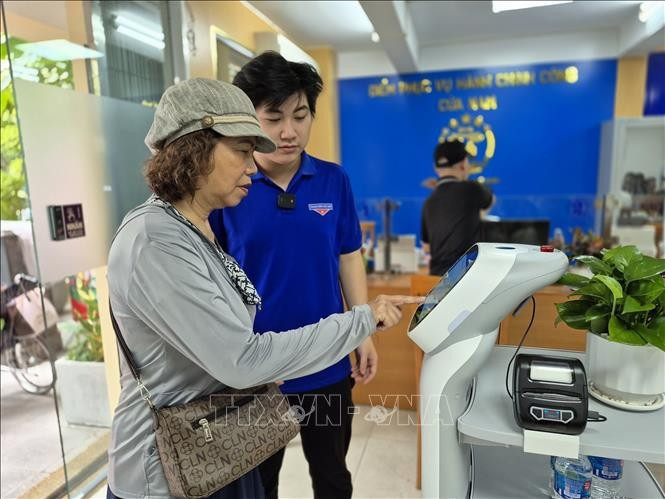
Digital transformation in elections has also been supported by youth initiatives. In Ha Dong ward, the local youth organisation developed a chatbot to assist voters by answering common questions on polling areas, constituencies, voting procedures and relevant regulations.
Nguyen Tien Phuc, Vice President of the ward’s Vietnam Fatherland Front Committee and Secretary of the local Youth Union Committee, said the chatbot reduces pressure on direct communications activities while making official information more accessible to residents. The initiative also demonstrates the proactive role of young people in promoting digital transformation in practical community tasks.
Behind the system is a team of youth members who regularly review and update content to ensure accuracy and consistency. Although not operating continuously online, the model has proven effective thanks to active management and community engagement. Following initial success, the chatbot has been expanded to neighbourhood youth branches, gradually reaching a wider population.
From integrated resident data and digitised candidate records to QR-code communications, digital mapping and chatbot support, Hanoi is building a comprehensive technological ecosystem for election organisation. As data connectivity improves and information transparency increases, the electoral process is becoming not only more accurate but also closer to citizens.
In the digital era, each ballot is safeguarded not only by legal frameworks but also by a synchronised and scientific technological foundation, helping ensurethe Election Day truly becomes a nationwide democratic festival grounded in transparency, trust and informed participation./.