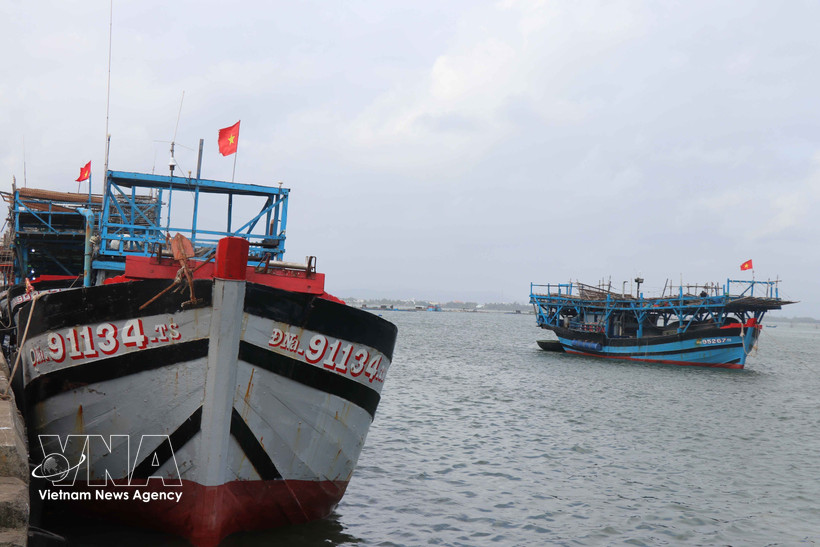
The central city of Da Nang has fully implemented all recommendations set out by the European Commission (EC) in tackling illegal, unreported and unregulated (IUU) fishing, marking a significant step forward in Vietnam’s efforts to have the EC's “yellow card” warning lifted.
According to the municipal Sub-Department of Seas, Islands and Fisheries, the city’s sustained efforts over recent years have delivered tangible results, particularly in strengthening monitoring, traceability and law enforcement.
Technology-driven monitoring
More than 4,000 fishing vessels in Da Nang have been fully registered and integrated into the national fisheries database, with offshore vessels closely tracked via the vessel monitoring system managed by the Directorate of Fisheries and Fisheries Surveillance. Authorities can monitor vessel positions, fishing activities and crew details around the clock.
Nguyen Huu Truong, Head of the Fisheries Surveillance Desk under the Municipal Sub-Department, said that applying technology to monitor fishing vessels is an important tool towards building a transparent, modern, and sustainable fisheries industry. The system allows onshore stations to warn captains when their vessels approach restricted waters. Violations are promptly reported to local authorities and border guards for handling upon return to port.
As one of Vietnam’s major fisheries hubs, Da Nang plays a key role in enforcing regulations.
Its key facilities, such as the Tho Quang Fishing Port, handle thousands of vessel movements annually, including boats from across central provinces. Port authorities have stepped up inspections and introduced smart camera systems to supervise landings, ensuring only vessels that complete electronic catch documentation (eCDT) procedures are processed.
In the first quarter of 2026, Da Nang’s seafood output was estimated at 30,000 tonnes, up 1.6% year-on-year. The city is home to 25 seafood exporters, including four shipping to the EU market. Authorities regularly inspect these firms to ensure full traceability of raw materials in line with regulations on tackling IUU fishing.
According to Vo Van Long, Head of the Sub-Department, all local fishing vessels have now been identified, marked and recorded in the national database, meeting EC requirements. However, he stressed that anti-IUU fishing efforts must be maintained on a long-term, consistent basis.
Comprehensive support for fishermen
Alongside enforcement, Da Nang is accelerating policies to support fishermen and restructure the sector toward sustainability.
Earlier this year, the city issued a fisheries development policy package for 2026–2030, with a total budget of over 60 billion VND (nearly 2.3 million USD). The policy includes subsidies for vessel insurance, installation of vessel monitoring systems, and the dismantling of ineligible boats.
Financial support is also provided for replacing outdated engines and transitioning away from destructive fishing methods such as trawling. Vessel owners switching to alternative, compliant fishing practices can receive up to 50% of conversion costs.
Local authorities are working with coastal communities to disseminate these policies and guide fishermen through application procedures, ensuring timely access to support.
With a combination of strict enforcement and targeted incentives, Da Nang aims to build a modern, transparent and sustainable fisheries sector, reduce pressure on coastal resources, and enhance fishermen’s livelihoods, while contributing to Vietnam’s efforts to remove the EC’s “yellow card” on Vietnamese fisheries exports./.