
Can Tho city has identified the acceleration of major energy projects as a central driver to regain high growth momentum, with the city targeting gross regional domestic product (GRDP) growth of 10–10.5% in 2026.
Large-scale power investments are expected to play a decisive role in lifting industrial output, expanding the local economic base and creating spillover effects across construction, services and public finance.
To support this ambition, the city has mapped out 10 key task groups and solution packages, ranging from public investment disbursement and land clearance to improving the business environment and unlocking stalled projects.
Among these, energy infrastructure is seen as having the most immediate and measurable impact on growth, particularly as several long-delayed projects are approaching critical implementation stages.
Can Tho is prioritising the rollout of a series of high-capacity power projects, including the O Mon II, O Mon III and O Mon IV thermal power plants with a combined capacity of 3,150 MW, alongside the Long Phu I thermal power plant, designed to generate around 2,000 MW.
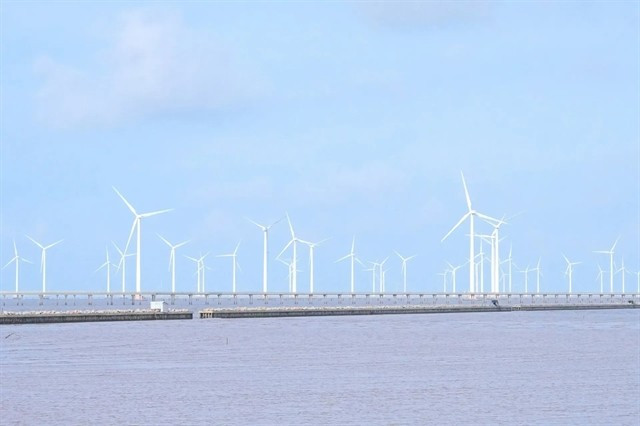
In addition, a number of wind power projects are being promoted to diversify the city’s energy mix and enhance long-term sustainability.
Local authorities have signalled a tougher stance on implementation discipline.
Projects that fail to break ground or fall significantly behind schedule may be withdrawn and reassigned to investors with stronger financial capacity and execution experience.
If key power plants come online by the third quarter of 2026, they are expected to make a substantial contribution to restoring double-digit growth not only next year but also in subsequent years.
Alongside energy, the city is moving to clear obstacles facing real estate developments that were previously delayed due to regulatory shortcomings.
By reviewing legal compliance and completing unfinished procedures, Can Tho aims to revive construction activity and generate higher value-added output, while also strengthening budget revenue.
Land-use fee collection is also projected to become a notable revenue source.
Income from resettlement projects alone in 2026 could generate an additional 5–6 trillion VND (200–240 million USD), as payments from households have not been collected for several years.
These orientations were outlined by Truong Canh Tuyen, Chairman of the People’s Committee of Can Tho, at the city’s fourth-quarter press briefing held on January 6, where local leaders reviewed socio-economic performance and policy priorities for the year ahead.
Looking back at 2025, the city recorded a number of encouraging results despite lingering constraints.
GRDP grew by 7.23 %, while GRDP per capita reached 94.94 million VND (3,750 USD) per year. The local economy expanded to 306.17 trillion VND (12.2 billion USD).
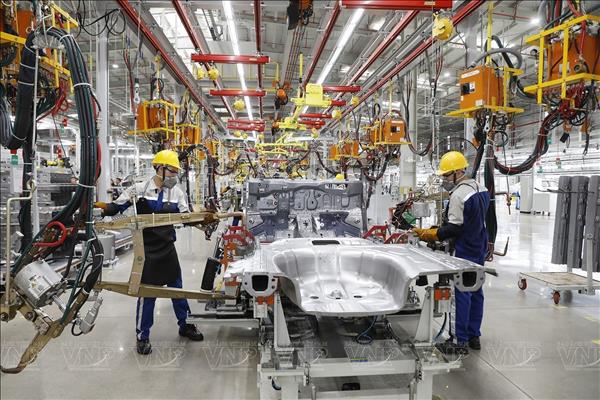
Industrial production continued its recovery, with the industrial production index estimated to rise by 10% year-on-year.
Trade and services maintained solid momentum, as total retail sales of goods and services climbed to 360.07 trillion VND (14.3 billion USD), up 20.02% from 2024.
Export turnover and foreign currency earnings reached 5.51 billion USD, marking a 10.8% increase.
Tourism remained a standout performer, welcoming more than 11 million visitors, up 16% year-on-year, and generating revenue of 9.98 trillion VND (395 million USD), an increase of 20%.
Agriculture remained stable, with rice output exceeding 4.7 million tonnes.
Total social investment reached 84.68 trillion VND (3.4 billion USD), while State budget revenue amounted to 25.88 trillion VND (1.03 billion USD), exceeding the central target.
However, the city continues to face structural challenges. Economic growth has yet to fully meet targets set by local resolutions, public investment disbursement remains below the national average, and non-budget investment–particularly foreign direct investment–has yet to meet expectations.
Urban infrastructure development remains uneven following administrative consolidation, while traffic congestion, waste management issues and disparities in access to education, healthcare and digital services persist, especially in rural and ethnic minority areas.
The city’s leaders believe that resolving these bottlenecks, combined with decisive progress on energy projects, will be critical in enabling Can Tho to translate its growth ambitions into sustained economic performance./.