Making news
Beyond assembly: Vietnam’s electronics industry poised for deeper value chain integration
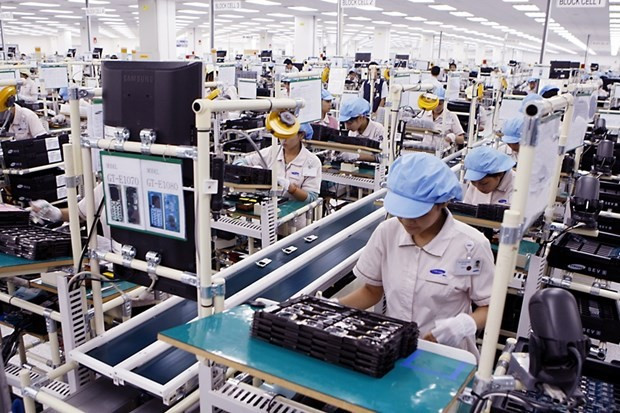
After more than a decade of robust expansion, Vietnam’s electrical and electronics (E&E) industry is approaching a critical juncture, with growing momentum to move past its traditional role as an assembly base and secure a stronger foothold in global value chains.
An electronics manufacturing powerhouse
Over the past ten years, the E&E sector has become one of Vietnam’s most dynamic growth engines, drawing substantial inflows of high-quality foreign direct investment (FDI) from multinational corporations. This wave of investment has helped pull domestic firms into global supply chains and strengthen local manufacturing capacity.
Bolstered by tens of billions of US dollars in FDI, Vietnam’s production and export capabilities have continued to expand. Samsung, the country’s largest foreign investor, has developed a supplier network of more than 300 Vietnamese enterprises following years of operation.
Acknowledging the impact of FDI on export growth, Cho Sang Jae, Director of the Korea Trade-Investment Promotion Agency (KOTRA) in Hanoi, said Vietnam has achieved notable progress in electronics manufacturing, gradually reducing its dependence on simple assembly-based production.
Electronics export turnover climbed from nearly 46 billion USD in 2015 to 126.5 billion USD in 2024. In the first 11 months of 2025, the figure approached 150 billion USD, accounting for about one-third of Vietnam’s total export value, more than triple the 2015 level. Vietnam now ranks among the world’s top 10 electronics exporters and has emerged as a strategic manufacturing hub for many multinationals in the region.
However, alongside these achievements, the industry continues to face structural constraints. Supply chains remain fragmented, while comprehensive data covering components, semi-finished products, assembly, logistics, testing, and research and development are still limited.
Despite exports nearing 150 billion USD in the first 11 months of this year, imports of electronics, computers, and components surged by a record 39.2% year-on-year to 136 billion USD. Domestic firms remain largely positioned in low value-added segments, with the rate of locally made components still modest and heavy reliance on imported materials and core components.
Information gaps between Vietnamese enterprises and FDI firms further impede linkages and partner matching. At the same time, authorities and investment promotion bodies lack sufficient data tools to clearly identify missing links within the value chain.
New momentum from a value chain map
Following an in-depth assessment of the sector, the Vietnam Trade Promotion Agency under the Ministry of Industry and Trade, together with KOTRA, has officially unveiled the Vietnam E&E Value Chain Map. The launch is accompanied by a linked enterprise directory designed to facilitate partner searches and business connections.
Cho Sang Jae noted that Vietnam has been steadily developing a more modern manufacturing ecosystem across the E&E spectrum, encompassing computers, household appliances, industrial equipment, automotive components, renewable energy equipment, medical devices, and lighting products.
While many global corporations have already established operations in Vietnam, numerous small- and medium-sized enterprises and mid-sized foreign firms remain cautious due to limited access to reliable information on the local market and supply chains.
The newly released value chain map seeks to enhance transparency across the entire E&E supply chain, an industry generating hundreds of billions of US dollars annually, by clearly identifying what products are manufactured, in which segments, and at what capacity. It also enables more accurate identification of missing links, priority investment areas, and segments with greater potential for domestic enterprise participation.
According to KOTRA, the initiative is not merely a database but a piece of strategic information infrastructure supporting trade promotion, investment attraction, industrial development and improved national competitiveness. For policymakers, it offers an important foundation for targeting investments that can help complete supply chains and strengthen the global standing of Vietnam’s E&E industry.
Looking ahead, experts emphasise that Vietnam must ensure FDI inflows translate into technology transfer and the growth of domestic enterprises to avoid an “assembly trap”. Measures such as establishing joint research centres, promoting collaboration between multinational corporations and local firms, offering incentives tied to the rates of locally made components, and developing a high-quality technical workforce through closer cooperation between schools and businesses will be crucial for sustainable and long-term development./.