
The northern province of Bac Ninh is accelerating efforts to expand and modernise its private sector, targeting 85,000 enterprises by 2030 while developing a high-quality pool of entrepreneurs, according to Nguyen Dinh Hieu, Director of the provincial Department of Finance.
The province aims for at least two local firms to join global value chains, 15 private companies to rank among Vietnam’s 500 largest enterprises, and one to two regional-scale private brands, positioning Bac Ninh as a hub for internationally integrated businesses.
The private sector is expected to contribute 55–58% of gross regional domestic product (GRDP) and 35–40% of local state budget revenue, while creating employment for 84–85% of the workforce. Private investment is hoped to account for 38–40% of total capital in society.
Hieu noted that Bac Ninh has adopted a business-centred approach, rolling out a digital governance model with full online disclosure of planning information, investment procedures, and incentive policies. The province is piloting “24-hour and 60% green lanes” for strategic projects to reduce administrative procedure processing times by at least 40%. It plans for 70% of procedures to be fully processed online by 2030.
It also targets top-three rankings nationwide for the Provincial Competitiveness Index (PCI), Public Administration Reform Index (PAR Index), and Digital Government Index.
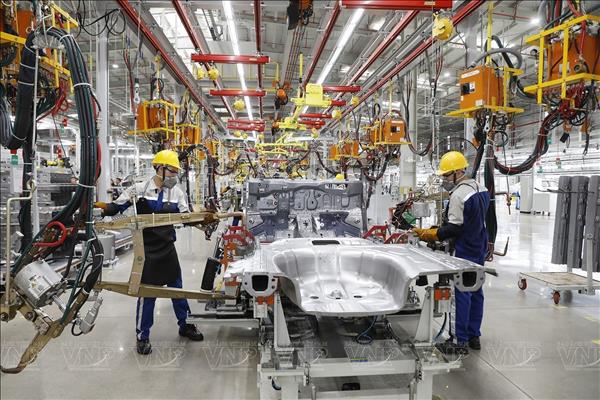
To bolster industrial development, Bac Ninh is forming inter-sector clusters and innovation centres within industrial parks, setting aside at least 20 hectares in each for high-tech and supporting industries. It is considering a supporting industry development fund to provide credit support, offer loan guarantees, and encourage private investment in such key fields as electronics components, precision engineering, new materials, and green logistics.
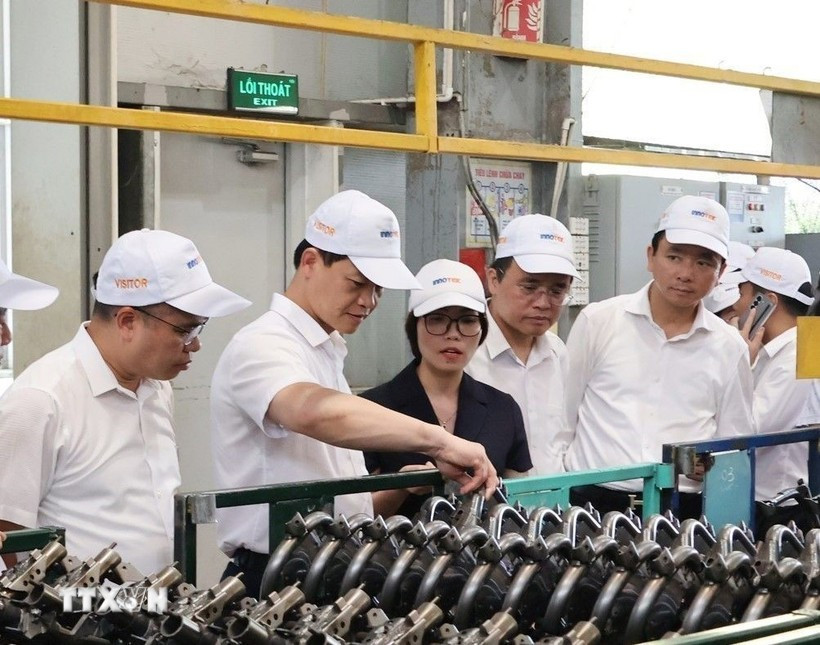
Authorities are also enhancing coordination between government agencies, business associations, and foreign investors to help local private firms integrate more deeply into global supply chains. Regular tripartite dialogues will help relevant sides learn about the demand for domestically made materials and components, and resolve bottlenecks. Foreign-invested enterprises are encouraged to share lists of products and services needing suppliers and directly connect with domestic firms.
Bac Ninh supports firms to go global
By 2030, Bac Ninh aims for at least 50 private companies to participate directly in supply chains of multinationals, and for at least five large-scale, international standard supporting-industry clusters to be operational.
To cultivate “Go Global” pioneer enterprises, the province has launched a 1,000-firm programme focused on innovation, the digital economy, and the green economy, together with a “Go Global Accelerator” to give support in finance, legal services, and trade promotion so that local businesses can access international markets. It also encourages business households to transition into registered enterprises, targeting at least 1,000 conversions annually, with 30% operating in high-added-value technology and service sectors.
Human resources development is a central priority. Bac Ninh is strengthening partnerships between schools, businesses, and administration to align training with industry needs. Manpower training and development centres for semiconductor, electronics, digital technology, and green economy sectors will be established in major industrial zones. A scholarship scheme tied to commitments to work at local firms and preferential policies for international experts and engineers will further support high-quality workforce development.
Hieu said that following the merger of Bac Ninh and Bac Giang, the newly formed province aims to become a leading growth engine in the Capital Region and Vietnam as a whole, and to establish itself as a modern and identity-rich high-tech industrial and service hub. Its economic scale now ranks fifth nationwide.
Bac Ninh is increasingly positioning itself as a dynamic growth powerhouse of the North and an attractive destination for investors, particularly in smart and green city building, high technology, and semiconductor.
During the first nine months of 2025, the province recorded 5,448 new enterprises, up 25% year-on-year, with registered capital totalling nearly 94.6 trillion VND (3.58 million USD). The private sector continued to expand its contribution to GRDP, budget revenue, exports, and job creation. Many new production and service models have also taken shape, particularly in electronics, precision engineering, logistics, e-commerce, and high-tech agriculture./.