

In light of the 14th National Party Congress, together with Party diplomacy, State diplomacy, and people-to-people diplomacy, parliamentary diplomacy will continue to promote the stature and position it has built and affirmed over many years, contributing to mobilising resources to usher the country into a new era and realising the aspiration of building a prosperous, happy, and thriving Vietnam, wrote Politburo member and Chairman of the National Assembly Tran Thanh Man.
The Vietnam News Agency respectfully introduces his article, entitled “Parliamentary Diplomacy in the Era of the Nation’s Rise”.
Over the 80-year course of history, under the leadership of the Communist Party of Vietnam, the National Assembly has continuously grown and renewed itself, gradually improving the quality, effectiveness, and efficiency of its operations, and increasingly affirming its firm position and role as the highest representative body of the people and the highest organ of state power of the Socialist Republic of Vietnam.
Within this overall development, parliamentary diplomacy has become an important diplomatic channel. Together with Party diplomacy, State diplomacy, and people-to-people diplomacy, it has created a combined strength for Vietnam’s professional and modern diplomacy; contributed to enhancing the country’s position in the international arena and promoting rapid and sustainable development, firmly safeguarding national sovereignty and interests, and consolidating a comprehensive and solid legal foundation for deep international integration.
Parliamentary diplomacy implemented in systematic and comprehensive manner
Recent realities show that the foreign affairs activities of the National Assembly have been implemented in an increasingly systematic and comprehensive manner, with a large workload and many important achievements across various fields:
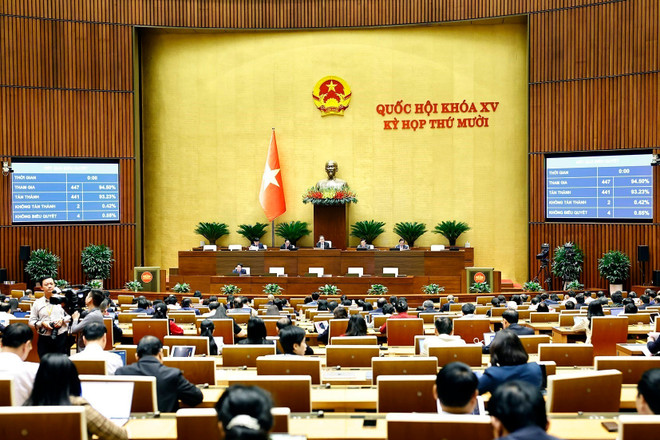
In legislation and supervision, the National Assembly has adopted numerous laws and ordinances directly related to foreign affairs, such as the Law on International Treaties, the Law on National Borders, the Law of the Sea of Vietnam, the Law on International Agreements, the Law on Nationality, the Law on Entry, Exit, Transit, and Residence of Foreigners in Vietnam, and the Law on Vietnamese Representative Missions Abroad; and has ratified many important agreements, including the Comprehensive and Progressive Agreement for Trans-Pacific Partnership (CPTPP), the EU-Vietnam Free Trade Agreement (EVFTA), the EU-Vietnam Investment Protection Agreement (EVIPA), and many new-generation free trade agreements.
These efforts have made important contributions to building and gradually improving a solid legal framework for implementing foreign affairs activities in line with national conditions and progressively meeting the requirements of international integration. Assessments and critiques by National Assembly bodies and deputies on foreign affairs and international integration issues have increased in number and practical relevance, making tangible contributions to the formulation and implementation of the Party’s and State’s foreign policy.
Bilateral parliamentary cooperation of the legislature has been actively and effectively promoted at multiple levels, with a focus on relations with neighbouring countries, deepening and stabilising relations with strategic partners; consolidating friendship and substantively advancing relations with major partners and traditional friends, especially at the high level, with the active participation of the Chairperson and Vice Chairpersons of the National Assembly, guided by the principles of proactiveness, responsibility, positivity, flexibility, and comprehensiveness across all fields.
In addition, exchanges of delegations between committees and specialised agencies of the legislative bodies of Vietnam and other countries have been established and implemented effectively. Areas and contents of cooperation have become increasingly diverse, going beyond the exchange and sharing of experience in lawmaking and promoting cooperation in overseeing the implementation of laws and international commitments, to opening pathways for development cooperation, addressing outstanding issues, building trust, and enhancing mutual understanding with partner countries, helping to affirm the image of a dynamic, innovative, professional, and effective Vietnamese legislature.
To date, the National Assembly of Vietnam has established relations with more than 140 parliaments and national assemblies; formed over 50 Parliamentary Friendship Groups with other countries’ legislatures; and carried out many practical and effective activities. It has signed numerous cooperation agreements with foreign parliaments, including those concluded simultaneously with both upper and lower houses.
The continuous expansion and deepening of cooperative relations between the National Assembly of Vietnam and foreign legislatures have helped promote and facilitate the implementation of state-level diplomatic relations across various fields, including politics, diplomacy, defence-security, economic, trade, investment, sustainable development, science and technology, culture and education, and people-to-people exchange.
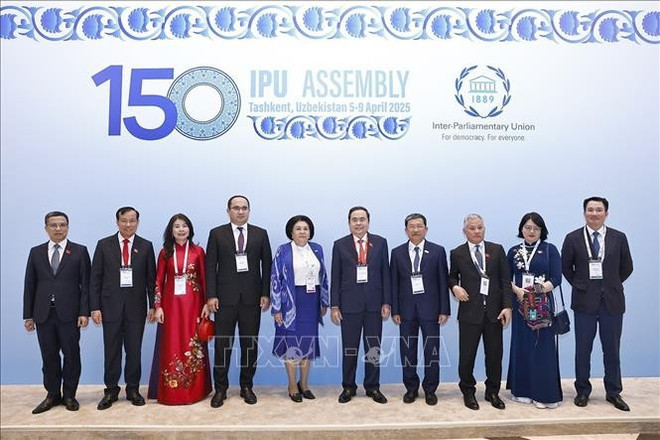
Within the framework of multilateral parliamentary cooperation, the Vietnamese National Assembly is currently a member of many regional and global parliamentary organisations such as the Inter-Parliamentary Union (IPU), the ASEAN Inter-Parliamentary Assembly (AIPA), the Asia-Pacific Parliamentary Forum (APPF), and the Parliamentary Assembly of the Francophonie (APF). In addition, it also participates in a number of other non-regular inter-parliamentary forums.
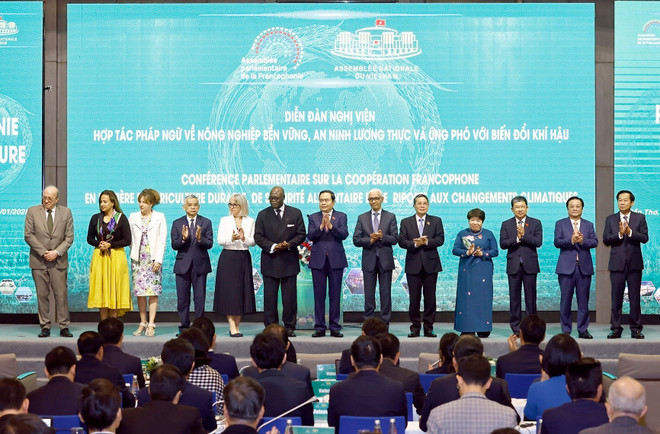
A notable hallmark of Vietnam’s multilateral parliamentary diplomacy in recent years has been the hosting of major multilateral conferences of international and regional significance, such as the 132nd IPU Assembly (IPU-132, 2015), the 26th Asia-Pacific Parliamentary Forum (APPF-26, 2018), the 41st AIPA General Assembly (AIPA-41, 2020), the 9th IPU Global Conference of Young Parliamentarians (2023), and the APF Executive Committee Meeting and the Francophone Parliamentary Forum on sustainable agriculture, food security, and climate change response (2025).
The National Assembly's external relations activities have helped affirm Vietnam’s readiness to be a friend and a reliable partner; as well as the country’s proactive and active participation in regional and international parliamentary forums, demonstrating its responsibility in addressing regional and global issues. Within multilateral parliamentary cooperation mechanisms, the Vietnamese legislature has taken an active and proactive role, proposing numerous initiatives to promote sustainable development, trust-building measures, preventive diplomacy, conflict prevention, and the peaceful settlement of disputes on the basis of international law. These initiatives have received broad support and high evaluation from other countries.
Furthermore, parliamentary diplomacy has promoted dialogue and contributed to the proper handling of many specific foreign affairs-related issues, including border and territorial matters, religion, democracy and human rights issues, external information, as well as the settlement of institutional bottlenecks or emerging issues in bilateral cooperation.
Parliamentary diplomacy has also made great contributions to mobilising the Vietnamese community overseas to turn towards the homeland and join hands in national construction and development. Through overseas visits and discussions with parliamentary leaders of countries hosting large Vietnamese communities, National Assembly delegations have consistently paid attention to exploring the actual living conditions and activities of overseas Vietnamese; and organised community meetings to share information, helping expatriates gain a clearer understanding of the country’s socio-economic development achievements and new policies of the Party and the State, particularly those concerning overseas Vietnamese, while listening to their thoughts and aspirations and encouraging them to remain connected with the homeland.
Parliamentary diplomacy continues to enhance stature and position, contributing to mobilising resources to usher Vietnam into a new era
The 14th National Party Congress is a milestone of special significance for the country’s development path in the new period, taking place amid rapid and complex changes in the world and the region, with many unpredictable factors, opening up new development opportunities and posing considerable challenges to Vietnam’s diplomacy at the same time.
In this context, the overarching objective of parliamentary diplomacy, alongside other pillars of Vietnam’s diplomacy, is to closely follow the Party’s foreign relations guidelines and decisions, build on achieved outcomes, and continue to maintain a peaceful, stable and favourable environment for national construction, defence and development; successfully carry out strategic tasks for socio-economic development and strive to achieve the country’s development goals by 2030, with a vision to 2045; and at the same time resolutely and persistently safeguard independence, sovereignty and territorial integrity, ensuring core national interests in accordance with international law.
Parliamentary diplomacy needs to further promote its role as one of the key components of a comprehensive and modern diplomacy; proactively, actively and responsibly participate in multilateral parliamentary mechanisms; promote bilateral relations with parliaments of other countries, especially strategic and important partners; and improve the quality of legislative work, ratification and oversight of the implementation of international treaties, ensuring harmony between national interests and international commitments.
Amid digital transformation and the rapidly changing international environment, the National Assembly of Vietnam faces the requirement to strongly renew its external relations modalities to adapt to the new situation, including stepping up the application of information technology in organising activities, expanding forms of online dialogue and discussions, and enhancing the timeliness and effectiveness of parliamentary contacts and connectivity. In parallel, building a contingent of parliamentary diplomacy officials who are professional, resilient, proficient in foreign languages and technology, and well-versed in international laws and practices is also a key factor in improving the quality and effectiveness of foreign relations activities.
In particular, studying and closely following Party General Secretary To Lam’s articles and speeches on international integration in the new situation and the mission of foreign affairs in the “new era”, the next stage of parliamentary diplomacy is to continue playing an active role in realising the vision and aspiration of taking the country “from deep integration to full integration, towards the status of a rising nation,” as articulated by the Party leader.
In light of the 14th National Party Congress, together with Party diplomacy, State diplomacy and people-to-people diplomacy, parliamentary diplomacy will continue to promote its stature and position built over many years, while comprehensively implementing groups of solutions to ensure the Party’s leadership over parliamentary external relations; enhancing the quality of advisory work, increasing professionalism in the implementation of foreign relations activities, and further bringing into play the National Assembly’s proactive and active role in both bilateral and multilateral channels; contributing to mobilising resources to usher the country into a new era and realising the aspiration of building a prosperous, happy and thriving Vietnam./.