Vietnam will need to generate between 227-231 billion USD in exports during the final five months of 2026 to meet its full-year growth target, putting pressure on exporters as trade barriers, production costs and competition intensify in major overseas markets.
The country’s exports reached nearly 319.7 billion USD in the first seven months, up 21.7% year-on-year, according to the Department of Customs.
To achieve annual export growth of 15-16%, total shipments would need to reach about 546-551 billion USD, requiring monthly exports of roughly 45-46 billion USD for the remainder of the year.
The trade balance presents another challenge. Vietnam recorded a trade deficit of about 20.3 billion USD during the seven-month period.
Nguyen Anh Son, Director of the Agency of Foreign Trade under the Ministry of Industry and Trade, said the dual target of increasing export turnover while balancing trade had become increasingly difficult.
The pressure on the remaining months of the year would be extremely high, Son told vnbusiness.vn, as Vietnam would need an average monthly trade surplus of 3 billion USD against the current deficit of more than 20 billion USD.
Imports, however, included substantial inputs for future manufacturing. Computers, electronics and components represented 40% of imports in the first seven months.
Together with machinery, equipment, tools and spare parts, the two categories accounted for more than half of total imports and serve as production and capital inputs for future exports.
Pressure is also mounting across major export industries.
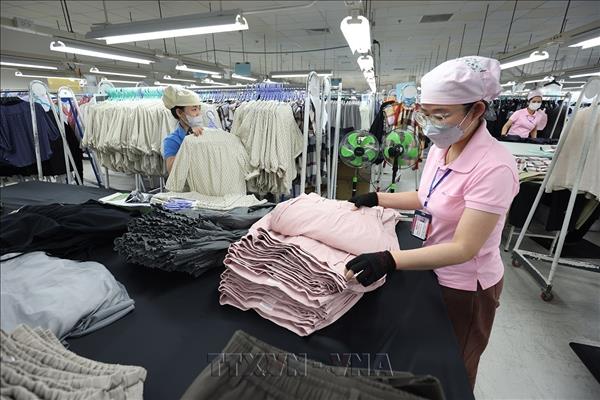
Cao Huu Hieu, General Director of the Vietnam National Textile and Garment Group (Vinatex), said profit margins in both garment and yarn production were being seriously threatened by raw-material price volatility and new tariff policies.
A 12.5% additional US tariff under Section 301 on Vietnamese textiles and garments, effective from July 24, has increased cost pressures.
Exporters are concerned that customers could demand cost-sharing, push for lower prices or shift orders to competitors such as Bangladesh and Cambodia, which face a 10% tariff.
In seafood, Nguyen Hoai Nam, General Secretary of the Vietnam Association of Seafood Exporters and Producers (VASEP), said export growth of less than 5% in July was insufficient to provide strong momentum towards the industry's target.
Vietnamese shrimp is facing direct competition from Ecuador and India, while Ecuador has begun expanding into processed shrimp, traditionally a strength of Vietnamese suppliers. VASEP's most optimistic scenario puts seafood exports at 12.5 billion USD if barriers are addressed in a timely manner.
Wood exporters are also confronting US trade-remedy measures. Despite exports exceeding 10 billion USD in seven months, the industry faces an 84.95% US anti-dumping duty on Vietnamese hardwood plywood, creating a substantial cash-deposit burden for exporters since July, according to the Vietnam Timber and Forest Product Association.
With traditional markets becoming more challenging, trade officials are calling for greater diversification.
Vo Thi Ngoc Diep, Vietnam's Trade Counsellor in the Netherlands, said the country should be treated as a strategic gateway to the European Union, with trade promotion linked more closely to major exhibitions and stronger compliance with green standards.
In Russia, Trade Counsellor Duong Hoang Minh identified payment arrangements as a key bottleneck, as major retailers require Vietnamese suppliers to accept deferred payments of 30-45 days.
Meanwhile, Truong Xuan Trung, Head of Vietnam's Trade Office in the UAE, urged businesses to use tariff preferences under the Comprehensive Economic Partnership Agreement (CEPA) and consider bonded warehouses or retail networks in UAE free-trade zones.
At a conference on August 13, Permanent Deputy Prime Minister Pham Gia Tuc said the Government and ministries would address emerging business difficulties immediately rather than waiting for periodic meetings.
He instructed the Ministry of Industry and Trade to accelerate negotiations on new free trade agreements, particularly with Mercosur in the third quarter, and simplify procedures for certificates of origin (C/O).
The Ministry of Finance was tasked with accelerating value-added tax refunds, while the State Bank of Vietnam was asked to facilitate exporters' access to credit and preferential interest rates.
Authorities were also instructed to examine companies with large gaps between imports and exports, particularly in electronics, to assess the potential for imported inputs to be converted into export products./.