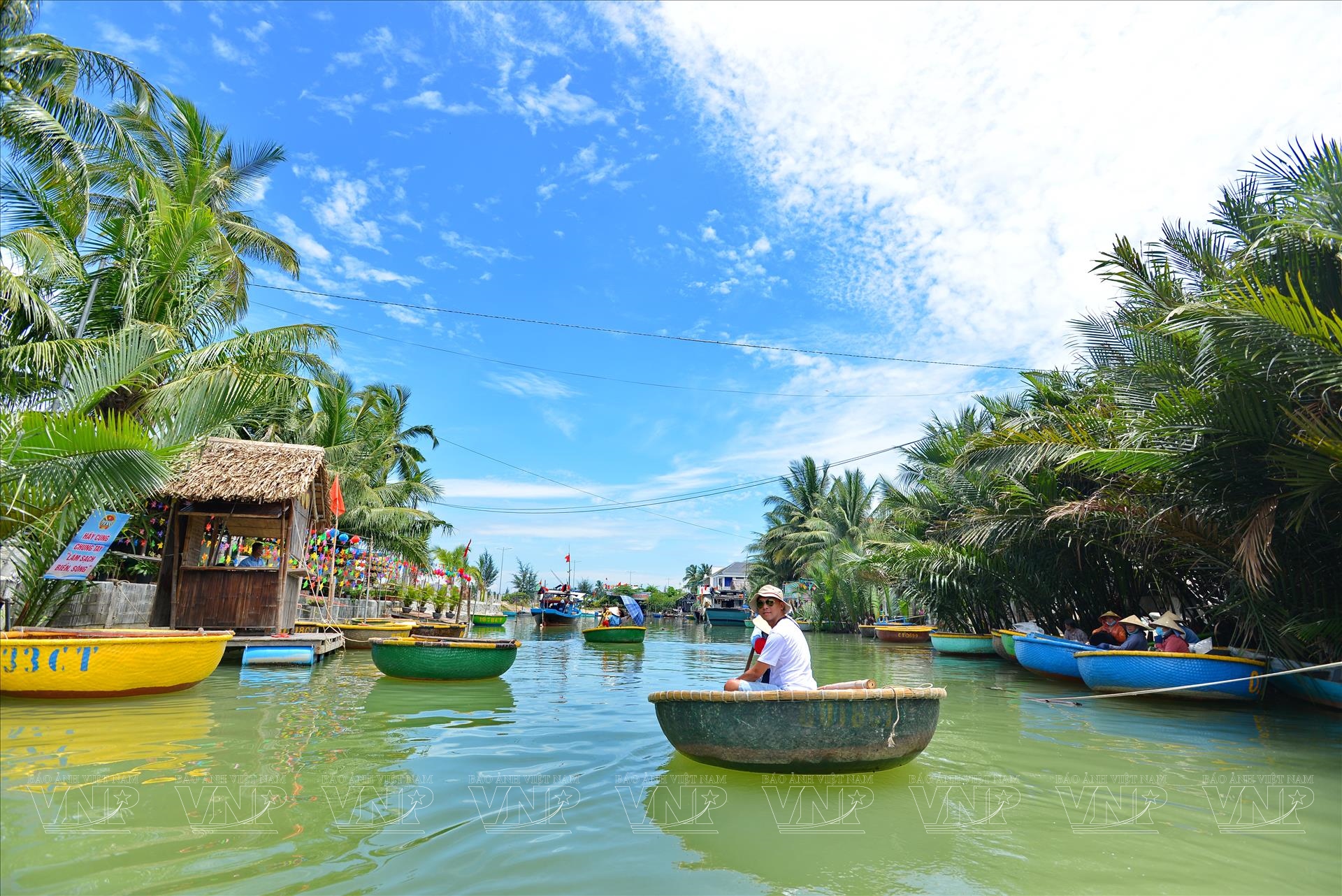
Cam Thanh Village nestles peacefully and charmingly along green waterways. Photo: Thanh Hoa/VNP
Amid intensifying competition among regional destinations, Vietnam has strengthened its position on the global tourism map. It has overtaken Thailand to become the most popular destination for Chinese travellers in Southeast Asia, welcoming nearly 5.3 million visitors from the market.
Fortune noted that while established tourism hubs such as Hanoi and Ho Chi Minh City remain major draws, emerging destinations are also posting impressive growth. Data from travel platform Klook showed that visitor numbers to Phu Quoc and Sa Pa in 2025 more than doubled those recorded in the previous year.
CS Soong, Klook’s vice president for corporate development, said travellers are increasingly seeking destinations that combine authentic cultural experiences with nature instead of focusing solely on major cities. Vietnam’s diverse tourism offerings, ranging from mountains and plains to islands and coastlines, give it a distinct competitive edge, he said.
The country has also stepped up investment in tourism infrastructure. One of the most significant projects is the expansion of infrastructure in Phu Quoc ahead of the APEC Economic Leaders’ Week 2027. Domestic and foreign investors are pouring capital into airports, resorts and hotels at key tourism destinations.
Alexandra Murray, Vice President and Regional Head of Southeast Asia at Hilton, described Vietnam’s tourism infrastructure development as extraordinary, saying strategic investments are strengthening the country's competitiveness and reinforcing its position as one of Southeast Asia’s leading destinations. The growing presence of international hotel brands also reflects investors’ confidence in Vietnam’s long-term tourism prospects.
Enhancing service quality to keep visitors coming back
According to Fortune, while Vietnam is widely recognised for its electronics manufacturing and exports, tourism, which contributes nearly 10% of GDP, is also demonstrating the country's growing strength in the services sector.
Experts quoted by the magazine said Vietnam is competing with Thailand and Malaysia to become the region’s leading destination. Rather than relying on low-cost mass tourism, the country is increasingly targeting higher-spending visitors with longer stays by expanding products such as medical tourism, meetings, incentives, conferences and exhibitions (MICE), and luxury resorts.
More open visa policies have also boosted tourism growth. Vietnam has simplified entry procedures by granting visa exemptions to visitors from selected countries and extending permitted stays. In 2025, it introduced a visa waiver programme for citizens of 12 European countries, allowing stays of up to 45 days under its tourism stimulus campaign.
Meanwhile, Vietnamese airlines are expanding their international networks. Vietjet has increased flights from China, Japan and Singapore and is expected to launch services to Europe.
Klook data showed Vietnam's visitor markets are becoming increasingly diversified. Besides traditional markets such as the Republic of Korea and Singapore, arrivals from the Philippines and India are rising strongly, while long-haul markets including the US, Australia and New Zealand have also recorded significant growth. China and the RoK remain Vietnam’s two largest source markets, well ahead of Russia.
Despite the positive momentum, experts said Vietnam should continue improving service quality to encourage visitors to stay longer, spend more and make repeat trips.
Prof. Vu Minh Khuong of the Lee Kuan Yew School of Public Policy in Singapore said Vietnam is learning from destinations that have experienced overtourism while adopting international best practices to pursue more sustainable growth.
According to VNAT, with strong growth momentum, strategic investment in quality tourism, upgraded infrastructure and increasingly diversified source markets, Vietnam is steadily reinforcing its position as one of Southeast Asia’s most dynamic and promising tourism destinations./.