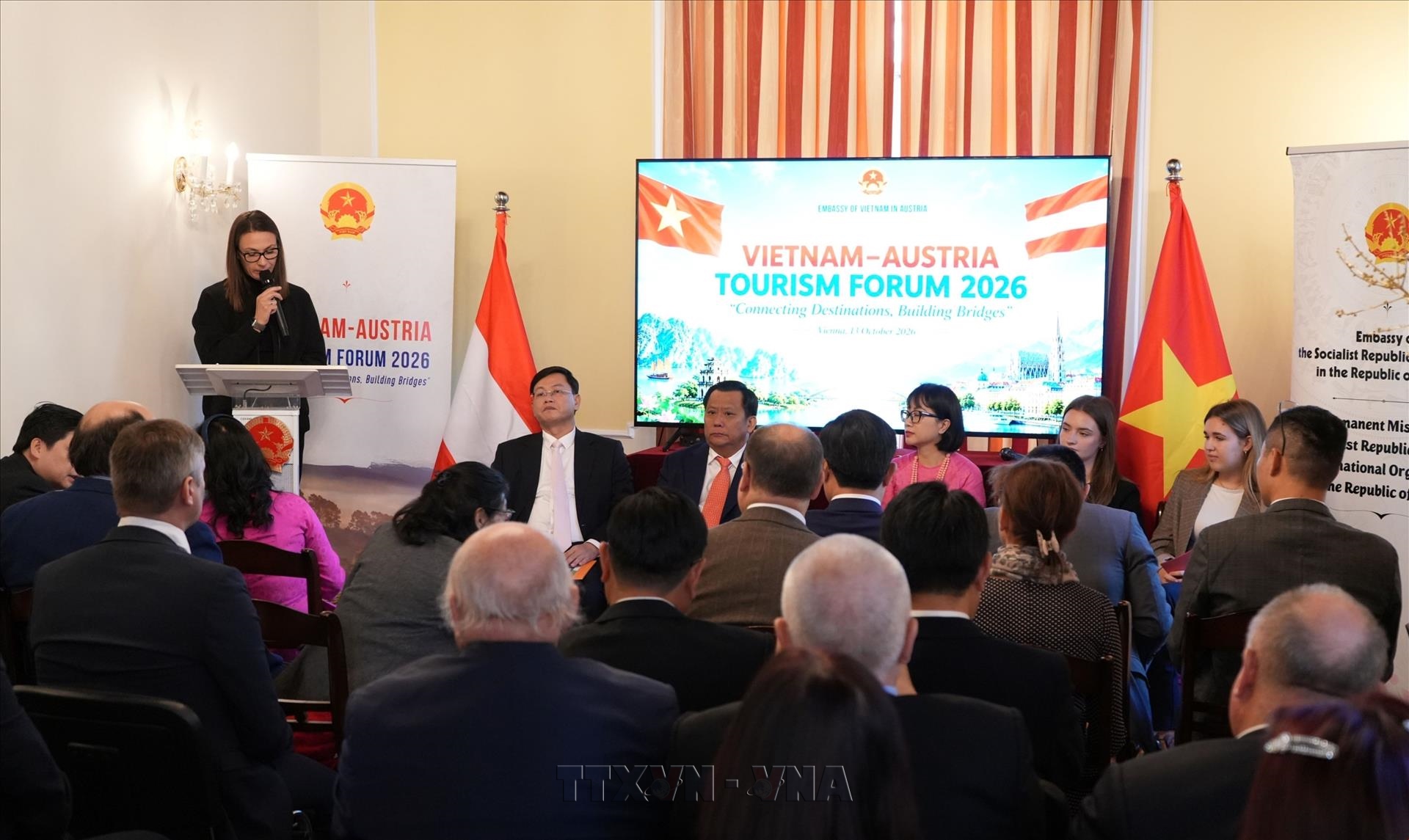
A view of the forum. Photo: VNA
Addressing the event, Vietnamese Ambassador to Austria Vu Le Thai Hoang underlined the considerable untapped potential for bilateral tourism cooperation, particularly as the two countries prepare to celebrate the 55th founding anniversary of diplomatic relations in 2027. He described this as an opportunity to strengthen friendship, expand economic cooperation and promote people-to-people exchanges through tourism.
According to the diplomat, Vietnam welcomed more than 21 million international visitors in 2025. In the first nine months of this year, the figure reached 17.7 million, up 14.5% year-on-year. The country aims to serve about 25 million foreign arrivals this year, building on its natural landscapes, cultural heritage, beaches, cave systems and diverse cuisine.
Vietnam has also been named the World’s Leading Heritage Destination six times, Asia’s Leading Destination seven times and Asia’s Best Culinary Destination four times, Hoang added.
Hoang highlighted improved air connectivity as a key factor in increasing visitor exchanges. With no direct flights between Vienna and Vietnam, travellers from both countries often transit through aviation hubs such as Frankfurt, Paris, Istanbul or Doha. Better transport links would shorten journeys and facilitate tourism and people-to-people exchanges, he said.
At the forum, Mai Xuan Liem, Standing Vice Chairman of Vietnam's Thanh Hoa provincial People’s Committee, introduced the province’s historical, cultural and natural attractions. He said nature exploration, hiking, heritage tours and local-life experiences could appeal to Austrian travelers. He said Thanh Hoa plans to step up promotion, assess market demand and develop suitable tour programmes.
According to Tong Thi Thu Hien, FLC Group’s representative in the EU and Germany, Vietnam and Austria had complementary tourism strengths. Austria is known for the Alps, historic cities, cultural heritage and musical traditions, while Vietnam boasts a long coastline, bays, mountains and diverse cultures. These strengths provide a basis for developing two-way tours and expanding business cooperation.
Representing Austria’s Federal Ministry of Economy, Energy and Tourism, Ingrid Zimmermann said Vietnam was becoming increasingly attractive to Austrian travellers for its natural beauty, cultural heritage and hospitality. She urged businesses, management agencies and tourism organisations to use the forum to exchange information, seek partners and develop concrete cooperation programmes.
Zimmermann said tourism plays an important role in job creation and local economic development, particularly in rural and mountainous areas of the Central European nation.
The country is implementing its Vision T tourism strategy, which promotes year-round sustainable development while balancing economic efficiency, local community interests and the preservation of natural and cultural resources. As Asian markets grow in importance, Austria hopes to strengthen cooperation and visitor exchanges with Vietnam.
The forum is expected to create further opportunities for tourism authorities, travel companies and aviation partners to connect, promote destinations, diversify tourism products and advance bilateral cooperation.