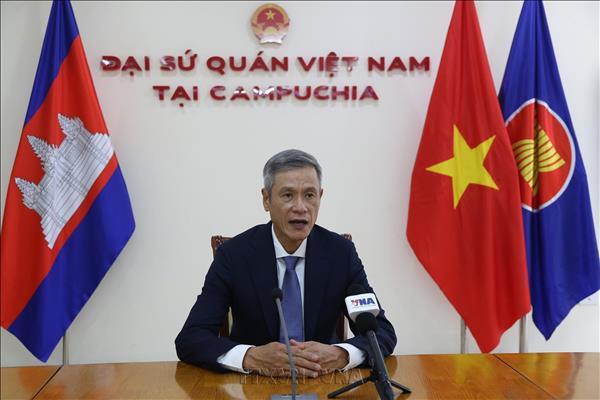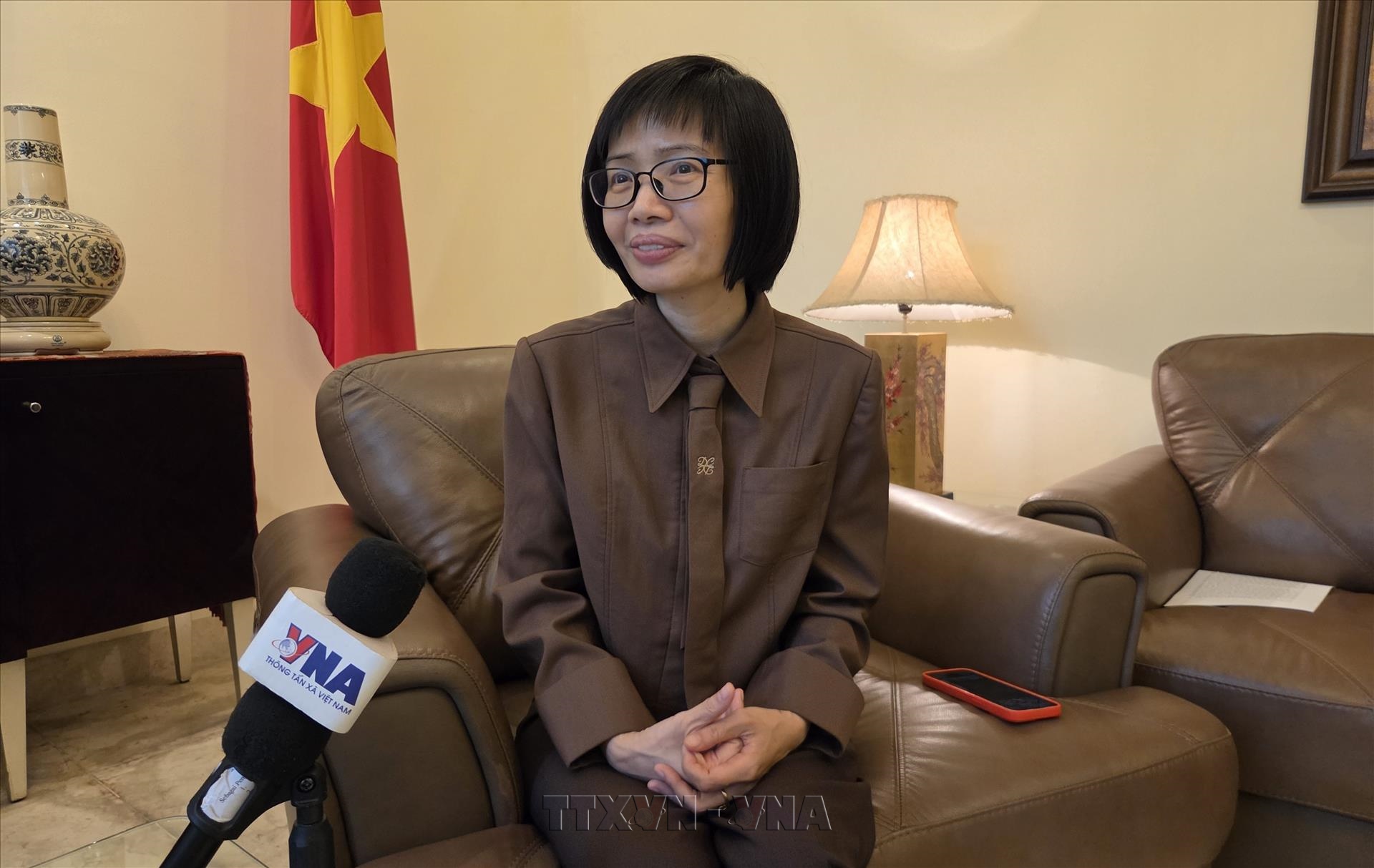
Vietnam has actively supported the Philippines in advancing its priorities as ASEAN Chair in 2026, contributing initiatives to strengthen regional unity, resilience and connectivity, Ambassador Ton Thi Ngoc Huong, Permanent Representative of Vietnam to ASEAN, has said.
In an interview with the Vietnam News Agency ahead of the 49th ASEAN Summit in Manila, the Philippines, the diplomat highlighted the expected key priorities of the event, Vietnam’s contributions to intra-bloc cooperation and the significance of Prime Minister Le Minh Hung’s attendance, reaffirming Vietnam’s commitment to strengthening the group’s central role amid regional and global uncertainties.
For Vietnam’s contributions during the Philippines’ chairmanship, Huong said Vietnam has worked closely with the chair and other member states to promote ASEAN solidarity and consensus, support the timely implementation of the Philippines’ priorities and initiatives, and put forward proposals to strengthen the bloc’s unity, resilience and connectivity, Huong said.
As country coordinator for ASEAN-New Zealand and ASEAN-UK relations, Vietnam has also led the development, adoption and implementation of ASEAN-New Zealand Foreign Ministers' Joint Statement on Promoting Regional Resilience and the ASEAN-UK Foreign Ministers' Joint Statement on Cooperation under the ASEAN Outlook on the Indo-Pacific (AOIP), the diplomat stressed.
These statements reflect ASEAN and its partners' commitments and concrete actions to enhance resilience to global crises that disrupt supply chains and affect energy and food security, while strengthening cooperation in the AOIP's four priority areas and providing practical support for the implementation of the ASEAN Community Vision 2045, she noted.
According to the ambassador, Vietnam has also actively worked to promote ASEAN consensus and strengthen the bloc's role in addressing many complex issues, including consolidating the bloc's common position on the East Sea at meetings and in ASEAN documents, as well as those between ASEAN and its partners, and making positive and responsible contributions to negotiations on the Code of Conduct in the East Sea between ASEAN and China.
In addition, Vietnam early completed its ratification of the ASEAN Petroleum Security Agreement (APSA), helping facilitate the agreement’s early entry into force and strengthen the region’s response to supply shocks. The country has also contributed to the development of the ASEAN Power Grid (APG), recognising energy connectivity as essential to the region’s green transition and sustainable growth.
Huong said PM Hung's participation in the 48th ASEAN Summit shortly after taking office, and his attendance at the 49th ASEAN Summit, demonstrate Vietnam's continued commitment to ASEAN, in line with the foreign policy set out by the Party Congress, which identifies ASEAN as strategically important and a top priority in Vietnam's foreign policy.
The PM's direct participation in the summit, along with his meetings and exchanges with leaders of ASEAN member states and partners, reaffirms Vietnam's strong commitment to ASEAN and its continued contributions to promoting the bloc's development and growth, strengthening its cohesion and maintaining its central role, Huong said.
The ASEAN summits also provide an opportunity for the PM, together with leaders of ASEAN member states and partners, to identify opportunities for advancing substantive and effective cooperation across fields, better meeting the needs of countries in the region and Vietnam for rapid growth and sustainable development, she noted.
Asked about the expected outcomes of the summit, held under the theme “Navigating Our Future, Together”, Huong said it will reaffirm ASEAN’s role and core values, advance regional integration and strengthen resilience amid mounting global challenges.
She stressed that multilateral cooperation, regional cooperation, international law and dialogue remain essential to addressing challenges; enhancing resilience to external pressures; and maintaining peace, security and stability, particularly for small and medium-sized countries facing external pressures.
ASEAN’s efforts to accelerate negotiations with China on an effective and substantive Code of Conduct in the East Sea (COC), in line with international law and the 1982 United Nations Convention on the Law of the Sea (UNCLOS), also reflect the bloc’s role and contribution to regional peace, security and stability.
A key highlight of this year's summit is expected to be the signing of the ASEAN Digital Economy Framework Agreement (DEFA), the region’s first legally binding agreement establishing common rules on digital trade, cross-border data flows, electronic payments, cybersecurity and emerging technologies such as artificial intelligence, and expanding market access for businesses, particularly small and medium-sized enterprises. The DEFA is expected to help double ASEAN’s digital economy to around 2 trillion USD by 2030.
According to the diplomat, the summit is also expected to advance cooperation in energy security and regional resilience through sustainable development and connectivity initiatives, including the APG. ASEAN aims to complete ratification of the APSA before the summit and discuss the possibility of establishing a regional fuel reserve and diversifyig the ASEAN Plus Three Emergency Rice Reserve (APTERR), thus enhancing the bloc's collective response capacity.
For ASEAN’s role amid growing global fragmentation, Huong noted that the bloc’s ability to engage a wide range of partners, including major countries and centres of influence in the region and the world, demonstrates the continued value of multilateral cooperation.
ASEAN-led forums, including ASEAN+1 Summit, ASEAN+3 Summit and the East Asia Summit, provide important platforms for dialogue on peace, security and development and help shape future cooperation priorities, the diplomat said.
The meetings also mark the fifth anniversary of ASEAN’s Comprehensive Strategic Partnerships with China and Australia, providing an opportunity to review cooperation in trade, investment, connectivity and responding to non-traditional security challenges, while exploring new areas such as the digital and green economies, energy security and supply chain resilience in line with the ASEAN Community Vision 2045, Huong went on./.