In the News
Top Vietnamse leader’s upcoming Australia visit to pave way for substantive ties: Scholar
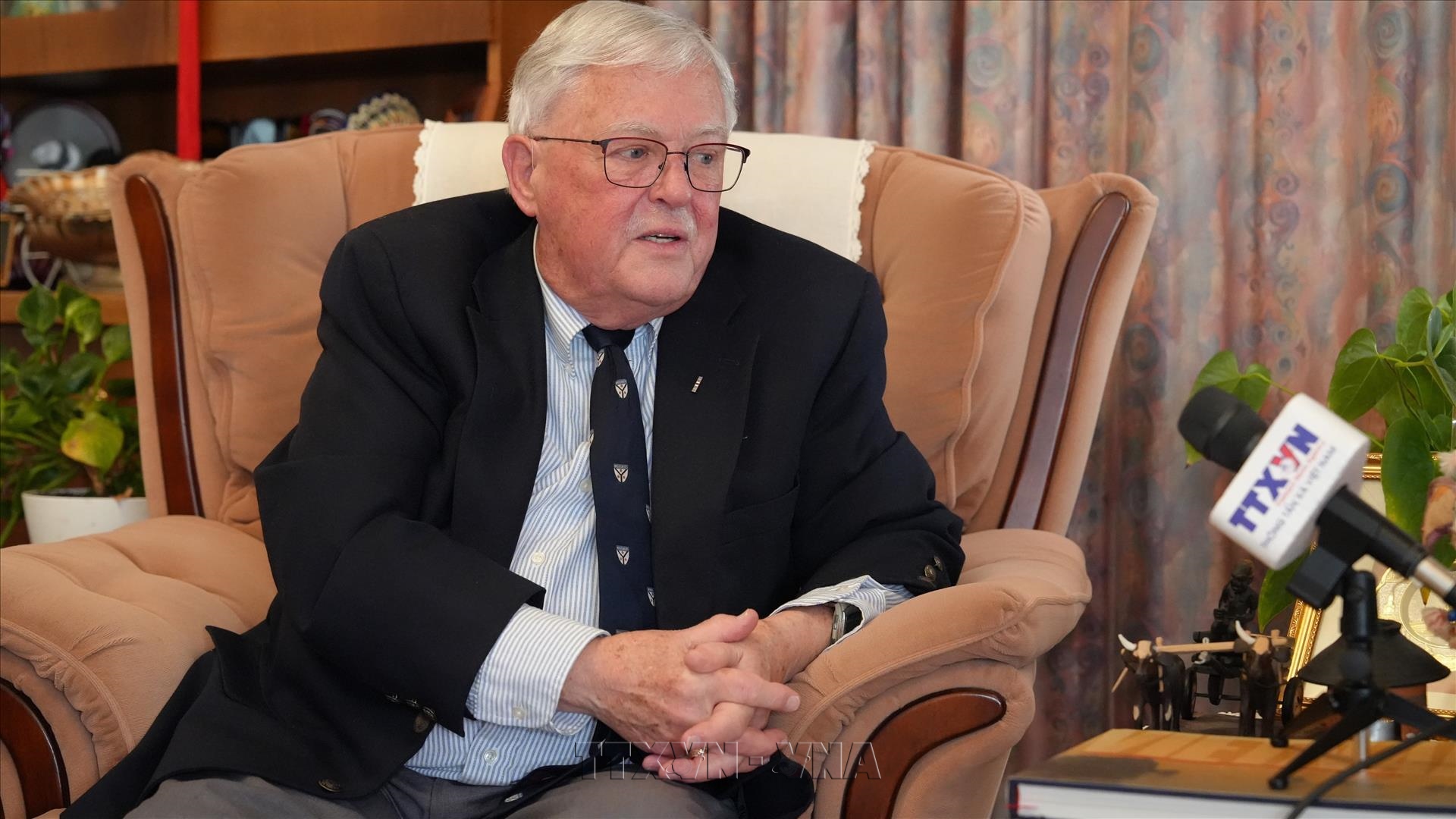
Professor Carl Thayer. Photo: Le Dat/VNA
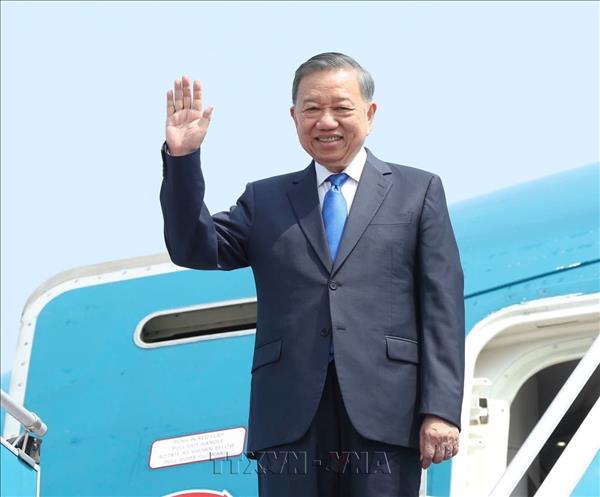
Thayer noted that it is the first state visit to Australia by the top Vietnamese leader in his current role, signaling a shared determination to maintain momentum in bilateral ties at the highest level.
Trade and investment will dominate the agenda, especially the push to double two‑way investment in the coming years. Strategic technologies, including artificial intelligence, cybersecurity, green tech and other emerging fields, are set to become key cooperation areas, with Australia holding considerable strengths that match Vietnam’s development needs, he said.
According to him, hi‑tech agriculture also carries strong long‑term potential. Although the visit may not deliver immediate sector‑specific agreements, he expects it to emerge as a major direction for future cooperation.
Workforce development will remain a key pillar. Education cooperation, he stressed, is increasingly pivoting toward vocational training, advanced skills and building a quality workforce for the digital economy. Australia is putting particular emphasis on boosting women’s participation in science, technology, engineering and mathematics.
About 96% of the current bilateral Action Plan is already in motion or completed on schedule. He therefore expects the two leaders to agree on a new Action Plan to guide the next cooperation phase.
On Vietnam’s institutional reforms and new development path after the 14th Party Central Committee’s third plenum, he said Vietnam is homing in on four priorities, including streamlining the state administrative apparatus and political system, sharpening development planning and coordination, building a new growth model powered by a quality workforce, and strengthening forecasting capacity, risk governance and resilience in an increasingly uncertain global environment. Those priorities, he said, reflect Vietnam’s evolution into a responsible middle power that is proactive and more deeply woven into global and regional affairs.
He observed that Vietnam’s emphasis on both policy design and rigorous enforcement, coupled with adoption of international best practices and standards, will narrow gaps in governance capacity, technical standards and policymaking approaches between the two countries. That, he said, will enable Australia to cooperate more effectively with Vietnam across a broad spectrum, from strategic technologies, digital transformation and innovation to workforce development.
Vietnam and Australia face similar development challenges, making their partnership increasingly complementary. The reforms currently being pursued by Vietnam will further strengthen common ground in priority cooperation areas, he said.
Looking at the long-term outlook for the Vietnam–Australia Comprehensive Strategic Partnership, he said the two countries share strategic interests and common views on maintaining peace and stability in the Indo-Pacific, backing ASEAN centrality, safeguarding security in the Mekong region, and preserving peace, stability and security in the East Sea. Both countries also attach importance to stronger maritime security and tackling transnational and non-traditional security challenges.
On economic resilience, he noted that Vietnam and Australia have built a solid foundation for cooperation through major free trade agreements, including the ASEAN–Australia–New Zealand Free Trade Agreement (AANZFTA), the Regional Comprehensive Economic Partnership (RCEP), and the Comprehensive and Progressive Agreement for Trans-Pacific Partnership (CPTPP). With global supply chains facing persistent disruptions, both countries continue to support multilateralism, a rules‑based trading system and the World Trade Organisation, providing a strong platform for long‑term cooperation that bolsters economic resilience.
Regarding sustainable development, he said both nations have promised to reach carbon neutrality by 2050 and are embarking on a range of climate change response schemes. The two countries also face common challenges in cutting emissions, advancing green energy transition, and developing wind and renewable energy.
Although Australia is not Vietnam's largest development partner, he saw substantial untapped potential for long‑term cooperation in specialised areas like energy transition, climate change adaptation and risk governance. Climate change is a global challenge, he stressed, and if international cooperation mechanisms weaken, every country will feel the consequences. Vietnam and Australia must therefore keep working closely to uphold international commitments.
Thayer praised Vietnam’s practice of tying policy enforcement to clearly defined goals, timelines and measurable outcomes. That approach, he said, mirrors Australia’s governance culture and will provide a solid basis for the two countries to roll out cooperation schemes effectively in the years ahead.
He expressed confidence that the bedrock of Vietnam–Australia relations will stay strong no matter how Australia’s political landscape changes after elections. The two countries will continue their long‑term work together to promote Southeast Asian peace and stability, uphold ASEAN centrality, and ensure that all East Sea activities comply with international law, particularly the 1982 UN Convention on the Law of the Sea, he added./.