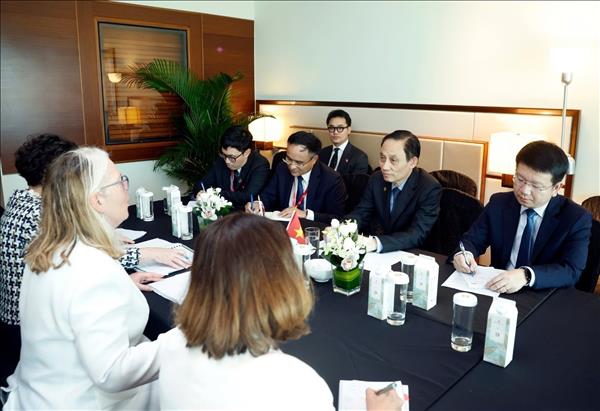
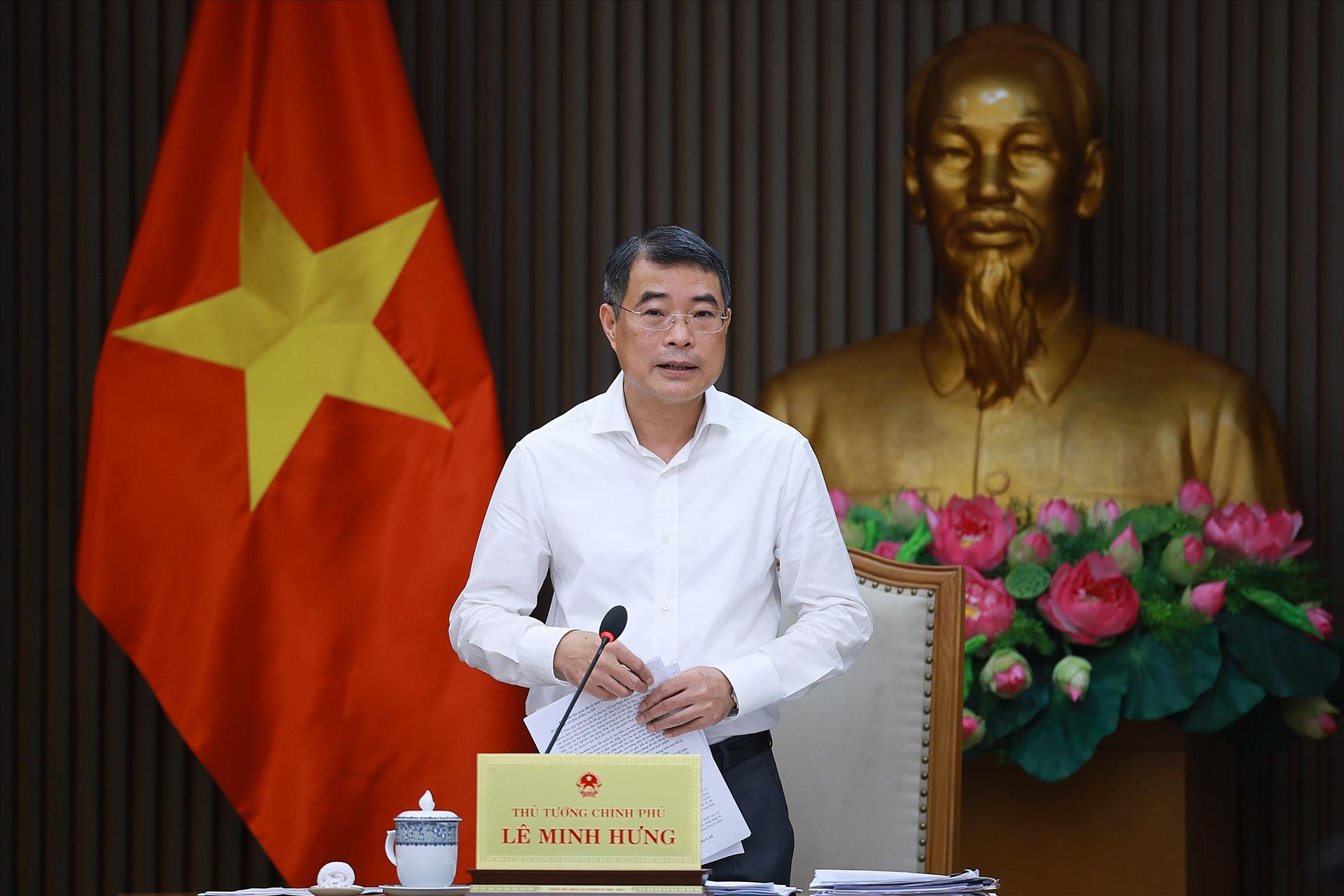
Prime Minister Le Minh Hung has ordered that second campuses of Bach Mai and Viet Duc hospitals in the northern province of Ninh Binh become operational in the second quarter without further delay, as directed by Party General Secretary and State President To Lam.
Chairing a working session between Government leaders and relevant ministries and agencies in Hanoi on April 14, PM Hung said the Government is moving aggressively to break long-standing bottlenecks and revive stalled projects, particularly in the health sector.
Stressing the need for clearly defined tasks, strict timelines, responsible units, and measurable results, as demanded by the top Party and State leader, he tasked the Deputy PMs with personally leading coordination efforts across ministries and agencies to tackle existing issues once and for all.
Regarding the second campuses of Bach Mai and Viet Duc hospitals, the PM pointed out that the remaining hurdles are largely coordination-related and fall within the purview of the Ministry of Health (MoH) and relevant ministries.
He requested the ministries of health, construction, national defence, and public security, within their respective functions, to pool maximum resources and adopt concerted, decisive, and effective action to clear the final obstacles. That means rushing through construction paperwork, fire safety approvals, environmental permits, and other pending procedures.
Specific mechanisms and policies for operating the two campuses must be finalised by the MoH no later than April.
The MoH was also ordered to conduct a thorough review of all tasks and projects assigned by competent authorities to follow key resolutions from the Party, Politburo, National Assembly, and Government, including conclusion No. 18 of the Party Central Committee and the Cabinet’s action plan, with particular focus on key tasks for 2026. The ministry must team up with other ministries and agencies to ensure both quality and progress, while keeping the PM informed with regular updates.
The ministry was also asked to urgently finalise the draft revised Food Safety Law and state management functions on food safety, craft a roadmap for periodic or free annual health check-ups for citizens from 2026, especially those in remote and disadva ntaged areas. It must overhaul the pharmaceutical distribution system to make it more scientific and efficient.
Citing the Politburo’s Resolution 57, the PM demanded the MoH race to build comprehensive and up-to-date databases by the second quarter, covering children, healthcare environment, preventive medicine, persons with disabilities, medical examination and treatment, social assistance, and food safety.
At the same time, it must accelerate administrative reform by simplifying procedures and business conditions, cutting compliance time and costs for citizens and enterprises, and redesign processes to reuse existing data so that citizens and businesses no longer need to resubmit the same information. Decentralisation and delegation of authority must also be accelerated in line with the conclusion No. 18, which limits ministerial-level agencies to handling no more than 30% of administrative procedures in their sectors.
Deputy PM Pham Thi Thanh Tra was assigned to directly oversee and work with the MoH on these tasks.
The Government leader also weighed in on a list of proposals, including payment for health insurance-covered medical expenses exceeding budget estimates from 2018–2022, preparation for public investment projects under the medium-term plan, adjustments to preferential and special allowances, the roadmap for hospitals to charge real full costs, a scheme to improve state management in food safety, and pilot policy mechanisms in the health sector, among others./.