Strong first-half growth
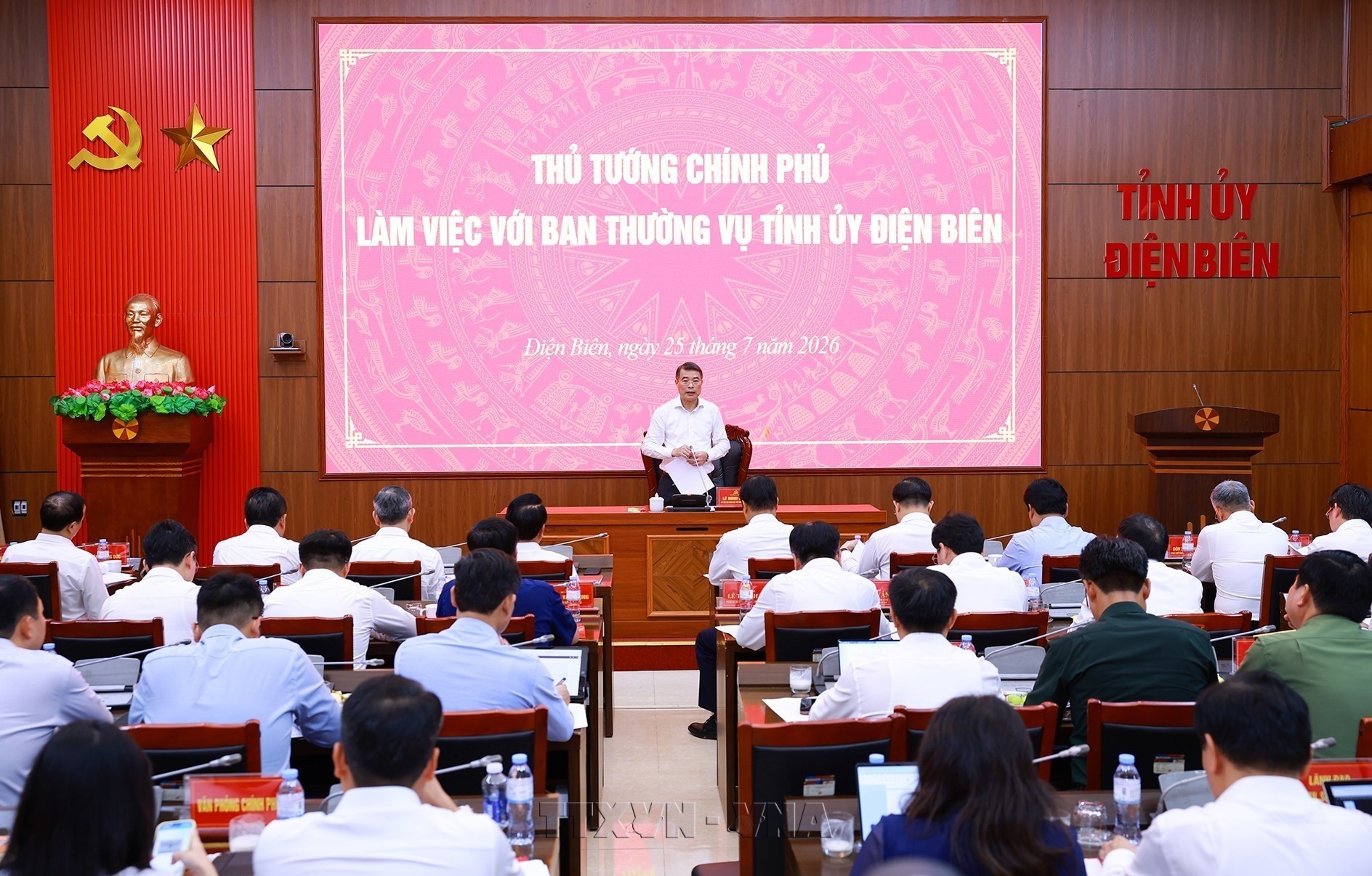
According to a report presented by the provincial Party Committee, Dien Bien's gross regional domestic product (GRDP) expanded by 8.67% in the first half, outpacing the national average of 8.18%.
Its economic structure continued to tilt toward services, which accounted for 62.35% of output and remained the primary growth engine. Industrial production rose 16.03% year-on-year, while total retail sales and consumer service revenue climbed 14.86%, and trade turnover jumped 26.68%. Tourism revenue exceeded 1.7 trillion VND (64.59 million USD) as the province drew nearly 1 million visitors, a 20% rise from a year earlier.
Dien Bien led the nation in public investment disbursement, hitting 54.3% of its annual plan.
Operations under a two-tier local administration model stayed stable, and an administrative restructuring cut the number of villages and residential groups by 558, or 38.6%.
Gains were recorded in education, health care, sustainable poverty reduction and employment, while authorities pressed on with the 500-day national campaign to search for, recover and identify fallen soldiers’ remains. National defence - security held firm, social order was preserved and cooperation with neighbouring border localities kept expanding.
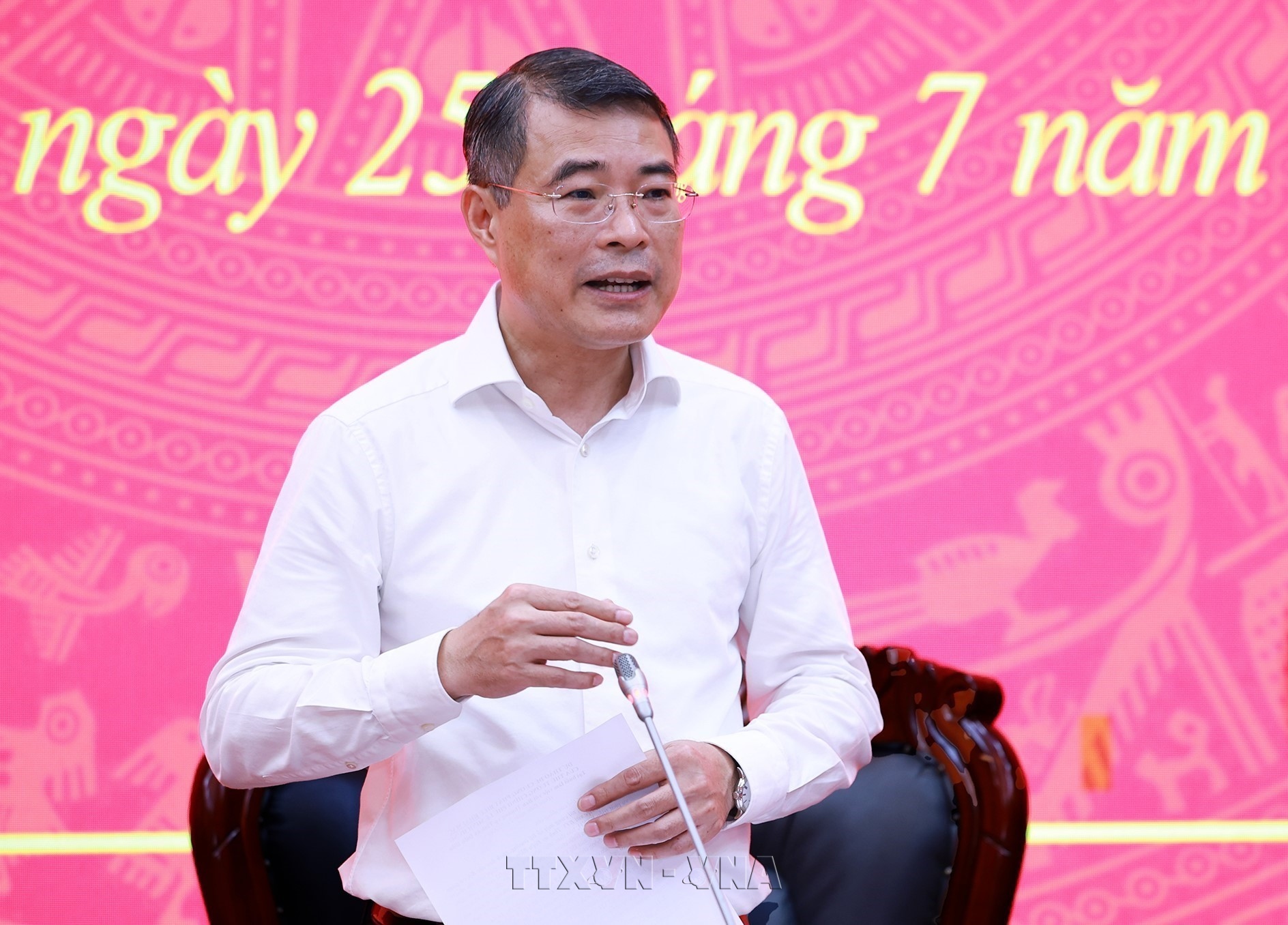
PM Hung stressed the need to fully and effectively follow the 14th National Party Congress’s resolution and subsequent Party resolutions and conclusions. Dien Bien has ample potential and competitive advantages, including the fact that it was spared administrative merger, but has yet to engineer a major breakthrough because long-identified internal bottlenecks haven’t been fully cleared, he said.
Unlocking border, aviation, heritage advantages
The PM urged Dien Bien to make services its principal growth driver, build modern border-gate economic zones at Tay Trang and A Pa Chai, and establish itself as a cross-border trade and logistics hub for Vietnam’s northwest and a gateway to neighbouring countries.
He also called for leveraging the local unique assets, including Dien Bien Airport, Dien Bien Phu special national historic site, wartime legacy, Muong Thanh rice field and Ban Flower Festival, to craft distinctive tourism products anchored in history, culture and experiential travel.
Dien Bien should accelerate processing and manufacturing while modernising the energy sector, Hung said, urging the province to maximise its 23 hydropower plants and proactively seek to include wind and solar projects in the revised national power development plan.
The province was told to pilot the low-altitude economy effectively to generate new growth momentum and push concentrated, high-value agriculture with deeper processing, sustainability and clear traceability.
The PM pressed Dien Bien to retain its leading position in public investment disbursement, targeting 100% by late 2026. Resources should be concentrated on critical infrastructure, with funds reallocated from slow-moving projects to those capable of faster rollout, he said.
The province’s revised master plan must mesh with national and regional planning frameworks, and the “four growth poles” model must be activated, with the Dien Bien Phu–Muong Thanh–Muong Phang cluster serving as the central economic nucleus.
Authorities were also directed to settle long-delayed projects during 2026 and prioritise transport links that maximise Dien Bien Airport’s strategic advantages and deepen regional connectivity.
On digital transformation, he ordered a vigorous 100-day campaign to clear bottlenecks across the political system, eliminate mobile and internet black spots in remote villages, and invest in integrated digital infrastructure built on the national digital architecture.
Institutional reform must become a competitive edge by improving the business climate, with less administrative procedures, business conditions and compliance costs, and faster decentralisation and delegation of authority.
Private sector development, social welfare, health care, education, culture and sustainable poverty reduction, especially in ethnic minority and border areas, were also spotlighted.
He underscored the need to safeguard political stability, national defence-security and border sovereignty while expanding economic cooperation and cultural exchanges with northern Lao provinces and China’s Yunnan province to facilitate border trade and build a borderline of peace, friendship, cooperation and development.
Earlier the same day, ahead of the 79th anniversary of War Invalids and Martyrs Day (July 27), the PM laid wreaths and offered incense in tribute to President Ho Chi Minh and fallen soldiers at the Ho Chi Minh memorial house on E2 hill, the Dien Bien Phu martyrs' temple and A1 martyrs' cemetery.
He also visited and presented gifts to Phi Huong Dung, a war veteran with a 42% disability rating, at his residence in Dien Bien Phu ward./.