Notably, real estate FDI does not stand alone. Behind these capital flows is the expansion of manufacturing, trade and infrastructure, which directly generates demand for industrial land, factories, warehouses, offices and housing for workers.
More room for real estate
According to the National Statistics Office under the Ministry of Finance, Vietnam had attracted 40.63 billion USD in registered foreign investment by the end of August, up 55.4% year on year. Of the total, newly registered capital reached 21.72 billion USD, up 96.8%, while additional capital stood at 12.21 billion USD, up 14.7%.
Real estate attracted 5.32 billion USD, accounting for 15.7% of total newly registered and additional capital, ranking second after processing and manufacturing. The latter attracted 20.18 billion USD, equivalent to 59.5%.
Disbursed FDI reached 17.25 billion USD in the first eight months, up 12% year on year and the highest level recorded for the same period in five years. Of this, 1.29 billion USD was invested in real estate, accounting for 7.5% of total disbursed FDI.
However, the structure of FDI is creating notable demand for industrial real estate. In the first eight months, processing and manufacturing alone attracted 20.18 billion USD in newly registered and additional capital. New manufacturing projects bring demand for industrial land, ready-built factories, warehouses, logistics centres, offices and housing for experts, engineers and workers.
This is also why industrial and logistics real estate is expected to remain a direct beneficiary of supply chain shifts. Experts at Savills Vietnam said industrial real estate remains one of the country’s segments with positive prospects, supported by manufacturing growth, foreign investment and supply chain diversification. Demand is shifting towards modern logistics facilities and industrial parks with good infrastructure connectivity.
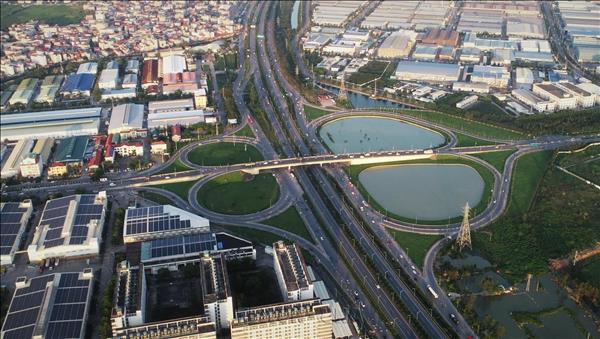
According to Su Ngoc Khuong, Senior Director of Investment at Savills Vietnam, infrastructure will become one of the key drivers shaping a new development cycle for the property market. Major transport projects are improving inter-regional connectivity and creating new growth poles along economic corridors.
This becomes clearer when FDI flows are viewed alongside infrastructure expansion. When a new factory begins operations, demand extends beyond production space. An accompanying ecosystem of warehouses, transport, services, retail, accommodation and housing also emerges.
As a result, experts said the impact of FDI on real estate can continue for years after a project is licensed.
Market increasingly differentiated by project quality
Strong growth in foreign capital does not mean all property segments will benefit equally. According to Savills, Vietnam’s market in 2026 is entering a more selective growth phase.
Giang Huynh, Director of Research and Consultancy at Savills Ho Chi Minh City, said the market is not entering an across-the-board recovery cycle, but rather one marked by increasingly clear differences among segments, locations and asset quality. Investors are paying greater attention to fundamentals, operational efficiency and long-term value.
For industrial real estate, this could shift competitive advantages from large land reserves towards the ability to meet the requirements of higher-standard industries.
Another change could emerge in the housing market. An increase in large-scale FDI projects often creates additional demand for housing for experts, engineers and workers in industrial centres. This expands the market from rental and affordable housing to integrated urban developments with services around industrial parks.
Savills said capital is tending to flow towards assets with good locations, high quality, stable income-generating capacity and long-term growth potential. This is also why the real estate M&A market may remain active, but in a more selective manner rather than across all segments.
With 5.32 billion USD in registered FDI flowing into real estate in just eight months, alongside 20.18 billion USD into processing and manufacturing, the market is receiving two parallel sources of momentum: direct investment in property assets and property demand generated by manufacturing activity./.