In the News
Key Party leader calls for effective implementation of policies to drive Da Nang’s sustainable development
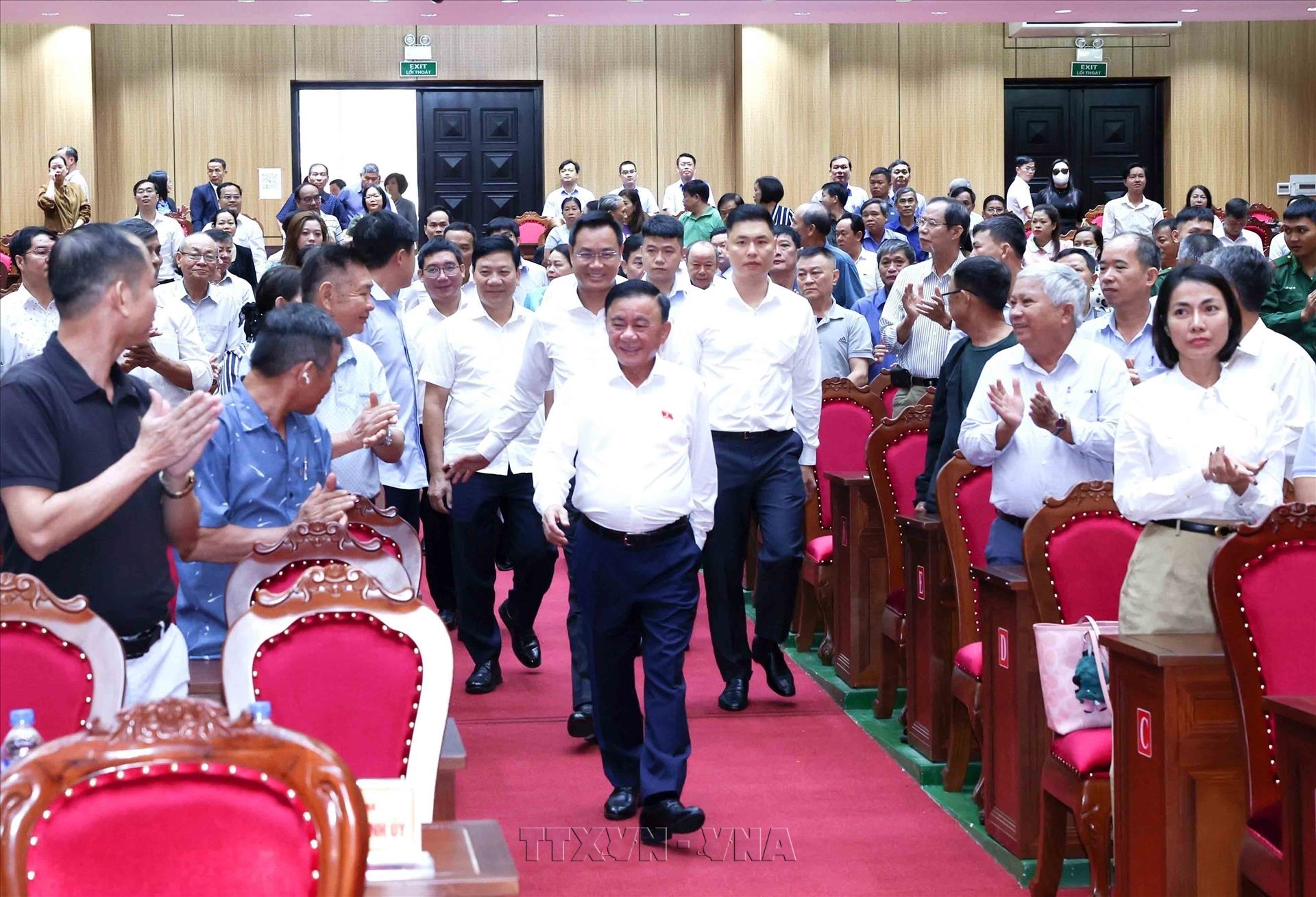
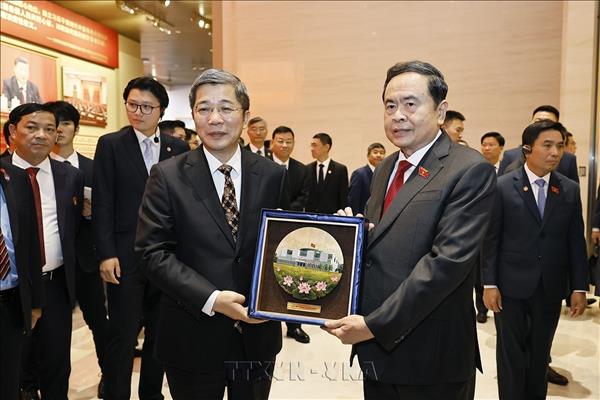
Politburo Member and Standing Member of the CPV CC's Secretariat Tran Cam Tu meets with Da Nang city's voters. Photo:VNA
Speaking at a meeting with voters from the central city’s Hai Chau, Hoa Cuong, Thanh Khe, An Hai and Son Tra ward, he praised their frank, responsible and practical opinions, which covered a wide range of issues of public concern.
He noted that 2026 is a particularly important year for implementing the Resolution of the 14th National Party Congress and pursuing the country’s development goals in a new period. Vietnam’s socio-economic situation showed positive changes in the first nine months of the year, with economic growth exceeding 9%, major economic balances maintained, and production, business, investment, trade and services continuing to improve.
These results reflected the Party’s leadership, the State’s governance and the efforts of the entire political system, the business community and the people, he said.
The upcoming second session of the 16th National Assembly will require further innovation in lawmaking and legal system improvement. Laws must not only serve regulatory purposes but also facilitate development, remove bottlenecks, unlock resources and protect the legitimate rights and interests of the people.
However, he stressed that effective implementation is even more important than institutional reform. Although many major policies and mechanisms have been introduced and some institutional obstacles gradually removed, the key challenge is ensuring that policies are translated into practical results more quickly and effectively.
He called for clear assignments, responsibilities, authority, timelines and expected results, alongside stronger inspection and supervision and timely action to resolve problems arising in practice.
Regarding Da Nang’s development, the Standing Member of the Party Central Committee’s Secretariat commended the city’s economic performance, with gross regional domestic product (GRDP) growing 10.31% in the first nine months of 2026 and 11.83% in the third quarter.
Following the expansion of its development space, Da Nang has gained additional advantages in marine economy, logistics, tourism, services, science and technology, innovation and human resources. However, he emphasised that these advantages could become genuine growth drivers only with appropriate mechanisms, effective governance and decisive implementation, supported by the participation and consensus of local residents.
He said the Party Central Committee will continue refining mechanisms and policies to help the city better harness its potential. Da Nang, for its part, should proactively identify bottlenecks, draw lessons from practical experience and propose new mechanisms and approaches.
On the two-tier local administration model, he stressed that the restructuring of the administrative apparatus must go beyond reducing the number of agencies. Its ultimate goal was to establish an administration that is closer to the people, clearer in its accountability, more effective and better able to serve them. Residents should have to make fewer trips, face faster procedures and receive clearer responses to their petitions.
Decentralisation, he stressed, must be accompanied by adequate personnel, resources and accountability. Matters that could be solved at the grassroots level should be handled there, without forcing residents to travel between multiple agencies. The city should also review staffing arrangements and address difficulties faced by local authorities, particularly in areas with large populations and heavy workloads.
The leader also called for continued reform of personnel work, from recruitment and placement to training and evaluation, with political integrity, competence, credibility and performance serving as key criteria.
On science and technology, innovation and digital transformation, people, knowledge and innovative capacity remain decisive factors in rapid and sustainable development. Da Nang should move beyond isolated technology applications towards improved governance, data exploitation, higher labour productivity and better public services. As a locality with experience in administrative reform and digital transformation, the city should continue piloting new approaches and sharing lessons to help improve national policies.
He further stressed that economic growth must ultimately translate into jobs, higher incomes, better education and healthcare, housing, a healthier living environment and improved public services. For Da Nang, rapid growth must go hand in hand with environmental protection, social welfare and quality of life.
The city should improve school planning, ensure an adequate teaching workforce, enhance substantive educational quality and train high-quality human resources. It should also strengthen grassroots healthcare, deploy qualified medical personnel to local facilities and use technology and data to connect lower-level and higher-level hospitals, while expanding regular health check-ups, particularly in remote and ethnic minority areas.
The leader requested the city’s delegation to the National Assembly to carefully consider every voter recommendation, clarify the authority responsible for each issue, set deadlines, monitor progress and inform voters of the results.
He expressed his confidence that, with its tradition of solidarity, dynamism and creativity, and with the support of residents and businesses, Da Nang will overcome challenges, strengthen socio-economic development and Party building, and emerge as an important growth pole for the country./.