
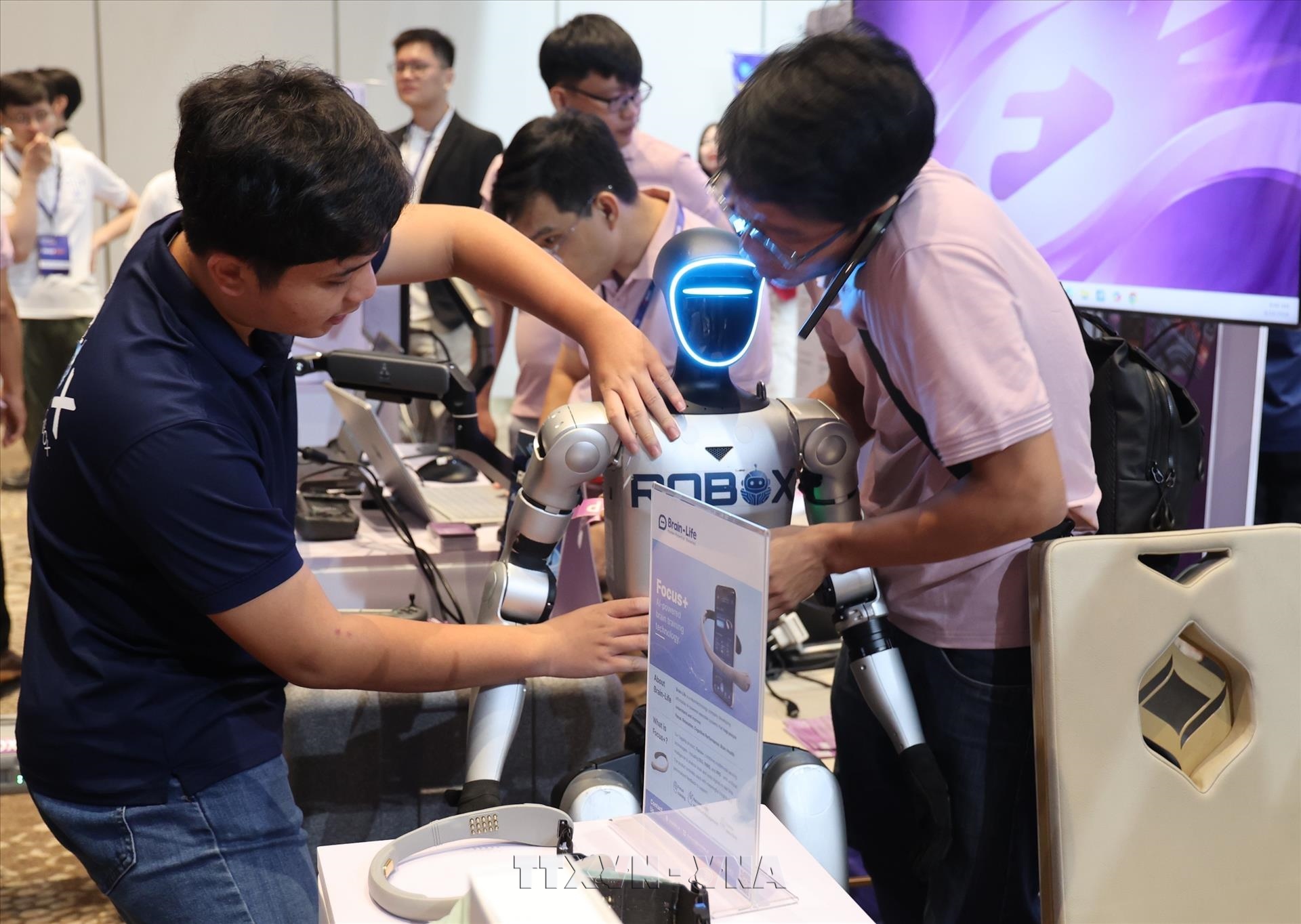
Several new robot models are showcased at InnoEx 2026. Photo: VNA
The annual event, running through August 20, is jointly organised by the InnoEx International Innovation Alliance, the Ho Chi Minh City Young Business Association (YBA HCM) and Investment and Business Partners (IBP).
InnoEx 2026 focuses on major shifts reshaping the global economy, including artificial intelligence (AI), data, automation, green transition, international trade and new business models. It also provides a platform connecting businesses, startups, investors and solution providers, facilitating partnerships, investment and access to knowledge and technologies.
The event is expected to attract more than 4,000 CEOs, founders and senior executives, over 70 international investment funds and hundreds of experts.
Truong Ly Hoang Phi, head of the InnoEx 2026 Organising Board, said the event goes beyond showcasing new technologies to create opportunities for businesses to rethink their strategies, restructure operations and build sustainable digital assets.
Addressing the opening ceremony, Deputy Secretary of the Ho Chi Minh City Party Committee Dang Minh Thong said innovation has become increasingly urgent as the city enters a new development phase.
The southern metropolis targets average annual GRDP growth of at least 10% during 2026-2030, with the digital economy accounting for around 40% of GRDP by 2030, and aims to become an Asian science, technology and innovation hub by 2045, he added.
These goals cannot be achieved by extending the old growth model, he said, stressing that new growth drivers must rely more heavily on science and technology, innovation, digital and green transformation, labour productivity and high-quality human resources.
With strengths in finance, industry, high technology, trade, seaports, logistics, education and research, Ho Chi Minh City should become a place for technology research, testing and commercialisation, rather than merely a market for technology adoption, he said.
Thong urged InnoEx 2026 to focus on technologies capable of shaping competitiveness over the next five to 10 years, including AI, data, semiconductors, biotechnology, green technology, clean energy, smart logistics, digital finance and the circular economy.
He also emphasised the need to shift from networking to co-creation and from showcasing solutions to addressing real-world challenges, with businesses playing a central role.
Ho Chi Minh City will also expand regulatory space for safe technology testing, open relevant datasets, invite businesses and research institutions to address urban challenges, and create more opportunities for investment and cooperation. It will continue developing shared digital, data and research infrastructure, promoting technology testing and public procurement, supporting startups and attracting technology groups, R&D centres, investment funds and high-quality talent, he added./.


