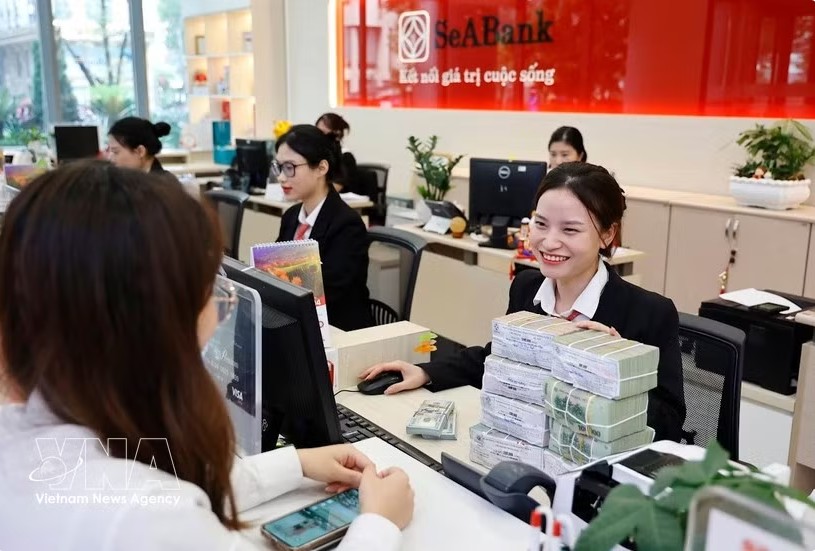
A transaction office of SeABank. In Resolution No. 148/NQ-CP, the Government requested the monetary policy be governed proactively and flexibly, in close coordination with an appropriately expansionary fiscal policy and other macroeconomic measures to support growth, control inflation, maintain macroeconomic stability and safeguard major economic balances. Photo: VNA
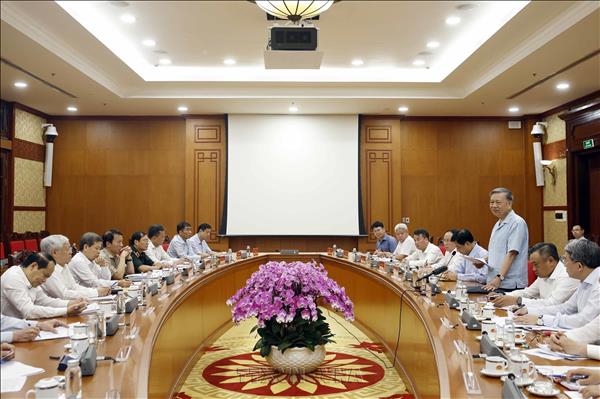
In Resolution No. 148/NQ-CP on the Government’s regular meeting for May 2026, agencies were instructed to review tasks scheduled for completion in June and the second quarter of 2026 and focus resources on ensuring their timely and effective execution.
Ministries, sectors, localities, and state-owned enterprises were instructed to stay aligned with the target of double-digit economic growth in 2026 and identify untapped growth drivers to promote so as to meet the target. They are also required to closely monitor international and regional developments, as well as policy shifts in major economies, improve forecasting quality and proactively propose timely and effective response measures.
The monetary policy should be governed proactively and flexibly, in close coordination with an appropriately expansionary fiscal policy and other macroeconomic measures to support growth, control inflation, maintain macroeconomic stability and safeguard major economic balances. Efforts should also be made to promote exports, imports and sustainable consumption while keeping the trade deficit under control.
Authorities were tasked with removing bottlenecks and refining policies to foster the safe, healthy, transparent and efficient development of capital markets, including the stock market, corporate bond market and other medium- and long-term financing channels. Diversifying capital sources and supply chains is expected to ease pressure on the banking system and enhance the economy’s capacity to absorb investment.
The resolution also calls for effective market and price management through the flexible use of policy tools in line with market principles and legal regulations to maintain supply – demand balance and price stability. Any adjustments to state-managed goods and service prices, including prices of electricity, medical and educational services, must be carefully considered to minimise their impact on the consumer price index (CPI) and ensure inflation remains within target. Inspections and oversight will be strengthened, with strict action against speculation, hoarding, market manipulation and unjustified price hikes.
Measures to increase state budget revenues at both central and local levels are requested to be implemented effectively, including broadening the tax base and combating revenue losses, particularly in e-commerce, digital platform businesses and cross-border services. Authorities will intensify efforts against transfer pricing, tax evasion and tax fraud while strictly enforcing measures to promote thrift and prevent wastefulness.
Ministries, sectors and localities, particularly those with public investment disbursement rates below the national average, are urged to accelerate public investment spending.
Priority will be given to accelerating site clearance, compensation, resettlement support and construction material supply, along with expediting projects linked to APEC 2027, nationally important projects and key transport infrastructure works. These projects must meet requirements on quality, efficiency and schedule while preventing losses, wastefulness and corruption.
Authorities were also instructed to effectively implement the conclusions of Party General Secretary and State President To Lam regarding the implementation of the Secretariat's Directive No. 34-CT/TW on social housing development. They are also told to review and propose new housing development mechanisms and policies that align with the Constitution, Party guidelines and public needs.
The Government stressed the need to ensure adequate supplies of electricity and fuel products for production, business activities and household consumption, particularly during the peak summer period of 2026, with no shortages permitted under any circumstances. The development of key power generation and transmission projects must be accelerated, alongside nationwide efforts to promote energy efficiency.
Relevant agencies were directed to promptly resolve obstacles facing major industrial projects in energy, oil and gas, manufacturing and mineral processing sectors in order to expand domestic production capacity, secure raw material supplies and strengthen economic self-reliance.
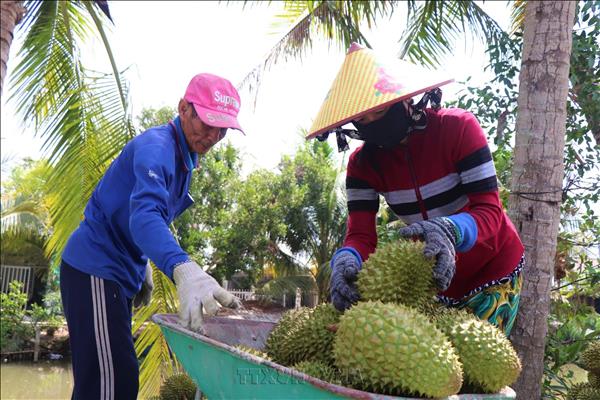
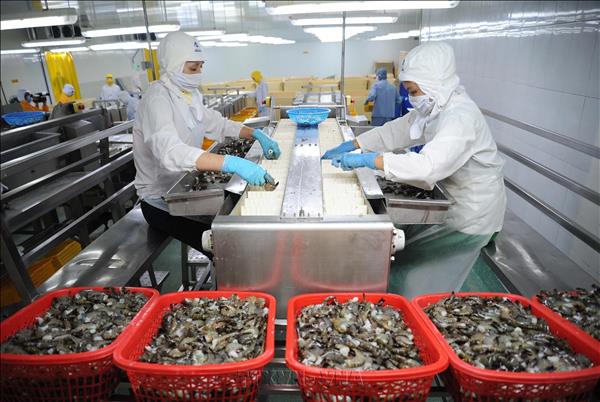
The resolution also emphasises boosting the production, consumption and export of agricultural, forestry and fishery products while ensuring food security under all circumstances. Agricultural restructuring should continue toward a greener, more circular and sustainable model, with greater application of high technology, climate resilience measures, traceability systems and national branding for key products.
Efforts will be intensified to develop the domestic market while expanding and diversifying export markets. Consumer demand stimulus programmes, trade promotion activities and product marketing campaigns will be strengthened, and customs clearance procedures further streamlined to facilitate business operations. Logistics development will be promoted as the backbone of domestic commerce through integrated multimodal transport networks encompassing air, rail, sea, inland waterway and road transport.
The Government also ordered the prompt and effective implementation of 14 laws and resolutions adopted by the 16th National Assembly during its first session. Detailed regulations guiding their enforcement must be issued swiftly to ensure consistency and avoid legal vacuums.
Ministries and agencies were instructed to review progress on draft laws and resolutions under their responsibility and proactively propose legislative initiatives for consideration at extraordinary sessions of the National Assembly. Agencies were also reminded to strictly comply with Government and Prime Minister directives on drafting detailed regulations guiding implementation.
The Government highlighted the importance of developing a high-quality workforce for emerging sectors such as digital transformation, green transition and climate change response. Labour market developments should be closely monitored to prevent localised supply – demand imbalances.
Strategic technology development tasks under the Prime Minister's Decision No. 808/QD-TTg must be completed on schedule, with developing strategic technology products identified as a top priority. At the same time, summer tourism stimulus programmes should be expanded, linking tourism development with the preservation and promotion of cultural heritage values.
Authorities were directed to fully and promptly implement social welfare policies, improve healthcare services and strengthen public health protection. Surveillance systems must be enhanced to detect and respond early to infectious disease risks during the hot season. A review of the pharmaceutical distribution system is to be completed in June 2026, with a focus on reducing intermediary layers and lowering costs for citizens and society.
The resolution also calls for continued enhancement of national defence and security capabilities, as well as political security and social order safeguarding. Efforts to combat corruption, misconduct and wastefulness must be intensified while citizen reception and complaint resolution mechanisms should be implemented effectively to prevent disputes from escalating into security hotspots.
The country will continue to elevate both bilateral and multilateral diplomacy, and effectively implement international treaties and agreements, particularly outcomes achieved through the high-level external engagements. The Government stressed the need to maximise opportunities for growth and development, step up policy communication, proactively guide public opinion, build social consensus and firmly counter false, distorted and hostile information./.