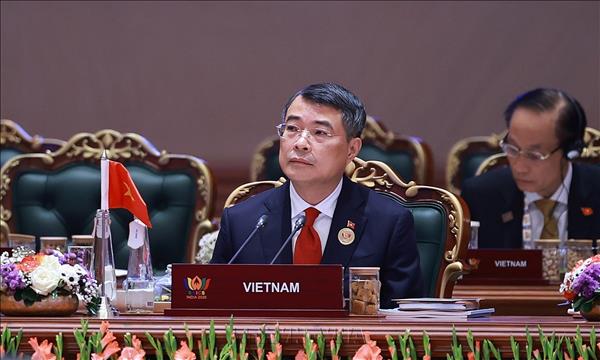
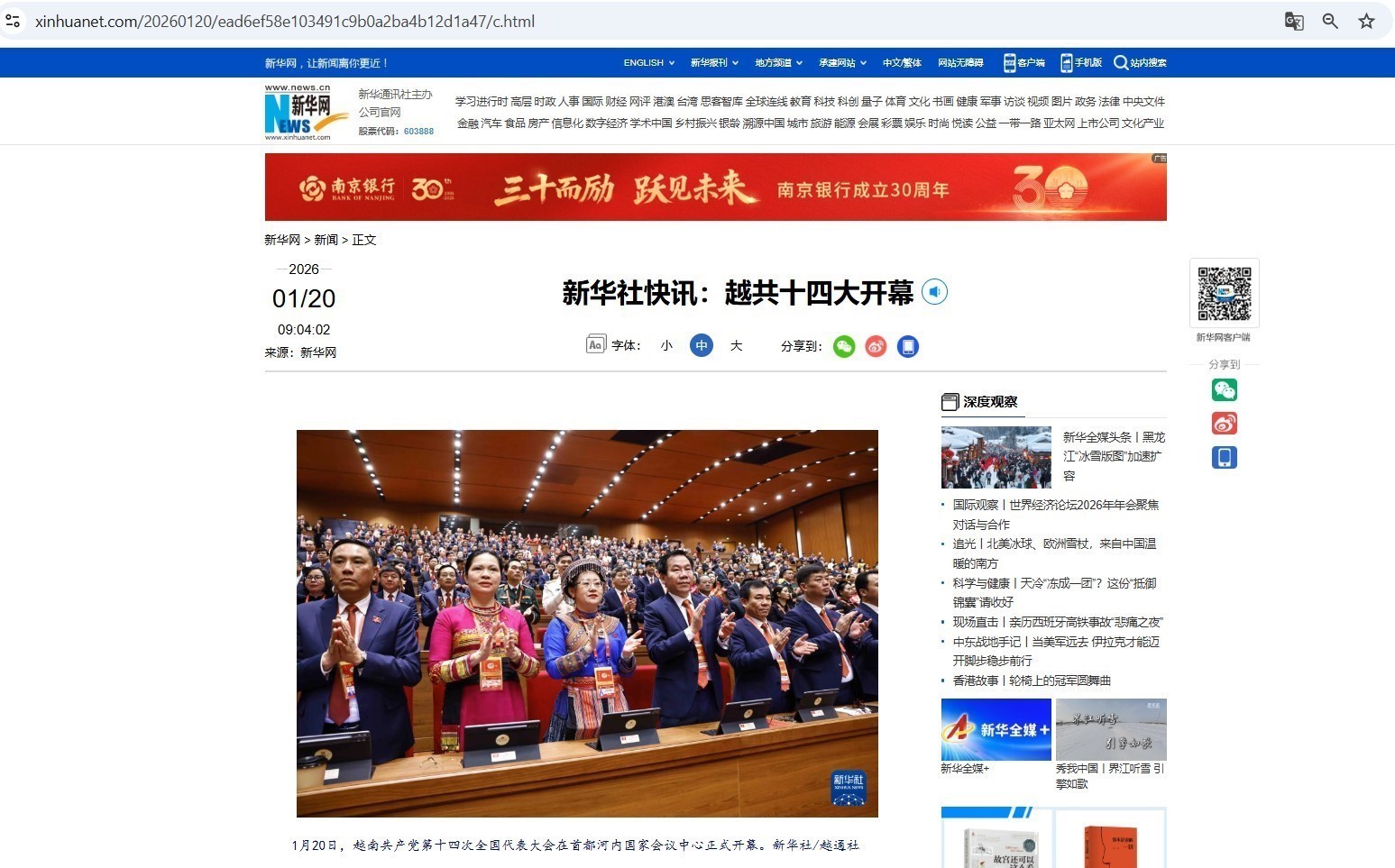
The official commencement of the event, anchored by a live broadcast of Party General Secretary To Lam’s opening keynote speech, was closely monitored by prominent international press agencies and news networks. Analysts worldwide focused heavily on Vietnam's ambitious 10% economic growth target, alongside its development strategies designed to navigate a highly volatile regional and global landscape.
In-Depth Coverage from Regional Neighbors
China’s leading state media organs—including Xinhua, the People’s Daily, and China Central Television (CCTV)—provided exhaustive coverage of the political gathering. Their reports emphasized that the Congress faces the dual task of auditing the execution of the 13th Congress’s resolutions and evaluating four decades of Doi moi (Renewal). The coverage noted that the assembly will evaluate major milestones, analyze existing bottlenecks and their root causes, and derive long-term theoretical and practical insights for the nation's future.
Furthermore, international observers anticipate that the Congress will ratify strategic directions, objectives, and foundational breakthroughs for the 2026–2030 cycle with a forward-looking vision toward 2045, while also restructuring the political apparatus and voting in the new 14th CPV Central Committee.
Chinese outlets also shed light on an innovative administrative shift: the consolidation of the Political, Socio-economic, and Party-building review papers into a singular, cohesive Political Report. For the first time, this document operates directly as an actionable program with explicit tasks, deadlines, and assigned accountabilities. This draft garnered massive public engagement, pulling in roughly 14 million consultative opinions from across the nation.
In Singapore, prominent platforms like The Straits Times and CNA zeroed in on Vietnam's resolve to sustain a double-digit (10%) growth rate through the end of the decade. Media noted this target stands despite a complex web of hurdles, ranging from natural catastrophes, severe weather, and health crises to geopolitical rivalries, supply chain vulnerabilities, food and energy insecurities, and deeply rooted domestic structural bottlenecks. Singaporean journalists observed that Vietnam’s push for climate-adaptive infrastructure and enhanced regional and international connectivity remains a cornerstone of its economic durability.
Perspectives from Malaysia, Cuba, and Africa
In Malaysia, the news site Free Malaysia Today drew attention to Hanoi's pledge to dismantle bureaucratic red tape, a move aimed at boosting technological innovation and accelerating international trade while firmly defending national sovereignty.
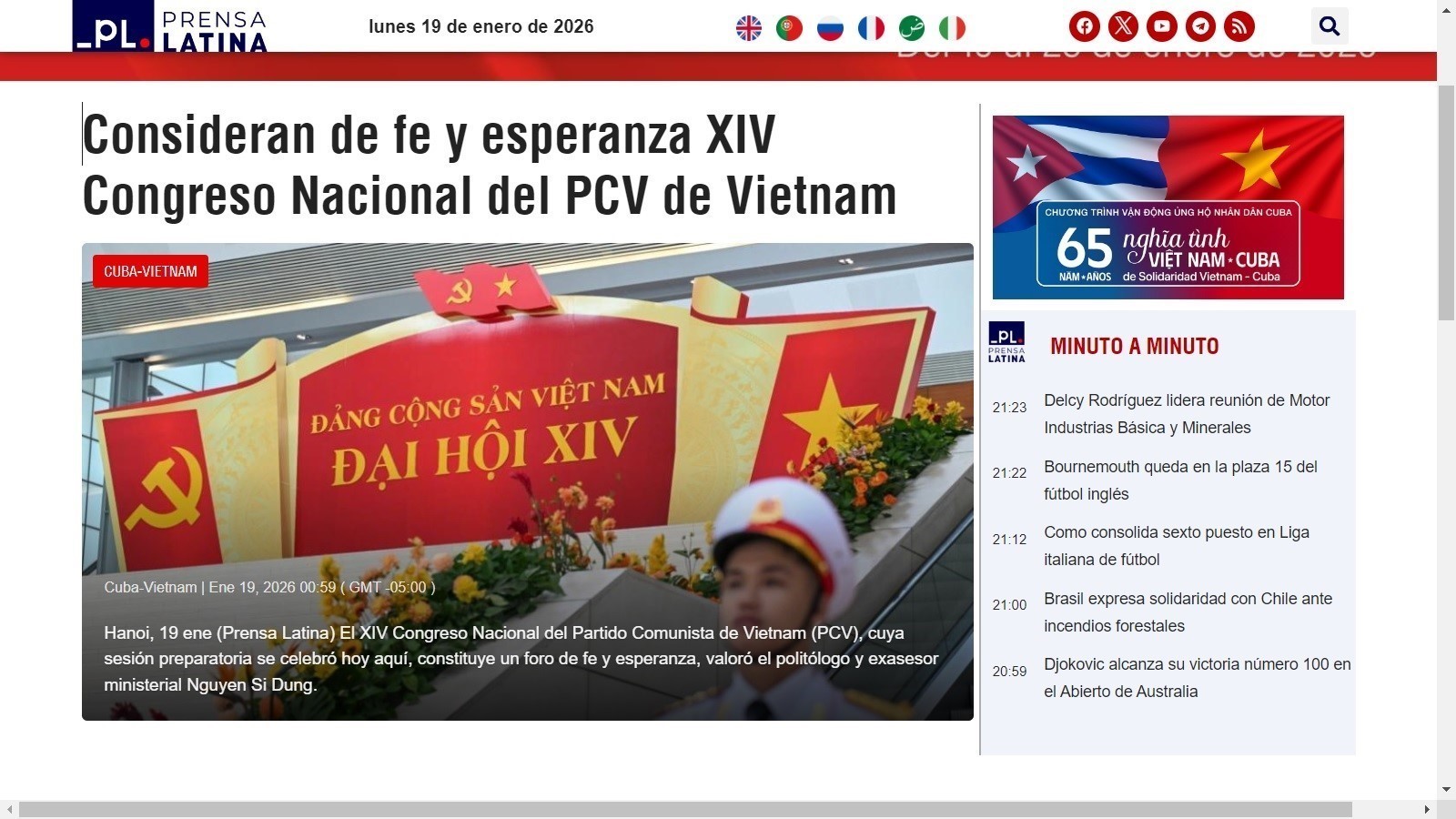
Across the Atlantic, Cuba’s Prensa Latina news agency dedicated an exclusive media column titled "The 14th National Congress of the Communist Party of Vietnam" to ensure accurate information reached global readers. Filled with real-time updates and photojournalism, the column underscored the CPV's role in guiding Vietnam into a new chapter defined by peace, autonomy, democracy, and public well-being.
Meanwhile, a bulletin issued by Mozambique’s ruling party, Frelimo, captured the vibrant spirit of unity and hope blanketing Hanoi. The publication described a capital city transformed by celebratory banners and flags, showcasing Hanoi as the cultural and political heart of a unified nation.
Strategic Five-Year Trajectory
Leading up to the event, US-based ABC News characterized the Congress as Vietnam's premier political milestone, given its role in locking in the country's top leadership tier and defining its policy blueprint for the next five years. The network concluded that Vietnam's ultimate objective—ascending to high-income status by the year 2045—will fundamentally dictate its internal political and economic choices, as well as its rising influence on the global stage./.