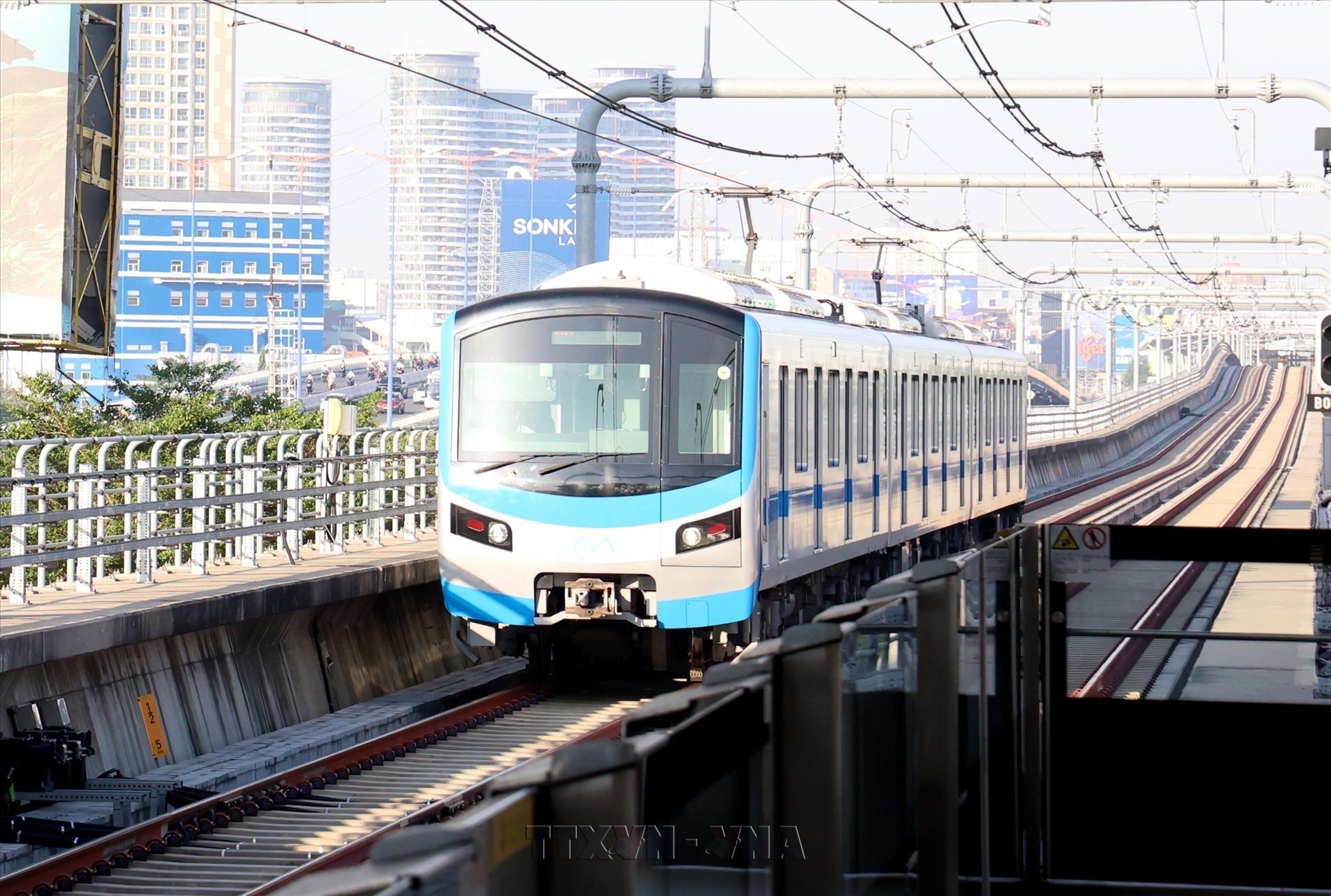
The Ministry of Construction has submitted a document to the Ministry of Finance to include four major railway development projects in the national list of projects calling for foreign direct investment (FDI) during the 2026–2030 period.
The four projects require a combined capital of over 445 trillion VND (approximately 17 billion USD). All are structured under the public-private partnership (PPP) model, with individual investment thresholds starting from nearly 25 trillion VND.
The projects include Bien Hoa – Vung Tau route; Ho Chi Minh City – Can Tho – Ca Mau route, Mu Gia – Vung Ang route, and Thap Cham – Da Lat route.
According to the Ministry of Construction, all the four projects align with national railway planning, transport sector development strategies, and the government policy of mobilising non-budget capital for infrastructure development.
Nguyen Anh Dung, Deputy Director of the Ministry of Construction's Department of Planning and Finance, said that focusing on railways aims to build a modern, high-capacity transport system, thus lowering logistics costs and improving regional links between key economic hubs, deep-water seaports, international border gates, and logistic hubs.
Dung added that prioritising railway infrastructure helps shift transport volume away from roads, reducing traffic congestion and road accidents. The initiative also aligns with Vietnam's green growth targets and its commitment to achieving net-zero carbon emissions.
Explaining the decision to prioritise railways over other transport sub-sectors, Dung noted that maritime and inland waterway projects are largely decentralised to local authorities, while national highway networks rely primarily on public funding or domestic private capital. Air transport remains subject to a strict 30% foreign ownership cap due to national security regulations.
However, attracting foreign investors to railway projects presents distinct hurdles. Infrastructure development projects in this sector require immense capital outlay and long payback periods, while financial returns remain relatively low. Furthermore, existing PPP risk-sharing mechanisms have not proven sufficiently attractive to global capital.
Of the nine major infrastructure projects promoted in the 2021–2025 foreign investment portfolio, several road projects shifted to public investment or domestic private developers, while others saw limited foreign engagement.
To address these bottlenecks, Tran Chung, Chairman of the Vietnam Association of Road Traffic Investors (VARSI), emphasised the need to refine existing policies. He urged authorities to enhance risk-sharing provisions, clarify state support mechanisms, and ensure robust project feasibility studies prior to international market roadshows./.