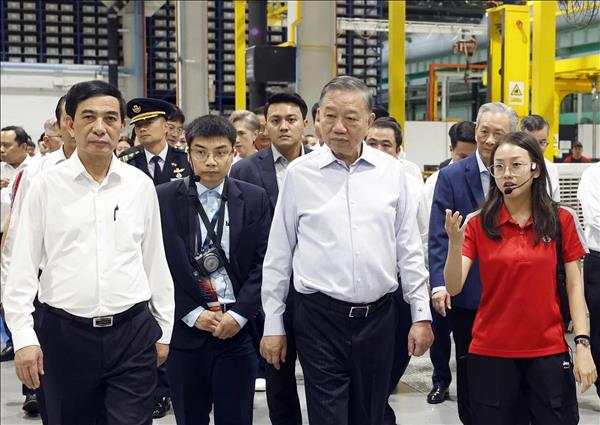
Party General Secretary and State President To Lam has emphasised that the Party, State and people of Vietnam always regard the development of relations with China as an objective requirement, a strategic choice and a top priority in Vietnam’s foreign policy of independence, self-reliance, self-strengthening, multilateralisation and diversification of external relations.
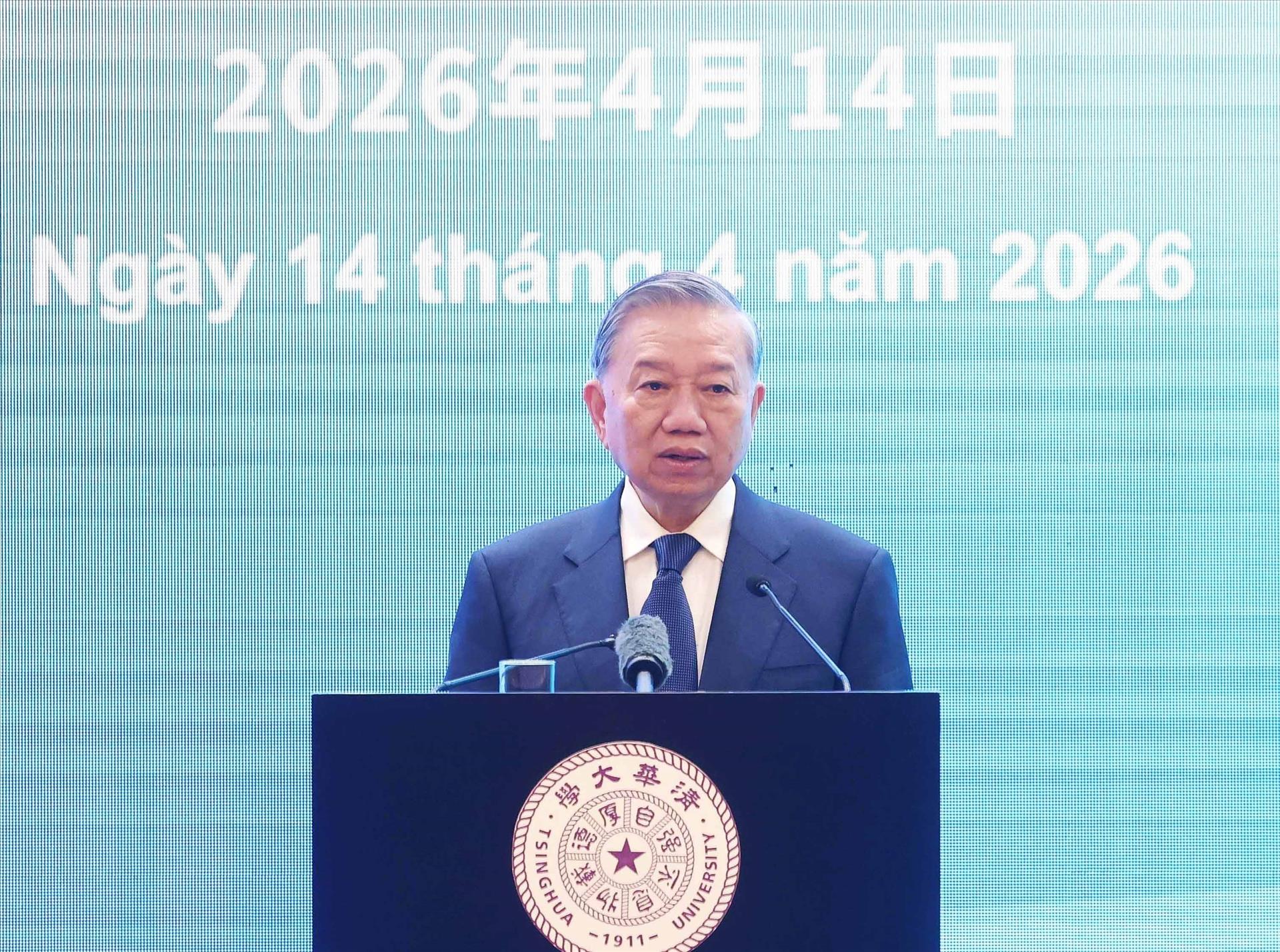
Delivering a policy speech at Tsinghua University in Beijing on April 14 as part of his ongoing state visit to China, the top Vietnamese leader underlined that this consistent approach stems from the fundamental and long-term interests of both countries and aligns with the aspirations of their peoples, while significantly contributing to peace, stability, cooperation and development in the region and the world.
He highlighted that Vietnam and China are neighbouring countries sharing many cultural similarities and a long history of exchanges.
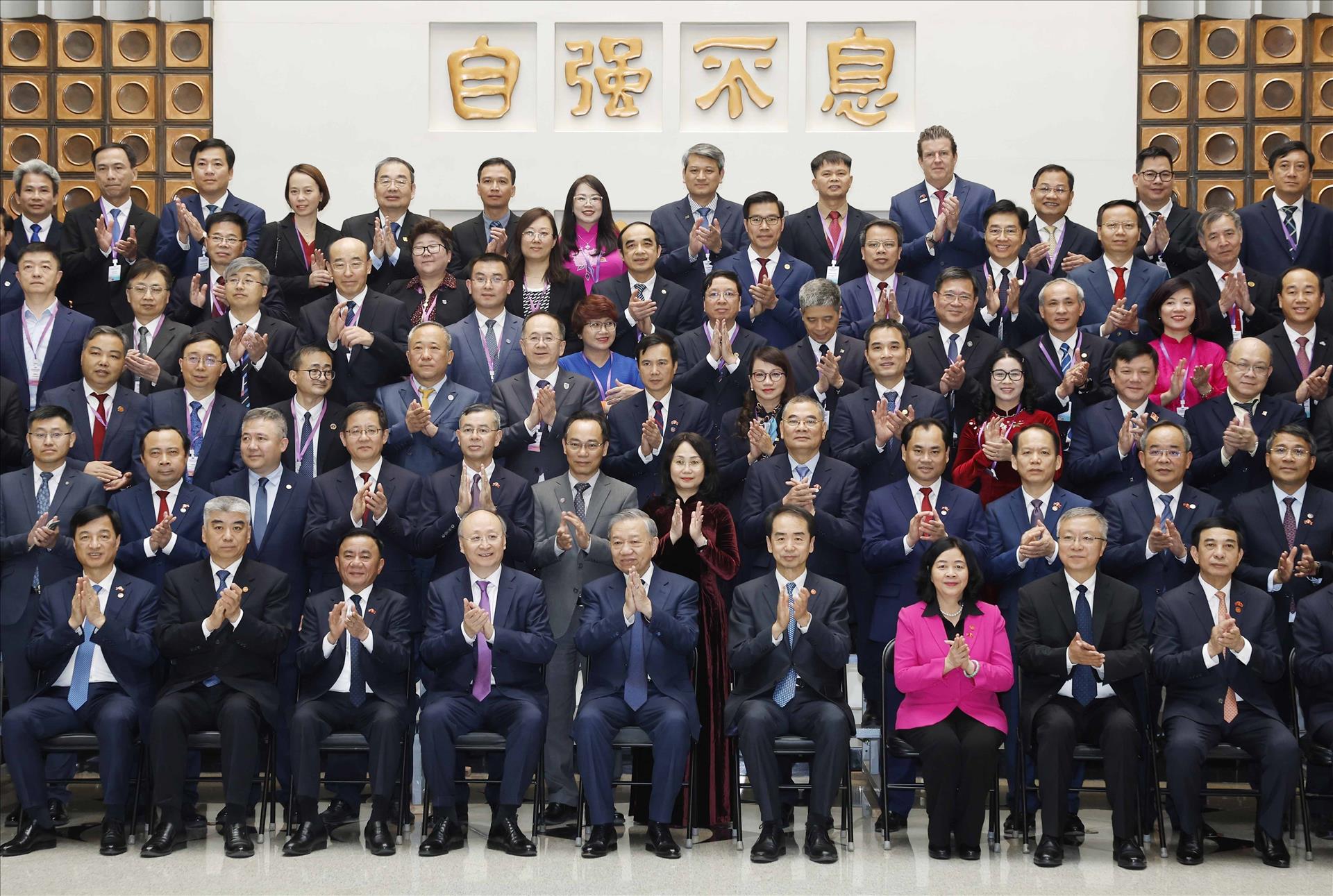
Geography has linked the two nations through mountains and rivers while history has bound them through thousands of years of interaction. The peoples of both countries have nurtured this relationship with sincerity and a shared aspiration for peace, stability and development, he said during the Vietnam – China Forum on Higher Education, Science, Technology and Innovation Cooperation, jointly organised by China’s Ministry of Education and Vietnam’s Ministry of Education and Training.
General Secretary and President Lam expressed satisfaction with the positive progress in cooperation between Vietnamese universities and research institutions and Tsinghua University. Leaders of both sides have identified priority areas such as artificial intelligence, semiconductors, science – technology, and the training of high-quality human resources – directions he described as appropriate and necessary to be further expanded.
He noted that currently, there are around 25,000 Vietnamese students in China, demonstrating the growing depth of educational exchanges between the two countries.
The leader noted that Vietnamese students in China, including those at Tsinghua University, act as bridges of friendship and cultural ambassadors who reflect the fondness for learning, openness, and ambition of Vietnamese youth. He added that Chinese students in Vietnam also help foster mutual understanding.
Looking ahead, he stressed the need to further strengthen the political and social foundations of Vietnam – China relations. For bilateral ties to develop in a stable, healthy and sustainable manner, they must be first built on political trust, mutual respect, mutual understanding between the two peoples, and the shared determination of successive generations of leaders of the two Parties and countries.
Alongside high-level mutual visits and cooperation between ministries, sectors and localities, greater attention should be paid to people-to-people exchanges, particularly youth, academic, cultural, educational and tourism exchanges, so that each people is aware of their responsibility for maintaining and enriching the bilateral friendship.
The top Vietnamese leader called for stronger progress in substantive cooperation, with strategic connectivity as the focus, results as the yardstick, and the interests of the two peoples as the ultimate goal. Science, technology, innovation and digital transformation should become a new highlight and a new pillar of Vietnam – China relations in the new period.
General Secretary and President Lam noted that Vietnam is entering a new stage of development in which science, technology, innovation and digital transformation are the key driver for achieving its strategic goals for 2030 and 2045. He affirmed that Vietnam attaches special importance to cooperation with China in areas where the two sides can complement each other and develop together, particularly artificial intelligence, big data, cloud computing, semiconductors, automation, robotics, green technology, biotechnology, new materials, clean energy and other strategic technology sectors.
Given this, he voiced his hope that bilateral ties will become stronger in terms of not only trade or investment but also knowledge, technology, innovation, and the capacity of shaping the future.
In that orientation, education and training, together with the development of high-quality human resources, must be a priority among priorities, he said, noting that Vietnam hopes that more Vietnamese students, postgraduates and young scientists will have opportunities to study and conduct research at leading Chinese institutions, including Tsinghua University.
He also said he hopes that Tsinghua University will further expand cooperation with Vietnamese universities and research institutes through student and scholar exchanges, joint training programmes, collaborative research initiatives, co-supervised programmes and the establishment of joint research groups and laboratories in key areas.
The Party and State leader of Vietnam stressed the importance of further strengthening youth connectivity so that younger generations become both inheritors of bilateral friendship and pioneers in shaping the future. He encouraged young people of the two countries to learn from each other, innovate together and jointly address major development challenges in areas such as education, health care, the environment, energy, smart city building, green agriculture and the digital economy.
At the same time, he emphasised the need for both sides to maintain a peaceful and stable environment, enhance strategic coordination and properly handle differences.
Building on the legacy of friendship nurtured by previous generations, grounded in trust, driven by substantive cooperation, and propelled by breakthroughs in science, technology and innovation, with youth serving as a bridge of the future, the leader expressed confidence that Vietnam – China relations will continue to develop in a healthy, stable and sustainable manner, bringing tangible benefits to both peoples and contributing to peace, cooperation and development in the region and the world.
On the occasion, he signed the university’s guestbook, expressing admiration for the dedication of its faculty members and the diligence of its students in building a high-quality educational environment, as well as appreciation for the Tsinghua spirit of “Self-discipline and Social Commitment” – a noble value shared by the peoples of Vietnam and China./.