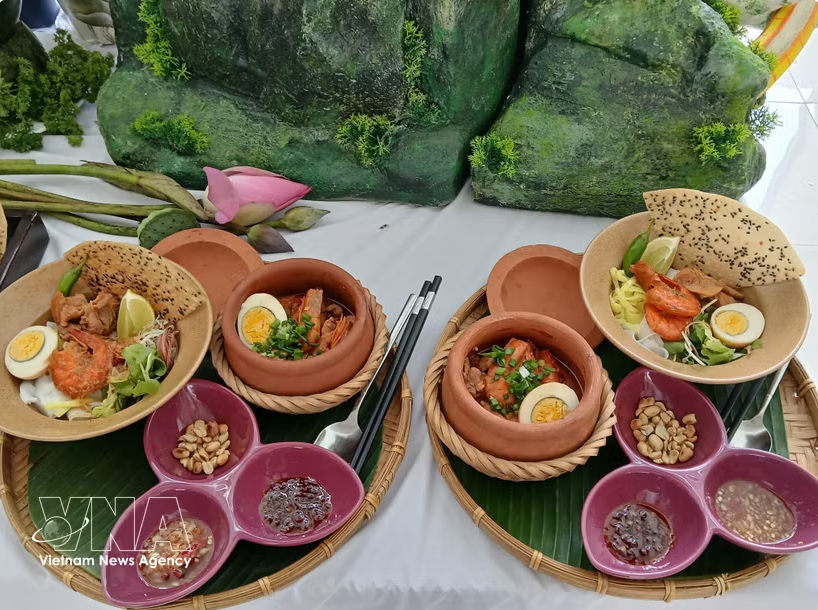
A trip may begin with a famous landmark, a beach or a historic site, but it is often a dish that visitors remember most. It could be a steaming bowl of “pho” in Hanoi, “bun bo Hue” in the former imperial capital, a “banh mi” on a street in Ho Chi Minh City, or a simple local dish enjoyed at a market.
For tourists, food is no longer simply a necessity during a journey. It is increasingly an important part of the travel experience, helping visitors understand the culture, people and daily life of the places they visit.
On August 17, Vietnam ranked first among the top 10 food destinations in the NZ Herald Travel Readers’ Choice Awards 2026. It was followed by Italy, Japan, Thailand, Singapore, Melbourne (Australia), France, Auckland, Wellington and Hawke’s Bay (New Zealand).
The result is notable as Vietnam surpassed destinations with long-established reputations on the global culinary map.
As competition among destinations grows, cuisine is becoming a major advantage for Vietnam, which boasts diverse regional food, rich cultural stories and experiences ranging from street food to high-end dining.
With proper investment and development, cuisine can become a tourism product in its own right, helping attract and retain visitors, extend their stays, increase spending and, importantly, create a distinctive destination brand.
From basic need to reason to travel
For a long time, food was viewed mainly as a service accompanying tourism. Visitors travelled to a destination to sightsee or relax and then looked for somewhere to eat. That approach is changing.
According to information cited by the Vietnam National Authority of Tourism from the World Food Travel Association, 81% of international tourists are interested in local cuisine and are willing to spend about 25-35% of their travel budgets on food and beverages.
This shows that eating is no longer simply an unavoidable travel expense but an important part of the tourism experience. Travel companies are therefore increasingly offering food tours as standalone products rather than supplementary activities.
Vietnam is well placed to benefit from this trend. Each region has its own ingredients, cooking methods, dishes and dining customs. The differences between northern, central and southern cuisine create remarkable diversity within a single country.
Vietnamese food is also closely connected to everyday life. A bowl of pho, a banh mi, a street food stall or a local market tells more than a story of taste. It also reflects history, climate, local produce, occupations, customs and the way communities live.
This is precisely the kind of authentic, local experience that modern tourists are seeking.
The appeal of everyday experiences
“Pho”, “banh mi”, “bun cha”, “fried spring rolls” and “banh xeo” have gone beyond being familiar Vietnamese dishes to become internationally recognised names. Many foreign visitors now come to Vietnam specifically looking for foods they have seen in the media or on social media.
“Banh mi” is a clear example. Once a humble street food, it has become an internationally recognisable symbol of Vietnam. The Vietnam Banh Mi Festival in Ho Chi Minh City has attracted strong interest from both locals and tourists.
The fourth edition of the festival in 2026 featured around 150 stalls, offering visitors a wide range of food and related activities.
Such events show how a single dish can develop into an entire tourism ecosystem. Visitors can taste food, watch it being prepared, learn about its origins, take part in activities, buy products and share their experiences online.
One of the biggest strengths of Vietnamese cuisine is that visitors do not need to go to luxury restaurants to enjoy it. A market, small eatery, street food stall or traditional food street can all become tourist attractions.
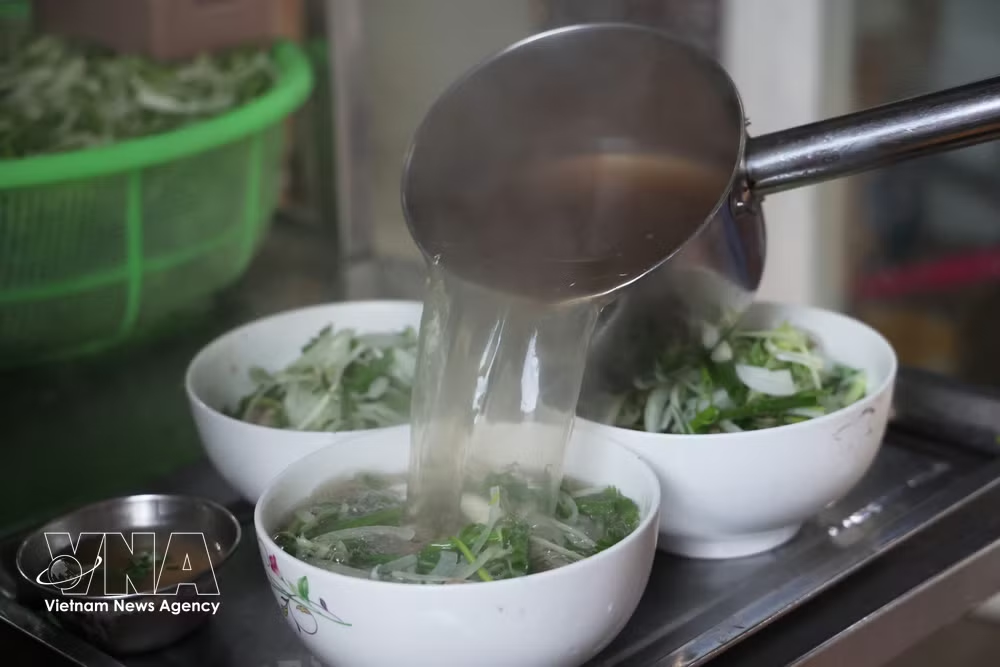
Travellers can sit at a pho stall and watch the preparation, visit a market with local residents, learn to make cakes or cook a traditional dish themselves. Food tourism can also include exploring floating markets, sampling street food and joining cooking classes.
In Southeast Asia, culinary experiences are increasingly influencing travel decisions, with Vietnam emerging as a destination of interest to food-loving travellers, according to Traveloka.
Modern tourism is no longer simply about “seeing” a destination. Visitors increasingly want to “live” it — to discover what local people eat, how they live and why particular dishes have their distinctive flavours.
A meal can therefore become a cultural lesson, a history story and a lasting travel memory. Such experiences can encourage visitors to stay longer and explore more deeply.
From street food to global recognition
Another opportunity lies in developing Vietnam’s high-end culinary sector. The arrival of the Michelin Guide in Vietnam in recent years has given the country’s cuisine another layer of international recognition. In 2025, the guide selected 181 eateries in Hanoi, Ho Chi Minh City and Da Nang, including Michelin-starred restaurants, Bib Gourmand establishments and Michelin Selected venues.
In 2026, the Michelin selection in Vietnam expanded further to 193 establishments, including 11 one-Michelin-star restaurants, 72 Bib Gourmand establishments and 110 Michelin Selected venues, along with three restaurants recognised by the Michelin Green Star programme.
These figures are significant not only for the restaurants themselves but also for tourism. They help strengthen Vietnam’s image as a culinary destination. A visitor may come for the country’s landscapes, but the prospect of dining at internationally recognised restaurants can provide another reason to choose Vietnam.
Importantly, high-end cuisine does not diminish the value of everyday food. The two can complement each other: one highlights quality and creativity, while the other preserves authenticity, accessibility and the stories of daily life.
That is perhaps the distinctive strength of Vietnamese cuisine. A culinary journey can begin with an inexpensive street-side dish and end with a carefully crafted meal at a world-class restaurant.
By preserving traditional values, improving quality, encouraging creativity and telling its stories effectively, Vietnamese cuisine can become a powerful ambassador, taking the image of the country even further on the global tourism map./.