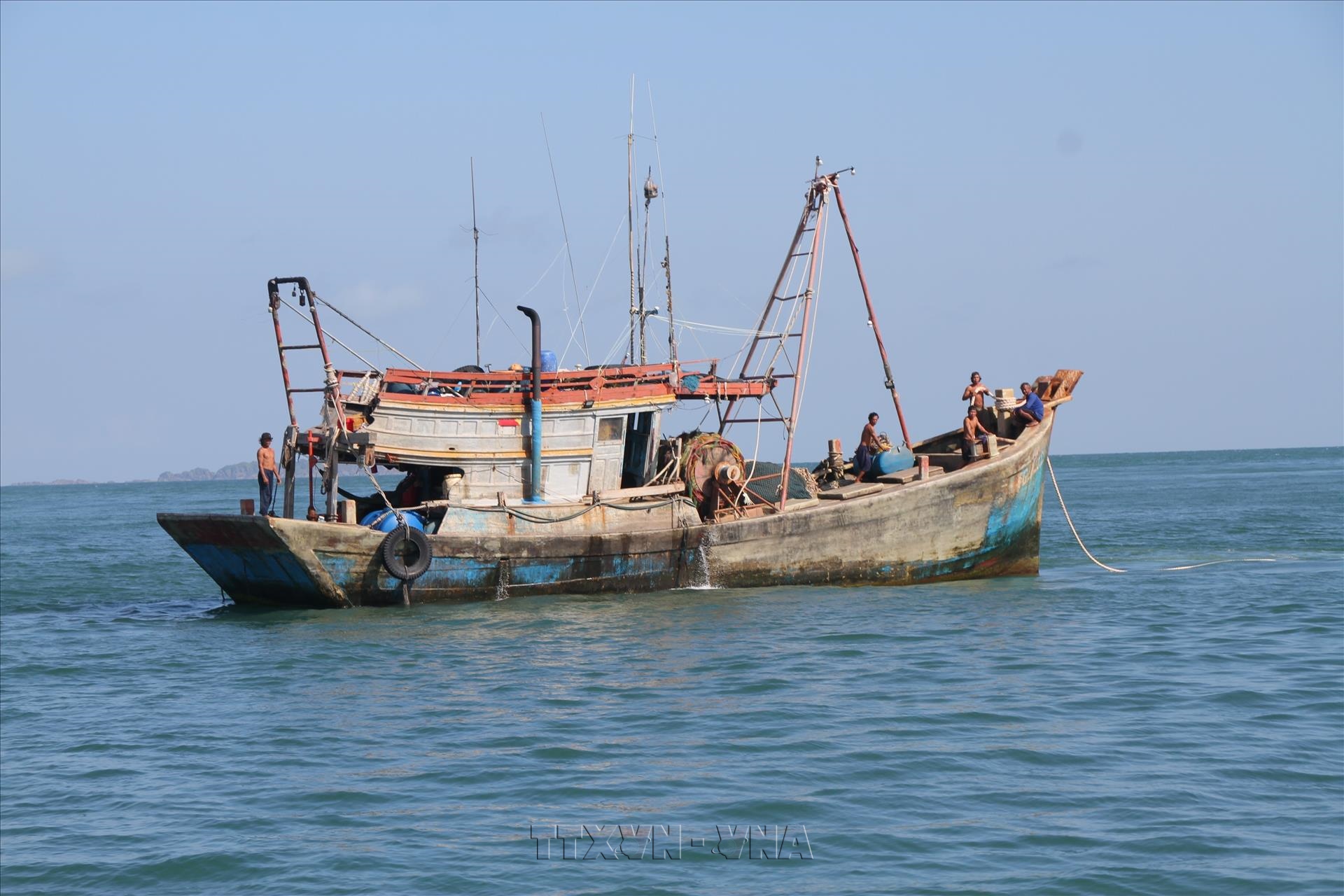
The VMS system and VNFishbase database are operated and monitored around the clock to promptly detect and warn of vessels showing signs of crossing maritime boundaries. Photo: VNA
Since the beginning of 2026, the province has recorded positive results in its IUU fishing prevention efforts. The VMS system and VNFishbase database are operated and monitored around the clock to promptly detect and warn of vessels showing signs of crossing maritime boundaries.
To strengthen fleet management, Ca Mau has reviewed and digitalised fishing vessel records while stepping up communication on seafood traceability requirements and strict standards of the European Union (EU) market. The province has also effectively operated the electronic catch documentation and traceability system (eCDT) and electronic fishing logbook (eLogbook).
Regular coordination among border guards, fisheries surveillance forces, the provincial fisheries department and fishing port management agencies has helped tighten controls over vessels entering and leaving ports, improve seafood traceability and raise fishermen’s compliance with regulations. These efforts also aim to promptly address recommendations made by the European Commission (EC) inspection team.
In preparation for the next EC inspection, Vice Chairman of the provincial People’s Committee Le Van Su has ordered local agencies and authorities to intensify IUU fishing prevention measures, with particular focus on fleet management.
Authorities have been instructed to review and closely manage every fishing vessel, ensuring consistency between actual conditions and data in registration, inspection, licensing, VMS, VNFishbase, and port entry and exit systems. Vessels failing to meet requirements must have their location, status and ownership clearly identified, with specific personnel assigned to manage them.
For VMS monitoring and preventing violations, all cases involving loss of connection, boundary violations, or abnormal voyages have been verified, handled, and fully updated in the database, with outstanding cases resolved. IUU fishing-related violations have been documented and dealt with in accordance with regulations, while cases showing signs of criminal offences have been transferred to competent authorities.
Regarding seafood traceability, Su requested transparent control of the entire chain, from fishing vessels, fishing logs and ports to catches, raw materials, processing enterprises and exporters. Data from VNFishbase, VMS and eCDT, together with relevant records and evidence, must be synchronised and cross-checked.
He stressed that a task should only be considered completed when actual results and complete, verifiable records, data and evidence are available.
Local agencies and authorities have also been requested to conduct thorough self-inspections before the EC delegation’s working visit, focusing on fishing vessels, VMS disconnection cases, boundary violations, seafood enterprises and consignments, as well as other areas at risk of errors. Any discrepancies or missing information must be promptly addressed.
Su stressed that heads of agencies and local administrations will be held responsible for the progress, quality and results of tasks under their management, warning against formalistic reporting or declaring work completed without actual results. Unfinished tasks must have clear causes, responsibilities, deadlines, and corrective measures./.