In the News
Australia-backed training equips Vietnam peacekeepers with aeromedical evacuation skills
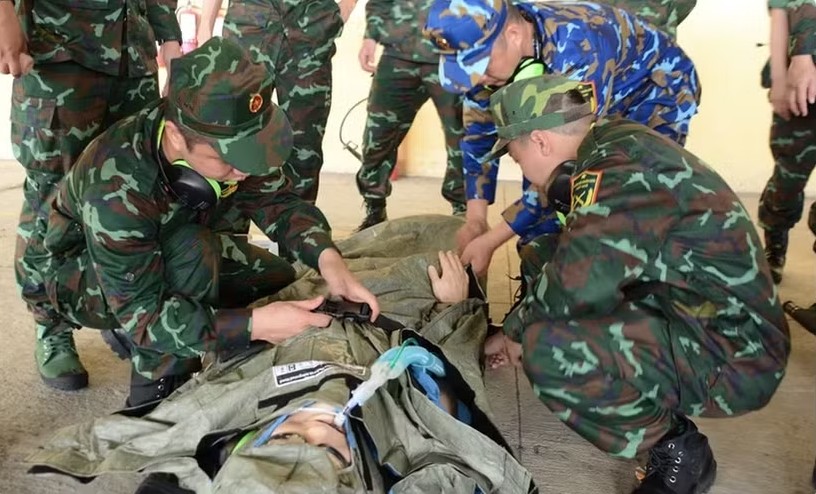
The Vietnam Department of Peacekeeping Operations under the Ministry of National Defence on June 18 organised practical aeromedical evacuation (AME) training for Level-2 Field Hospital No. 8, with support from Australia.
Taking place from June 13–22, the course aims to equip members of the hospital’s Aeromedical Evacuation Team (AMET), who are preparing for deployment to the United Nations peacekeeping mission in South Sudan, as well as other participating personnel, with essential knowledge and skills in aeromedical evacuation.
Colonel Nguyen Nhu Canh, Deputy Director of the Vietnam Department of Peacekeeping Operations, said the programme is delivered by six instructors from the Australian Army School of Health, alongside Vietnamese trainers who previously served in AMET units of earlier Level-2 Field Hospitals and have completed their missions.
The course brings together 32 trainees from Level-2 Field Hospital No. 8, the Level-1 Field Hospital attached to Engineering Unit No. 5, the AMET of the 108 Military Central Hospital and Military Hospital 175. For the first time, 10 peacekeeping personnel from the Ministry of Public Security are also participating.
According to Major David NgoThanh, Deputy Defence Attaché of Australia, aeromedical evacuation is a critical component of peacekeeping operations. The capability plays a vital role not only in mission activities but also in humanitarian assistance, disaster response and ensuring the safety of personnel operating in remote, high-risk areas.
Throughout the programme, participants receive both theoretical instruction and practical training in patient stabilisation, emergency evacuation procedures, coordination with specialised teams, and compliance with international standards and protocols.
The curriculum covers international and United Nations standards for aeromedical evacuation; evacuation principles and procedures; patient reception, transport and safety measures; emergency treatment and first aid; communications during patient transfer; documentation and referral procedures; and command, control and coordination of aeromedical operations.
In addition, trainees take part in field exercises involving casualty evacuation, loading and unloading patients from helicopters, and scenario-based aeromedical evacuation drills. Training activities utilise Mi-17 helicopters with rotors running, ambulances and specialised aeromedical equipment.
The course also provides an opportunity for participants to learn from instructors’ practical experience gained during service with the United Nations peacekeeping mission in South Sudan./.