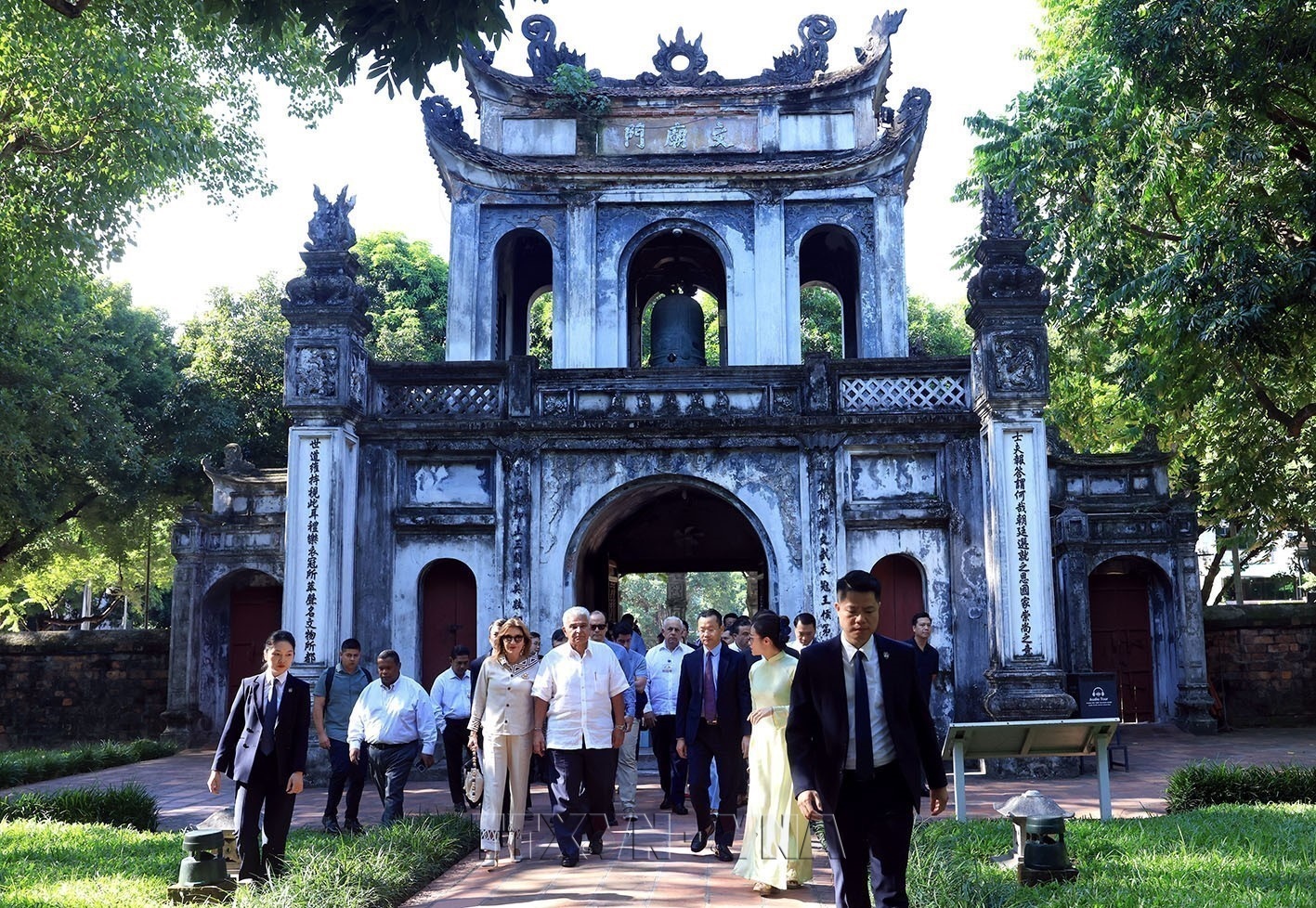
Panamanian President José Raúl Mulino and his spouse, Maricel Cohen De Mulino, visit Van Mieu-Quoc Tu Giam. Photo: VNA
The launch formed part of activities marking the 950th anniversary of the establishment of Quoc Tu Giam (1076-2026).
Covering more than 54,000 sq.m and comprising multiple layers of historical and architectural spaces, Van Mieu – Quoc Tu Giam (Temple of Literature - National University) requires clear, scientifically designed visitor guides to help people navigate the complex and learn about its buildings and main attractions.
The new overall map presents the site's spatial layout, the locations of its structures and key attractions, enabling visitors to plan their own routes. The leaflet provides an overview of the site's history, architecture, historical figures and outstanding cultural and educational values. Combining maps, images and explanatory content makes the heritage site more accessible, engaging and convenient to explore.
The initiative is the result of cooperation between the Van Mieu – Quoc Tu Giam Centre for Cultural and Scientific Activities, the French Embassy, the French Institute in Vietnam and Hanoi Architectural University. It is expected not only to enhance the visitor experience but also to pave the way for long-term cooperation in heritage research, conservation and promotion.
In the coming time, the partners will continue working together on research, collection and digitisation, as well as the development of a multilingual digital resource platform.
In the coming time, the partners will continue working together on research, collection and digitisation, as well as the development of a multilingual digital resource platform.
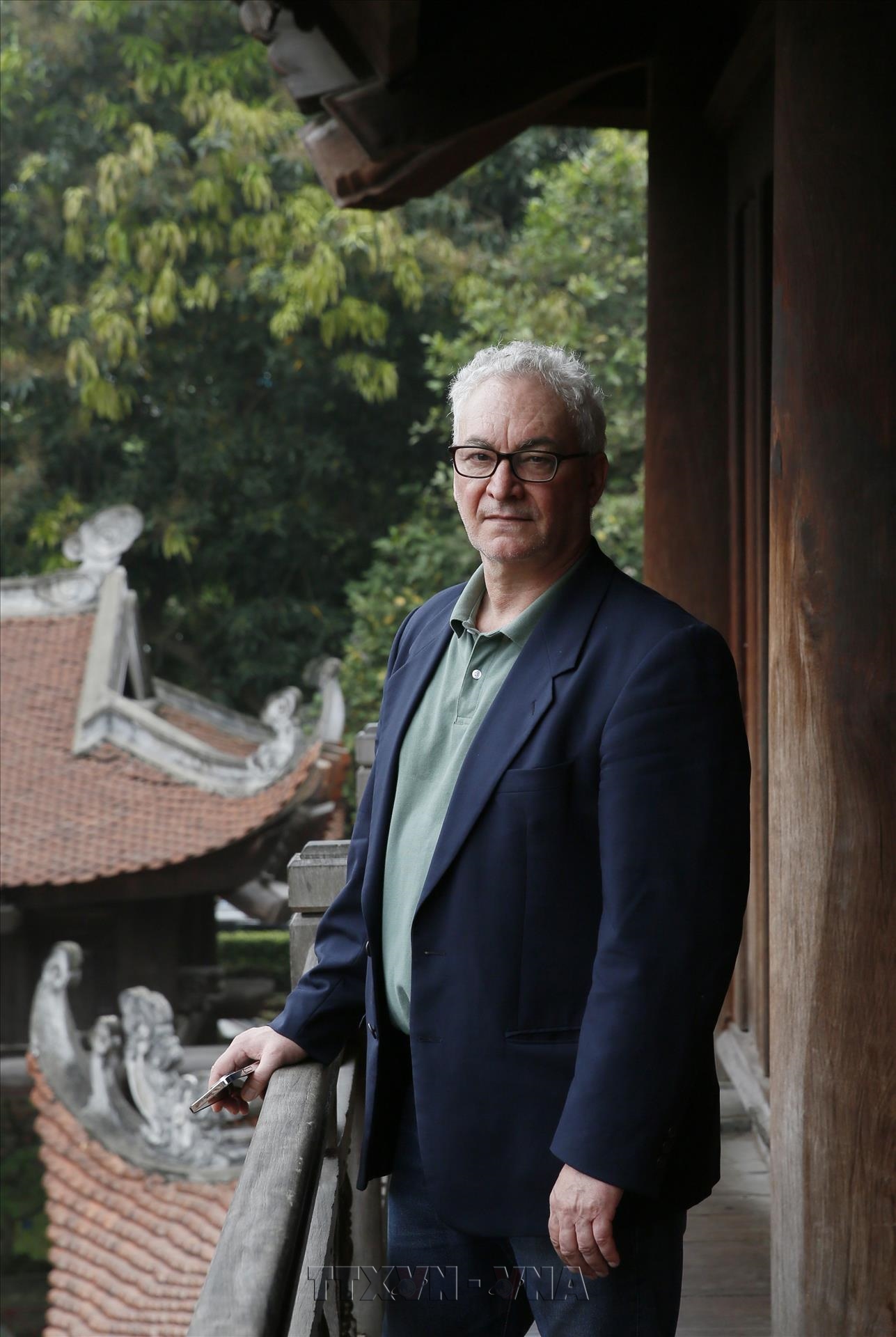
Associate Professor and Doctor Philippe Le Failler of the French School of Asian Studies (EFEO). Photo: VNA
This will bring together historical documents, stone inscriptions, horizontal lacquered boards, parallel sentences, royal decrees and archival materials related to Van Mieu – Quoc Tu Giam, the history of education and Vietnam's Confucian examination system. The platform is expected to integrate interactive maps, QR codes and digital interpretation tools to serve research, heritage education and public information needs.
The partners also aim to develop themed heritage discovery itineraries, beginning within the grounds of Van Mieu – Quoc Tu Giam before expanding links with the network of Van Mieu temples, altars dedicated to Confucian scholars, and prominent villages known for producing successful candidates in the traditional examinations nationwide.
Pham Xuan Tai, Deputy Director of the Hanoi Department of Culture, Sports and Tourism, said heritage conservation must go hand in hand with helping the public understand and appreciate its values. The department highly values the launch of the new visitor map and leaflet, describing them as practical tools to help visitors navigate the site, explore its structures and gain a deeper understanding of its history, architecture, and cultural and educational significance.
Hanoi Architectural University, particularly its team of architects and PhD holders trained in France who are now teaching at the university, has made dedicated contributions by bringing international knowledge and experience into practical efforts to promote the capital's heritage, he added.
Eric Soulier, Counsellor for Cooperation and Cultural Activities at the French Embassy and Director of the French Institute in Vietnam, said Van Mieu – Quoc Tu Giam was established a long time ago but remains a distinctive feature of Hanoi's cultural life. The site continues to welcome visitors wishing to learn about its culture and history. It also serves as a source of inspiration for research activities, helping promote cultural and scientific cooperation between Vietnam and France.
Associate Professor, Dr and Architect Nguyen Tuan Anh, Vice Rector of Hanoi Architectural University, said the project reflects nearly 30 years of cooperation in education, training and research between the university and French educational institutions, agencies and partners. The Van Mieu – Quoc Tu Giam project is a vivid example of this approach to cooperation./.
Associate Professor, Dr and Architect Nguyen Tuan Anh, Vice Rector of Hanoi Architectural University, said the project reflects nearly 30 years of cooperation in education, training and research between the university and French educational institutions, agencies and partners. The Van Mieu – Quoc Tu Giam project is a vivid example of this approach to cooperation./.