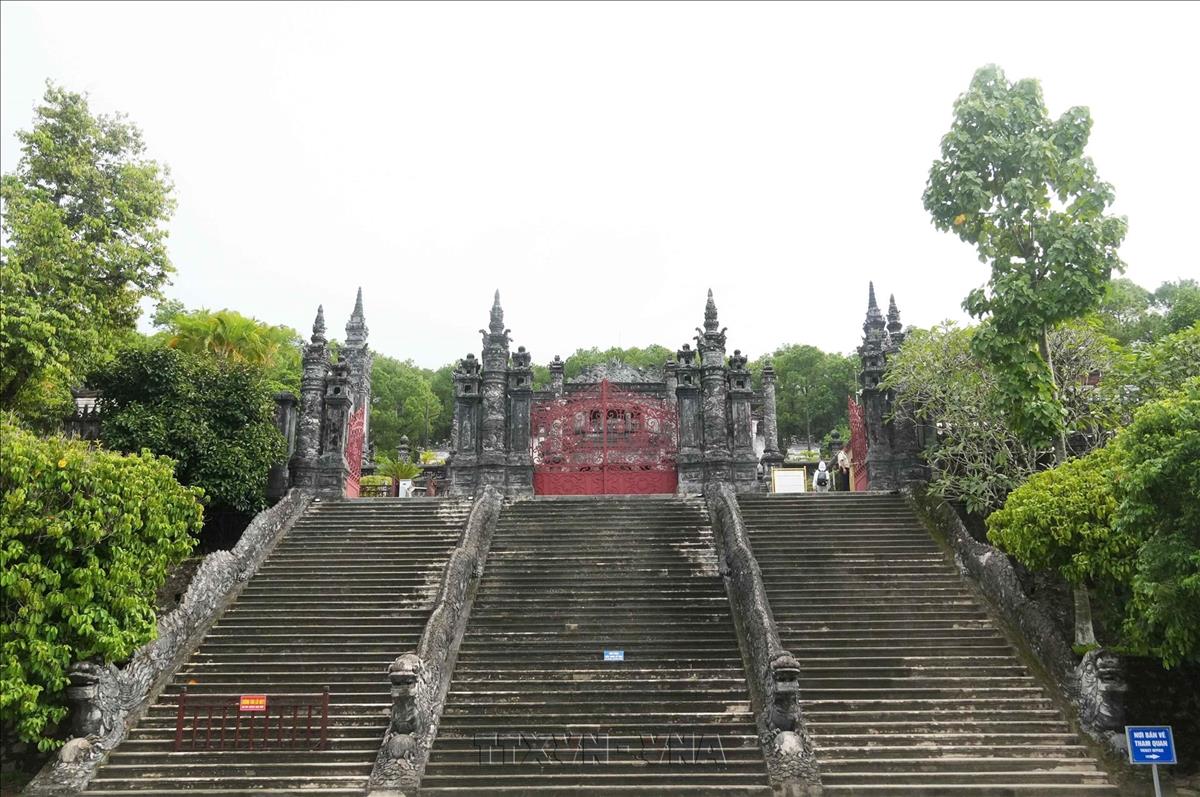
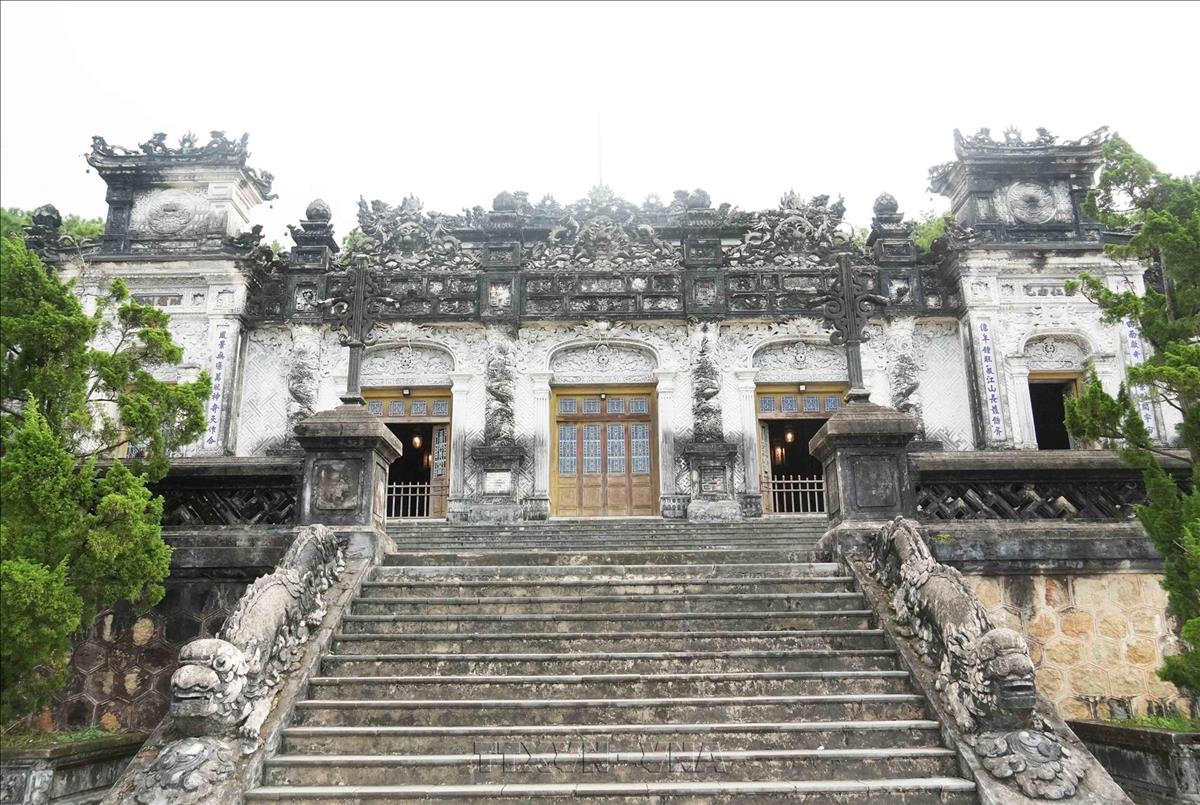
Thien Dinh Palace stands at the highest point of Emperor Khai Dinh’s tomb, forming its architectural centerpiece. Built between 1920 and 1931 on the slopes of Chau Chu Mountain in Thuy Xuan Ward, Hue City, the palace is renowned for its exceptional artistic value.
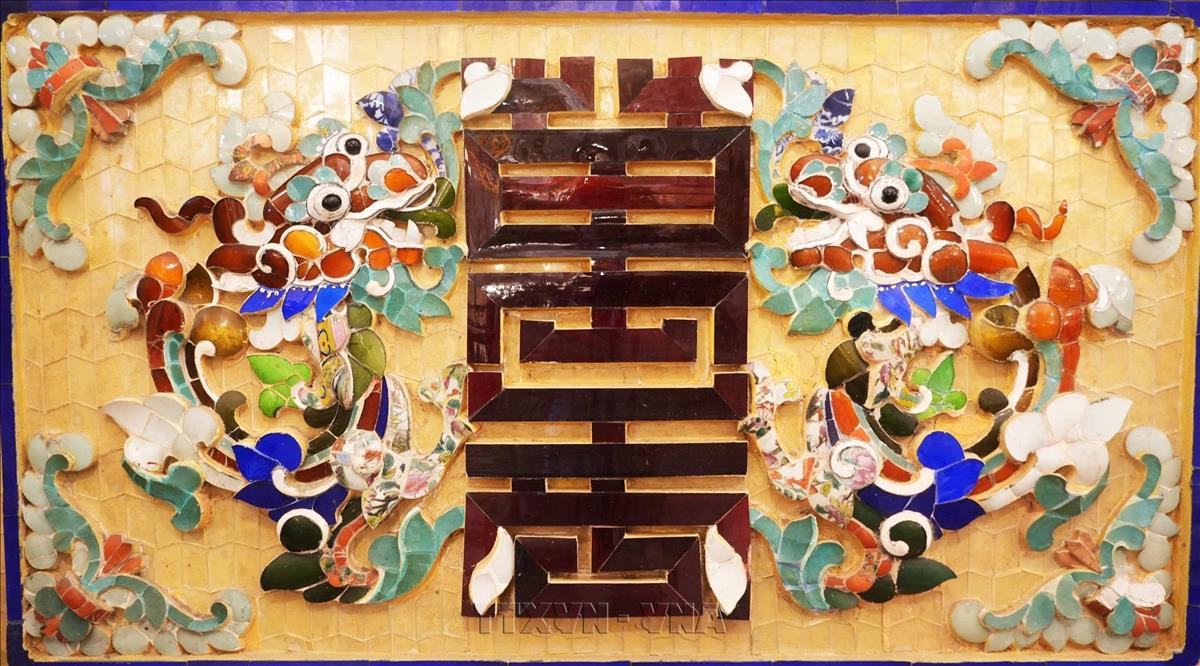
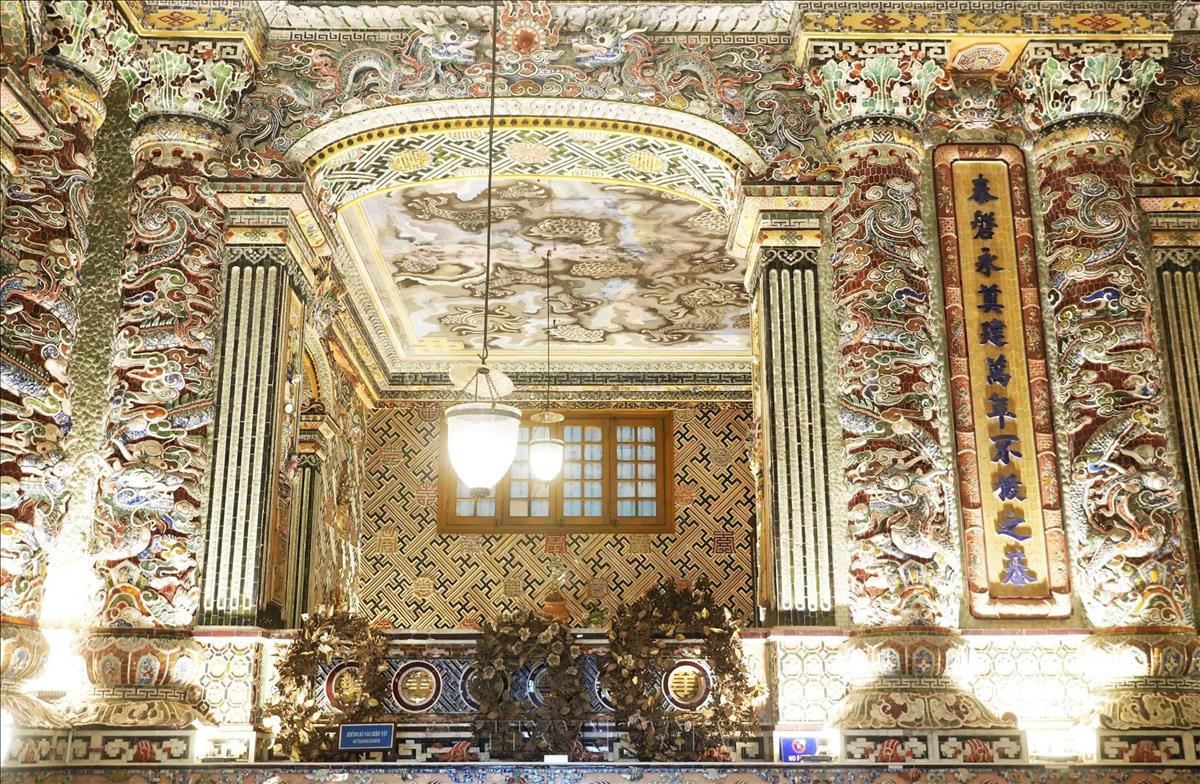
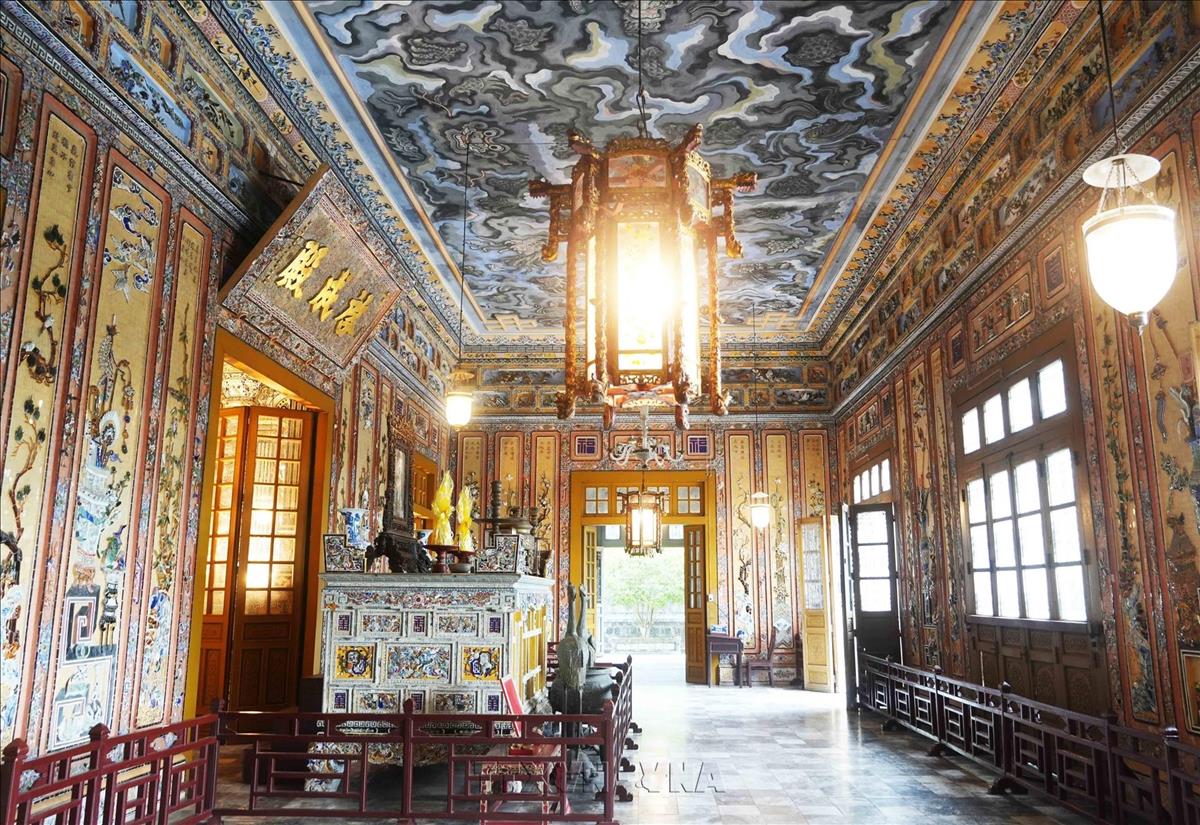
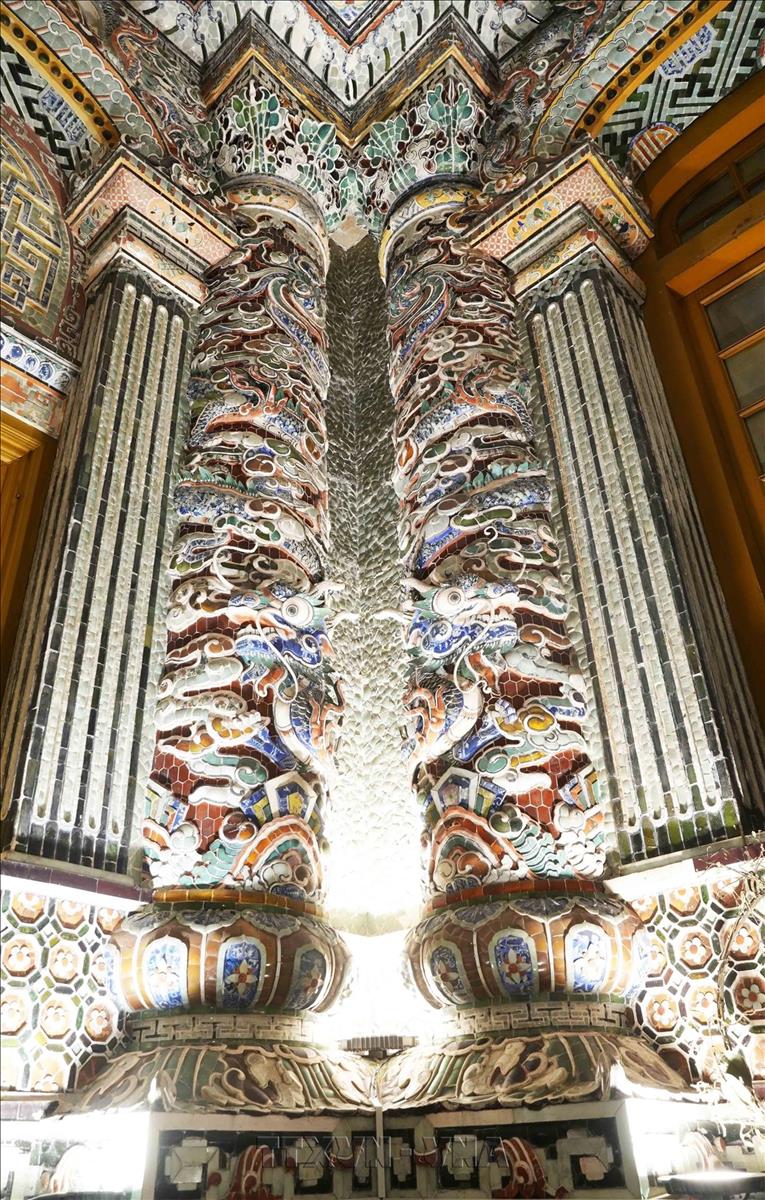
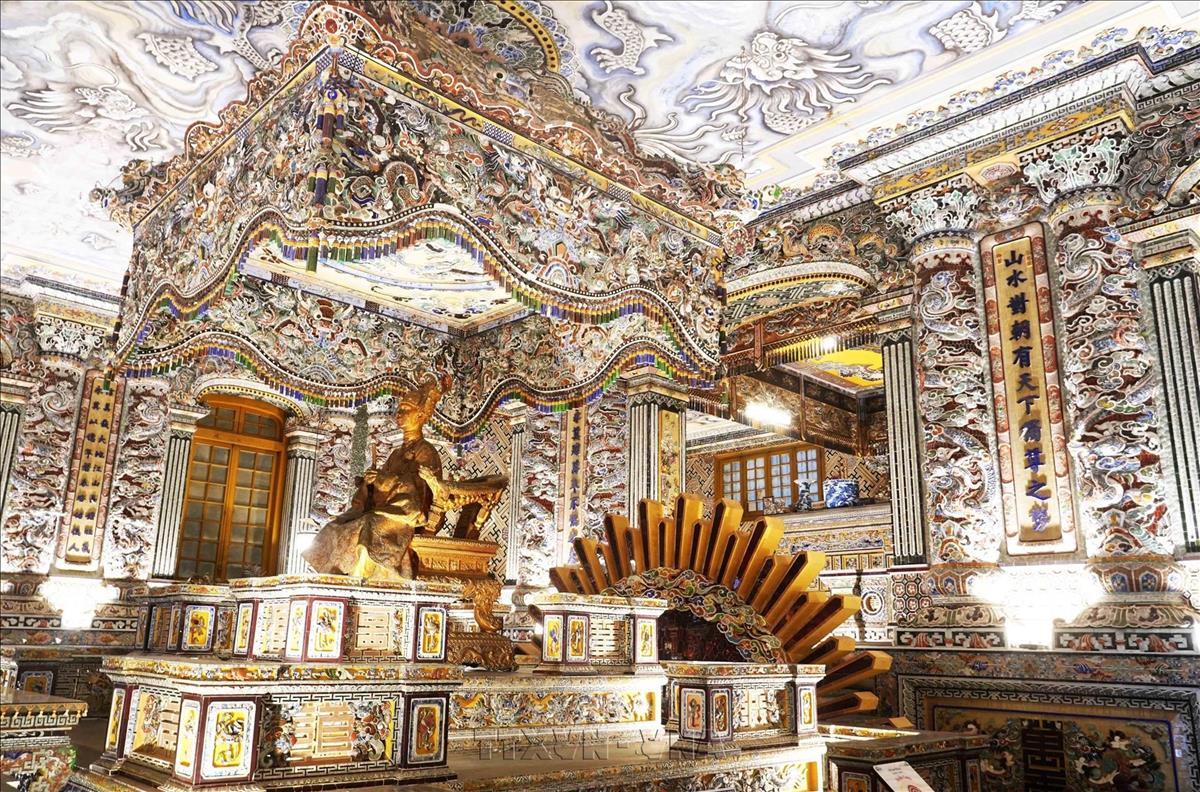
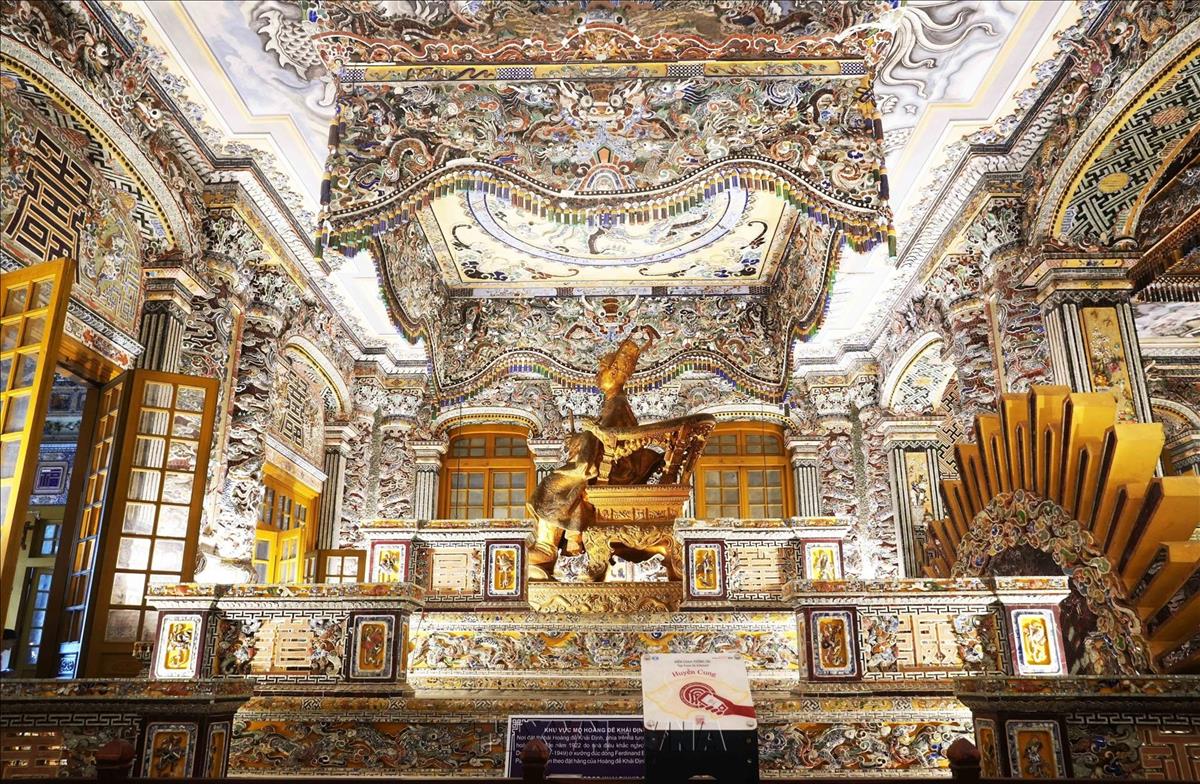
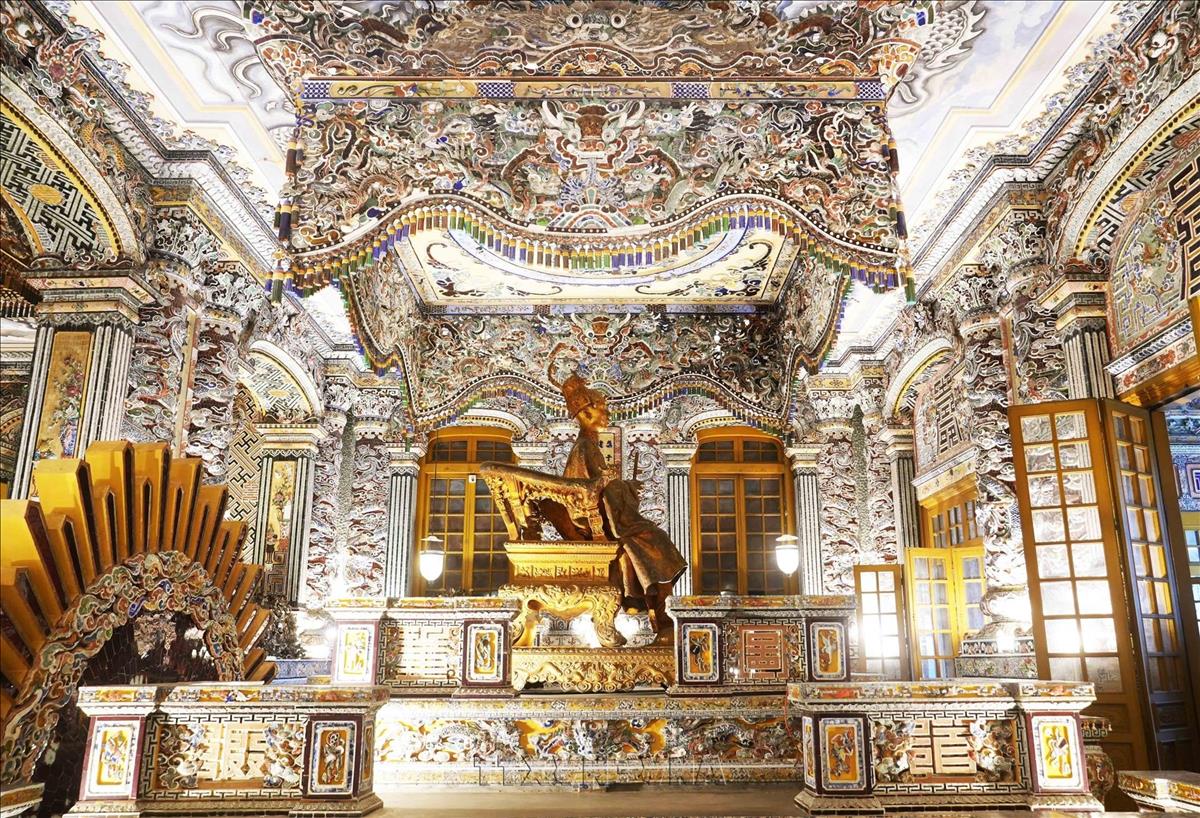
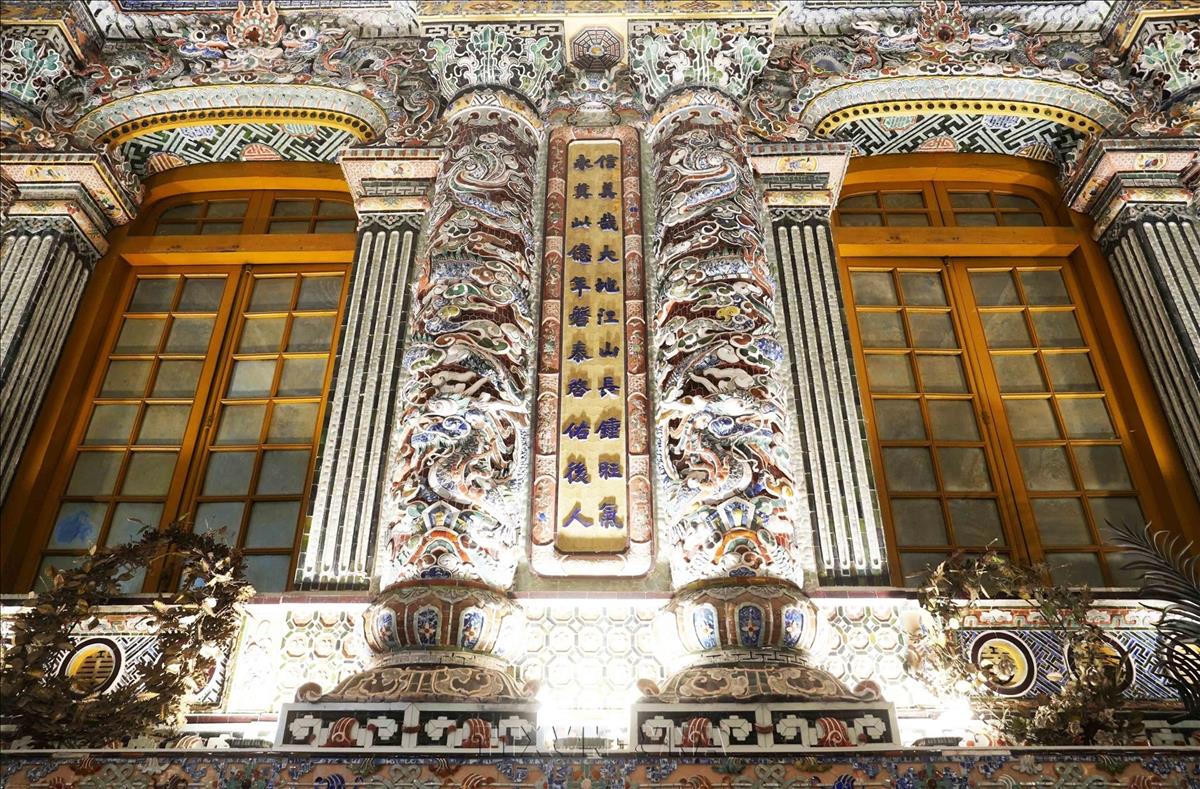
The tomb’s most remarkable artistic features are found in the interior decoration of Thien Dinh Palace. Its three central chambers are adorned with intricate mosaic reliefs made from fragments of porcelain, ceramics and colored glass, creating elaborate patterns and vivid decorative compositions.
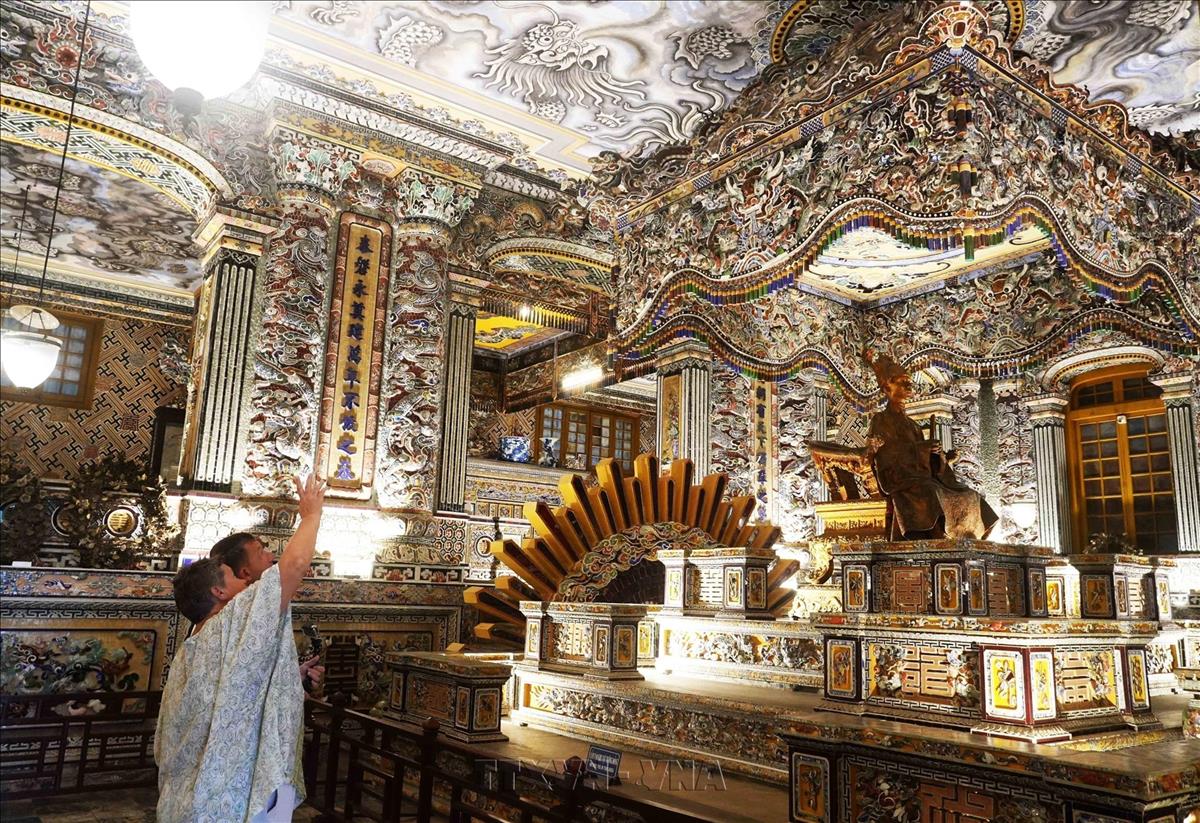
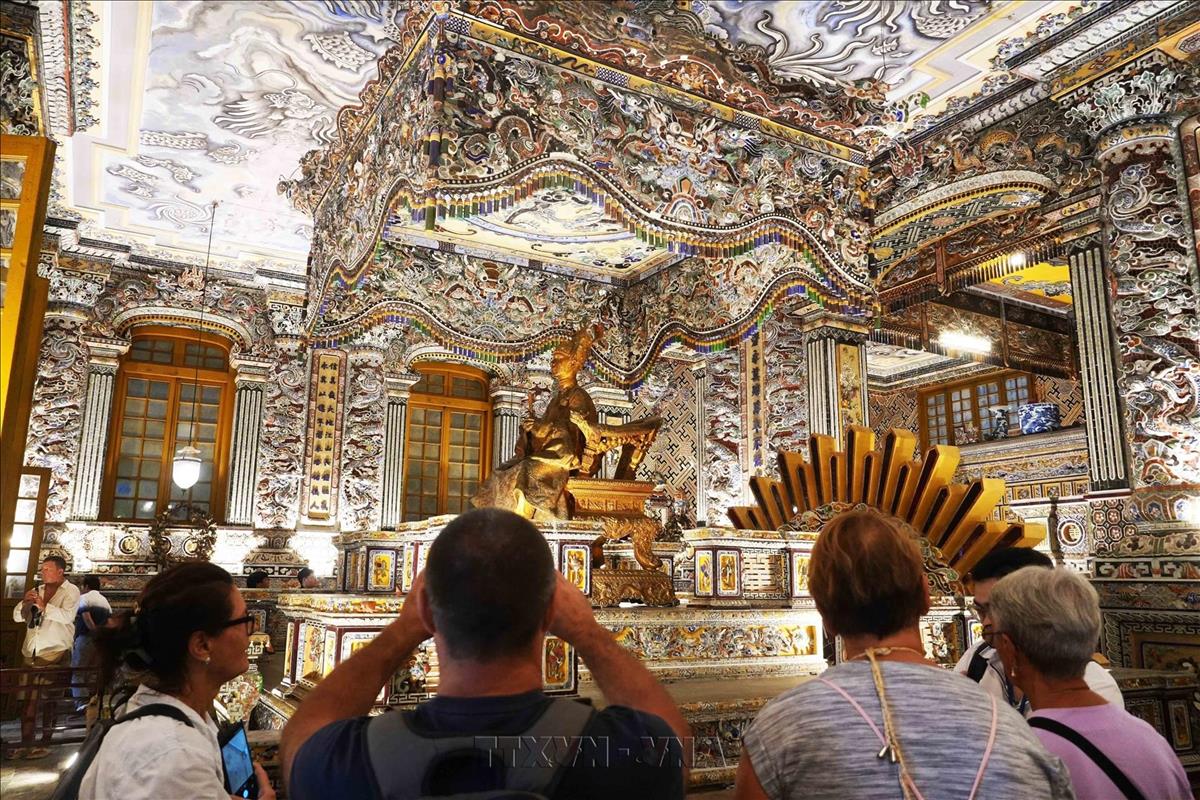
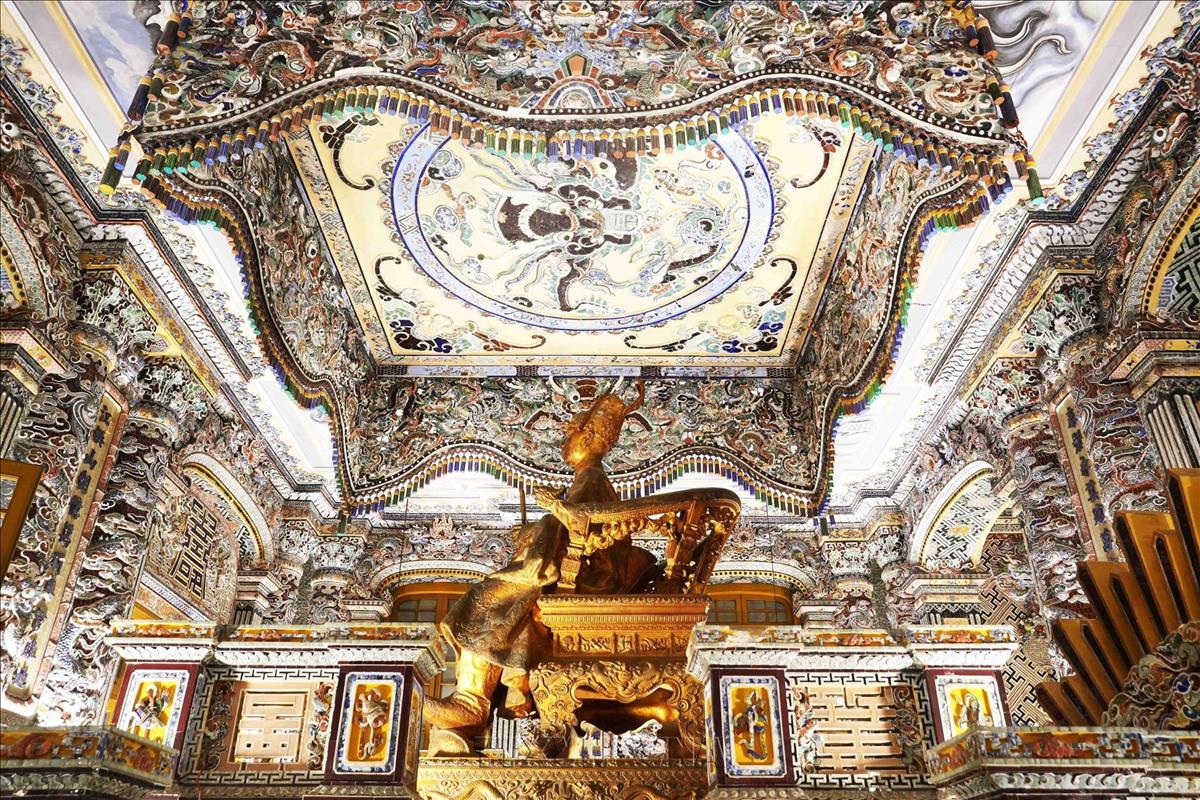
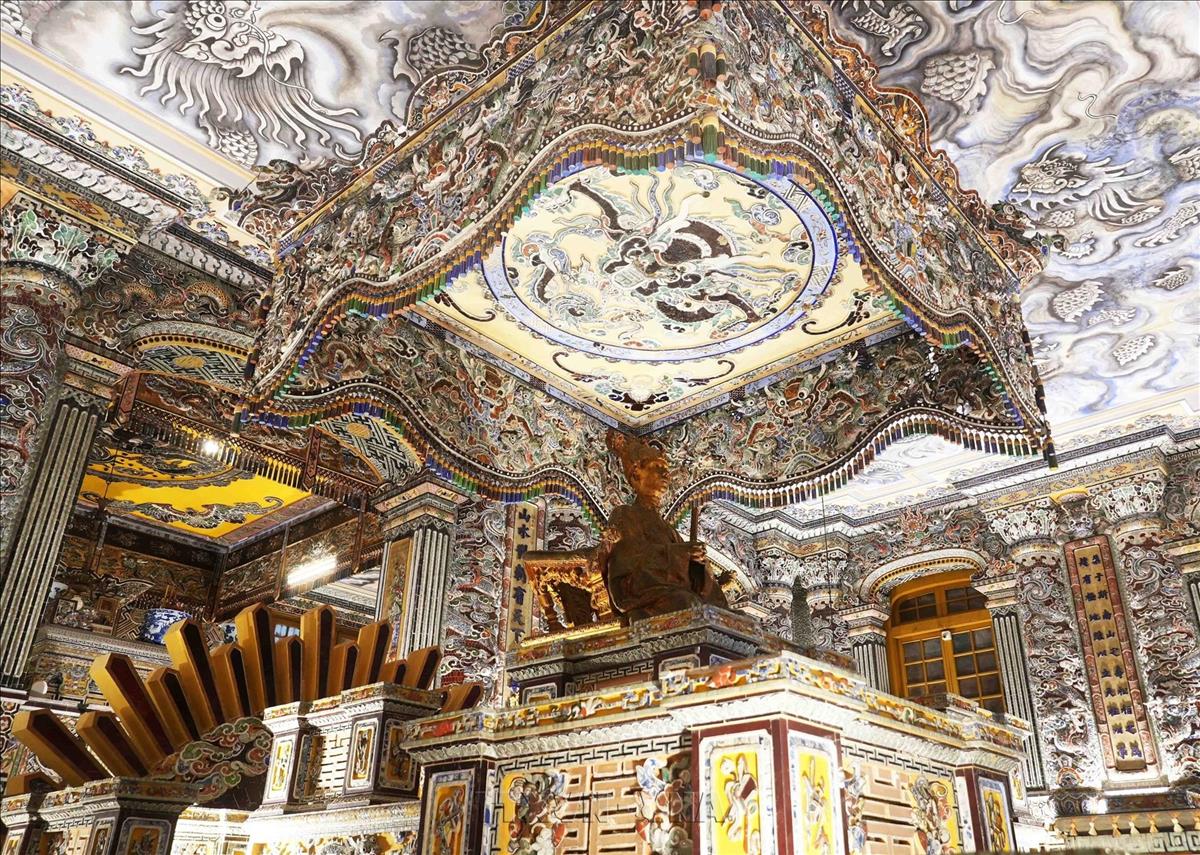
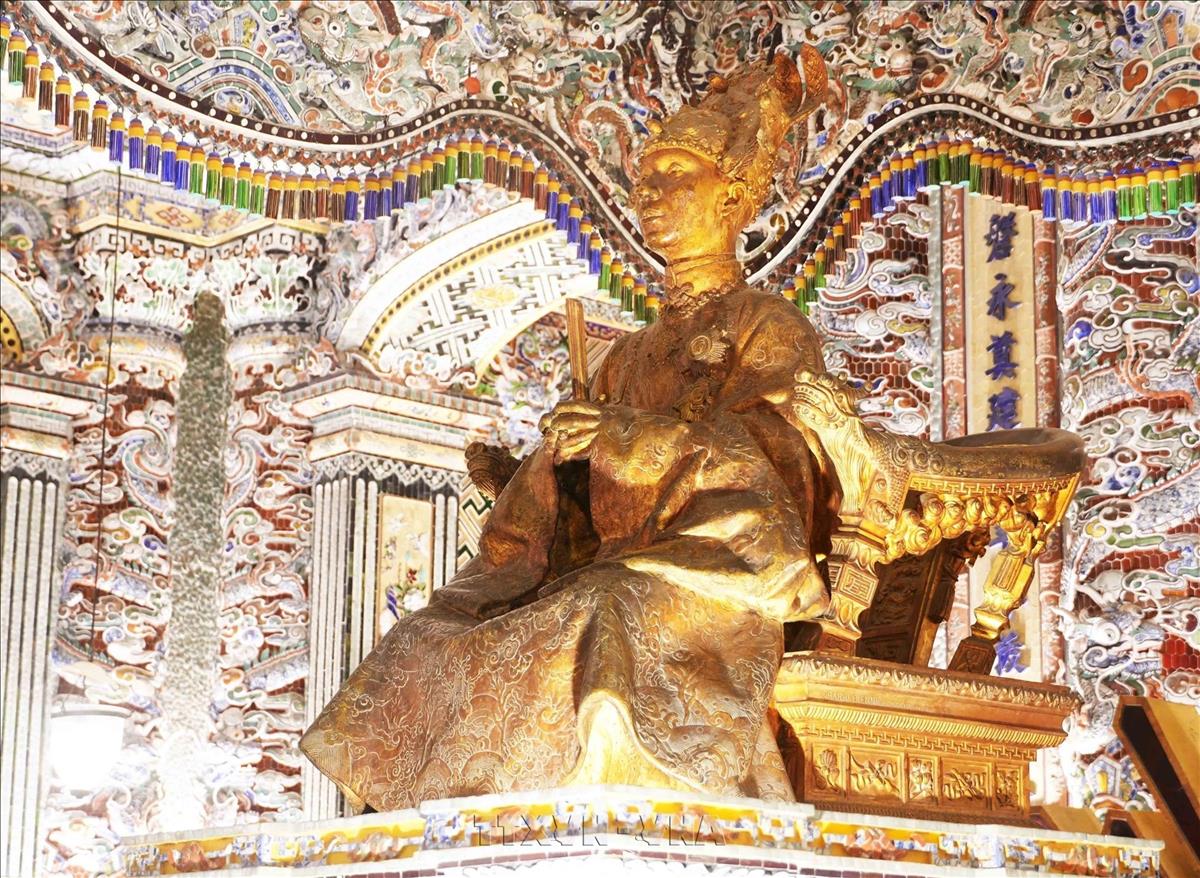
One of the most striking features is the buu tan (ornamental canopy) suspended above the bronze statue of Emperor Khai Dinh. Weighing one tonne, this remarkable work of art features flowing, graceful curves that create an extraordinary sense of lightness and softness. Despite its massive weight, the canopy appears as delicate as silk or velvet, demonstrating the exceptional craftsmanship and artistic imagination of its creators.
The walls of the Thien Dinh Palace at the Tomb of Emperor Khai Dinh (Hue City) are adorned with porcelain and glasswork that represent the pinnacle of both technical skill and artistic achievement. Photo: VNA
The walls and columns of the Thien Dinh Palace at the Tomb of Emperor Khai Dinh (Hue City) are adorned with porcelain and glass mosaics that represent the pinnacle of both technical skill and artistic achievement. Photo: VNA
The interior of the Thien Dinh palace at the Tomb of Emperor Khai Dinh, in the city of Hue, is adorned with porcelain and glasswork that represent the pinnacle of both technical skill and artistic refinement. Photo: VNA
Visitors capture the beauty of Thien Dinh Palace. Photo: VNA
The corner pillars of the Thien Dinh palace at the Tomb of Emperor Khai Dinh in Hue City are adorned with porcelain and glasswork that represent the pinnacle of both technical skill and artistic refinement. Photo: VNA
Visitors capture the beauty of Thien Dinh Palace. Photo: VNA
Tomb of Emperor Khai Dinh, located on the slopes of Chau Chu mountain, Thuy Xuan ward, Hue City. Photo: VNA
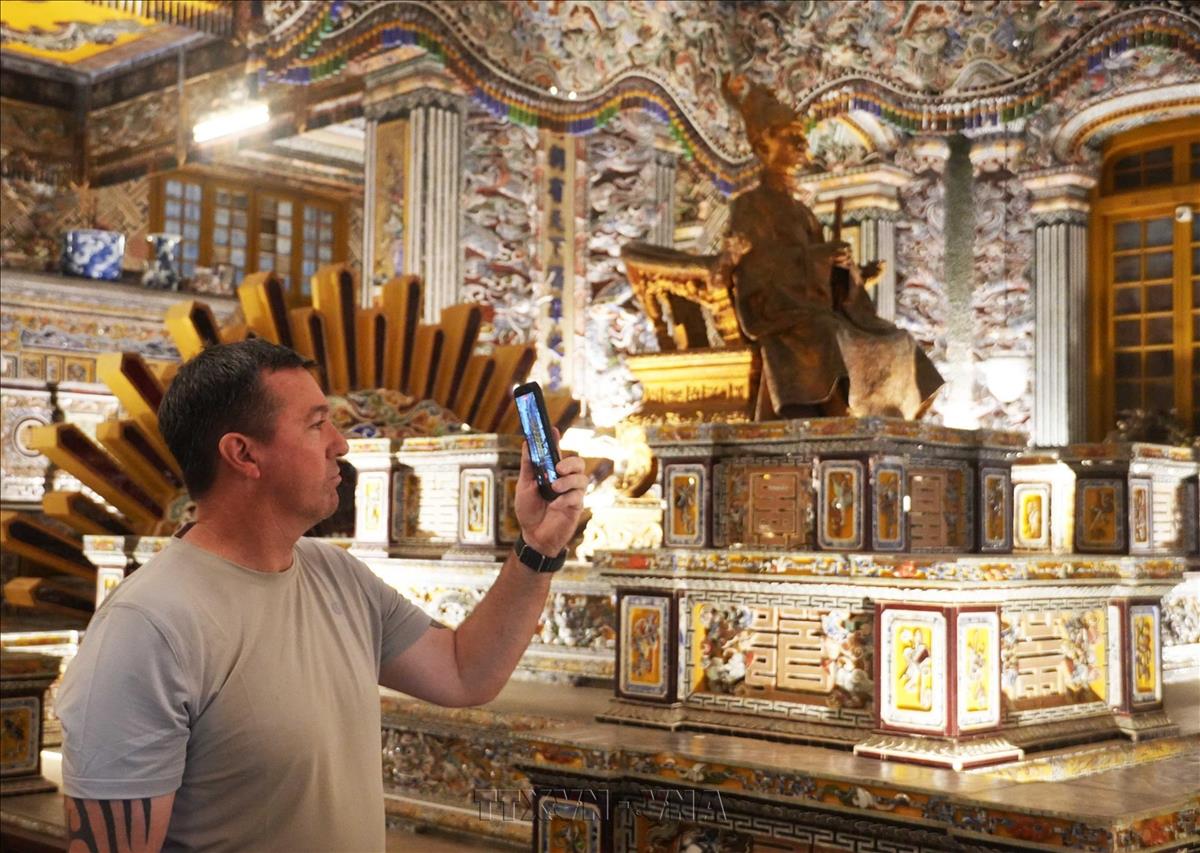
A visitor captures the beauty of Thien Dinh Palace. Photo: VNA
The interior decoration of the Thien Dinh Palace at the tomb of Emperor Khai Dinh, in the city of Hue, represents the pinnacle of the art of mosaic-making using ceramics and colored glass. Photo: VNA
The ornamental canopy above the bronze statue of Emperor Khai Dinh in the Thien Dinh Palace features soft, graceful curves that give the impression of being crafted from velvet or silk. Photo: VNA
The ornamental canopy above the bronze statue of Emperor Khai Dinh in the Thien Dinh Palace features soft, graceful curves that give the impression of being crafted from velvet or silk. Photo: VNA
The ornamental canopy above the bronze statue of Emperor Khai Dinh in the Thien Dinh Palace features soft, graceful curves that give the impression of being crafted from velvet or silk. Photo: VNA
The ornamental canopy above the bronze statue of Emperor Khai Dinh in the Thien Dinh Palace features soft, graceful curves that give the impression of being crafted from velvet or silk. Photo: VNA
The walls and columns of the Thien Dinh Palace at the Tomb of Emperor Khai Dinh (Hue City) are adorned with porcelain and glass mosaics that represent the pinnacle of both technical skill and artistic achievement. Photo: VNA
A bronze statue of Emperor Khai Dinh in Thien Dinh Palace. Photo: VNA
Thien Dinh palace, situated at the highest point, serves as the main structure of Emperor Khai Dinh’s tomb in Hue City. Photo: VNA