In the News
Top Vietnamese leader's visit to reaffirm political trust, open new chapter in Vietnam-Thailand ties: Thai Deputy PM
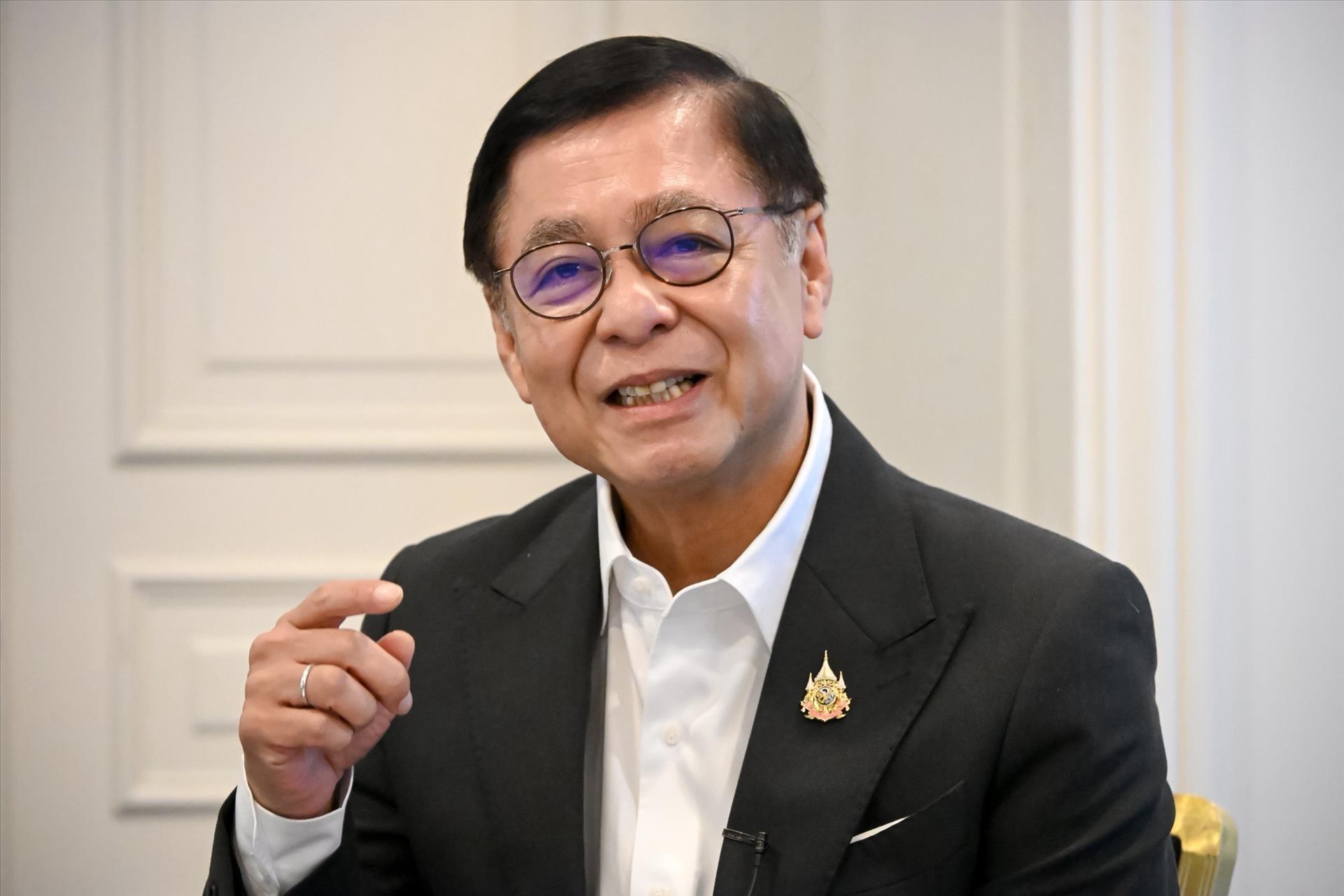
The upcoming official visit to Thailand by General Secretary of the Communist Party of Vietnam (CPV) Central Committee and President of Vietnam To Lam will serve as a major highlight of celebrations marking the 50th anniversary of bilateral diplomatic ties, reaffirming political trust between the two countries and open a new chapter in Thailand–Vietnam relations.
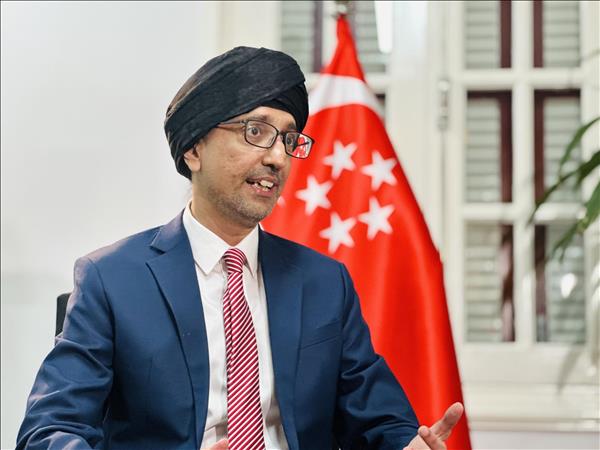
The statement was made by Thai Deputy Prime Minister and Minister of Foreign Affairs Sihasak Phuangketkeow in an interview granted to the Vietnam News Agency ahead of the visit.
Reporter: How does Thailand assess the significance of CPV General Secretary and President of Vietnam To Lam’s visit in the context of the strong development of Vietnam-Thailand relations currently?
Thai Deputy PM and FM Sihasak Phuangketkeow: This visit is significant because this is the first official visit to Thailand by To Lam as General Secretary of the Communist Party Central Committee and State President of Vietnam, and also the first official visit at leaders’ level under Prime Minister Anutin’s current administration.
Thailand is the first ASEAN country he is visiting officially after assuming the presidency. The visit is organised as part of the 50th anniversary of Thailand–Vietnam diplomatic relations this year.
Thailand and Vietnam are highly connected and interdependent. Our economies and supply chains are closely linked, and both countries benefit from each other’s growth.
Thailand is Vietnam’s largest trading partner in ASEAN and the 8th largest foreign investor in Viet Nam, while Viet Nam is Thailand’s second largest trading partner in ASEAN.
Bilateral trade has reached nearly 24 billion USD, and is on track to achieve the target of 25 billion USD. In terms of investment, our two countries are closely linked through integrated supply chains.
More than half of Thailand’s exports to Vietnam are intermediate goods used in Vietnam’s export-oriented manufacturing sector. This means that the more Vietnam exports, the more it imports from Thailand. This reflects strong complementarity between Thai and Vietnamese economies and supply chains.
We should, therefore, work together to build on this strong foundation and ensure that our economies continue to grow together.
We also have many Thai companies investing in Vietnam, with plans for further expansion in the near future. In this regard, we hope that the Vietnamese Government and relevant local authorities will continue to explore ways to further facilitate Thai investors in Vietnam and ease certain restrictions they may face. This would be of mutual benefit to both countries.
Reporter: In your opinion, what should Thailand-Vietnam do to drive their “Comprehensive Strategic Partnership” to a new high level?
Thai Deputy PM and FM Sihasak Phuangketkeow : Thailand and Vietnam are now Comprehensive Strategic Partners (CSP), the highest level of partnership Viet Nam has with any country.
A key component of the CSP Plan of Action is the “Three Connects Strategy”, which are connecting supply chains, connecting local economies, and connecting sustainable development strategies or green growth.
The aim is to strengthen competitiveness, ensure that economic benefits reach local communities, and promote sustainable growth together.
Our cooperation should focus on future-oriented economic partnership, particularly in potential areas such as green economy; digital economy; science, technology and innovation (STI); and future workforce development.
Reporter: In the context of various regional and global changes, how should Thailand and Vietnam cooperate to strengthen the central role and unity of ASEAN?
Thai Deputy PM and FM Sihasak Phuangketkeow: As Comprehensive Strategic Partners, Thailand and Vietnam should look beyond bilateral issues and work together on broader regional and international challenges. Comprehensive Strategic Partnership between Thailand and Vietnam benefits the region.
As two largest economies in the Mekong Subregion, we should be anchor for peace and development, and be drivers of economic development and connectivity, such as between Thailand-Laos-Vietnam.
ASEAN is at an important crossroads. While we have achieved many successes in the past, we also continue to face significant challenges. It is therefore essential for ASEAN to strengthen its unity and centrality in addressing these challenges.
Our two countries share a common outlook on the region, as well as the same concerns regarding ASEAN’s future. This is a time when we need to reinforce regionalism with ASEAN in order to promote peace, stability and progress, and to ensure that ASEAN remains a safe and constructive space amid growing geopolitical competition and conflict. In doing so, we can further advance intra-ASEAN economic cooperation and deeper regional integration.
Reporter: Our two countries are celebrating 50 years of diplomatic relations. What are your expectations for this relationship over the next 50 years?
Thai Deputy PM and FM Sihasak Phuangketkeow: The 50th anniversary marks an important milestone in the relationship, reflecting the deep and longstanding ties between our two countries. This significant visit also says much about the direction of our partnership over the next 50 years.
We highly welcome the fact that Thailand is the 1st ASEAN country to receive his official visit after he assumed the presidency, and this has become one of the key highlights of the 50th anniversary of relations between our two countries.
Therefore, this is an opportunity to reaffirm the political trust between our two governments and to open a new chapter in Thailand–Vietnam relations.
The visit will also underscore both countries’ commitment to further strengthen our CSP so that both countries can broaden and deepen bilateral cooperation across all areas of mutual interest, promote win-win cooperation, and deliver tangible benefits to the peoples of both countries.
CSP Action Plan will also be adopted as roadmap for concrete implementation.
Reporter: Thank you for your interview./.