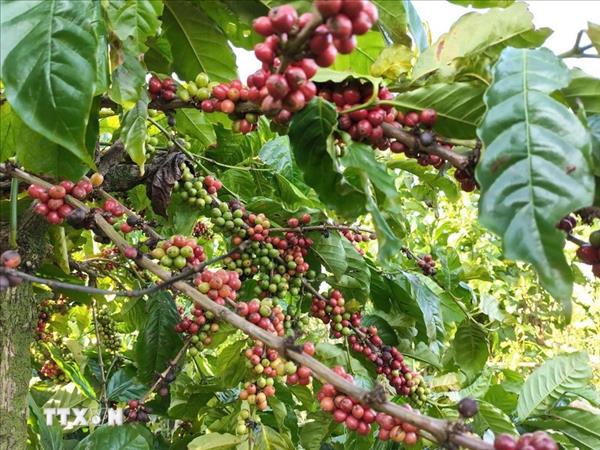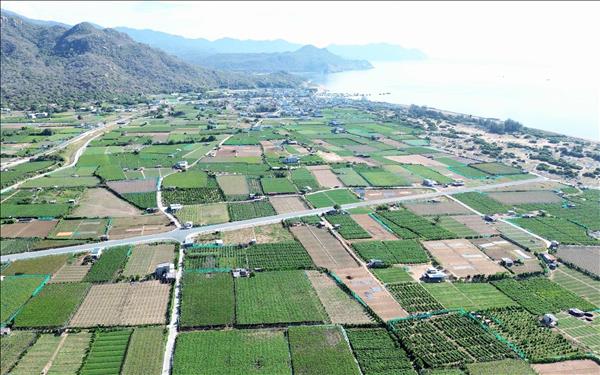
For a long time, the farmers in Hanoi have been familiar with the image of “a buffalo pulling a plough”. To establish an advanced, modern agricultural system, the Hanoi Agricultural Extension Center (HAEC) has developed a model of “synchronous mechanization, linkage and services in rice production” to create a foundation for communes to build new rural areas by growing rice.
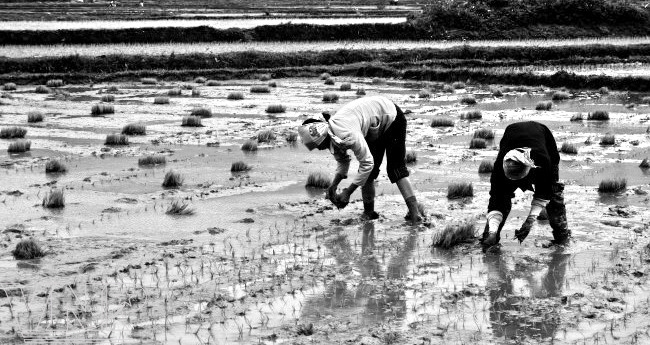
After many generations, rice cultivation in Hanoi is still based on traditional methods. Photo: VNP
|
In recent years, the promotion of mechanization and the application of scientific and technical advances in rice production have been important in successfully implementing the criteria for building new rural areas, helping to reduce costs and increase the income of the farmers in Hanoi.
For the 2011 spring rice crop, the centre selected four communes which have different characteristics for the programme of building new rural areas to implement the pilot model. They are Thuy Huong (in Chuong My District), Mai Dinh (Soc Son), Da Ton (Gia Lam) and Phu Thuong (Ba Vi).
In these communes, the centre re-zoned the production areas, mobilized the farmers to merge rice fields into larger fields, chose big suppliers of strains, materials and equipment, organized the production service groups in specialization and organised technical training courses in using the machines, equipment and sowing rice in rows by the sowing rigs.
The centre sent officials to Mai Dinh Commune to coordinate with the local authorities to persuade the farmers to implement the model. In Thuy Huong Commune, the centre supported a training class to teach all technicians how to use the machines and equipment. Mechanization was carried out in all crucial phases, such as preparing the soil, sowing rice, spraying plant protection pesticides and harvesting using combine harvesters.
For the 2011 spring rice crop, the centre selected four communes which have different characteristics for the programme of building new rural areas to implement the pilot model. They are Thuy Huong (in Chuong My District), Mai Dinh (Soc Son), Da Ton (Gia Lam) and Phu Thuong (Ba Vi).
In these communes, the centre re-zoned the production areas, mobilized the farmers to merge rice fields into larger fields, chose big suppliers of strains, materials and equipment, organized the production service groups in specialization and organised technical training courses in using the machines, equipment and sowing rice in rows by the sowing rigs.
The centre sent officials to Mai Dinh Commune to coordinate with the local authorities to persuade the farmers to implement the model. In Thuy Huong Commune, the centre supported a training class to teach all technicians how to use the machines and equipment. Mechanization was carried out in all crucial phases, such as preparing the soil, sowing rice, spraying plant protection pesticides and harvesting using combine harvesters.
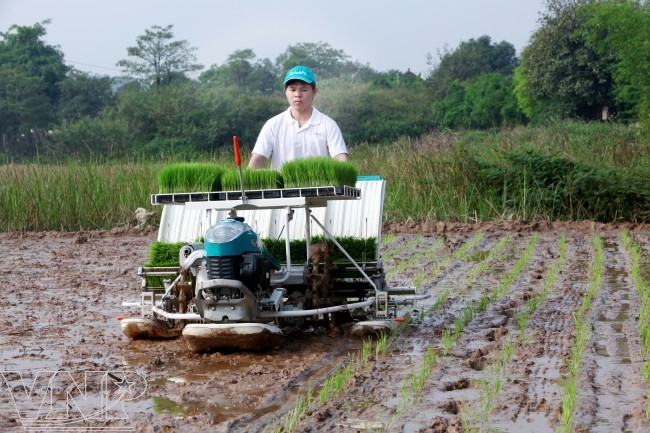 Synchronous mechanization in rice cultivation in Hanoi was implemented separately in some areas. However, it is time to implement the project with strength and focus. Photo: Tuan Kiet 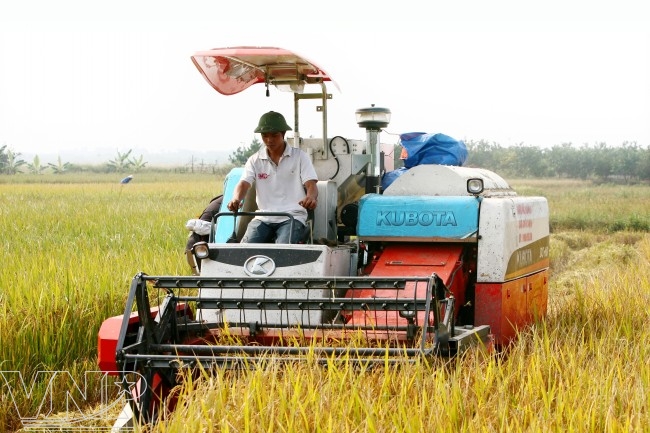 Synchronous mechanization helps save time in cultivating, tending and harvesting. It significantly reduces the cost of production and labour. Photo: Tuan Kiet |
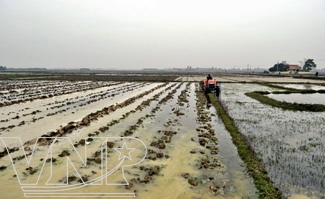 A ploughing machine. Photo: HAEC |
 Sowing rice using a new tool. Photo: HAEC |
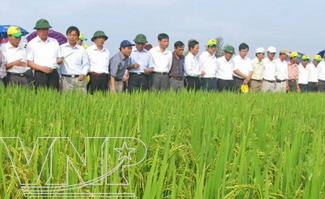 Many seminars in synchronous mechanization in rice cultivation are held by the Hanoi Agricultural Extension Centre. Photo: HAEC |
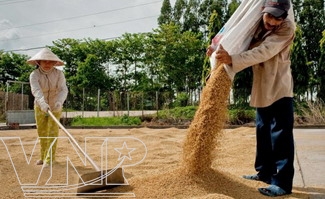 Synchronous mechanization and service linkage in rice production help increase the economic efficiency for Hanoi farmers. Photo: VNP |
“Hanoi defines to develop the agricultural sector in the modern direction towards goods production and service linkage in rice production.” |
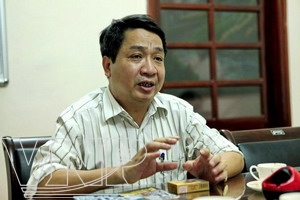
Nguyen Van Chi, Director of the centre said that synchronous mechanization in rice production is necessary. Every year, Hanoi has about 200,000ha under rice cultivation. Building a centralized mechanization model makes the planting, tending and harvesting faster, ensuring the production schedule and considerably reducing production costs and labour. It also helps enhance the operation’s effectiveness of the agricultural service cooperatives and promotes the advantages of the collective economic models in the rural areas.
According to him, mechanization in rice production was implemented separately in many areas. Now it is time to implement mechanization with strength and concentration. Hanoi is determined to build an advanced and modern agricultural system, proceeding to commodity production and service linkage in rice production.
The initial results show 80% of the rice cultivation areas and about 60% of other cultivation areas have been mechanized from the beginning of soil preparation. The services of the agricultural cooperatives are good, creating a linkage among the managers, scientists, cooperatives and farmers. Production costs have been reduced and harvesting time has been shortened, which helps increase the income of the farmers in Hanoi.
According to the farmers in Da Ton Commune, the cost of transplanting rice seedlings by hands is 150,000-200,000 VND/360m2, while doing this work with a machine costs only 40,000 VND/360m2. Other services, such as germinating the seeds, sowing rice, spraying herbicides, irrigating and harvesting are supplied by the cooperatives. As a result, the cost for each hectare can be reduced by 5-6 million VND while rice productivity can increase 15-20%.
The centre has asked the Hanoi Department of Agriculture and Rural Development to continue establishing the models to use in those communes with appropriate conditions.
Implementing mechanization in the fields and linking the services are an indispensable requirement, which contributes to the implementation of reducing the number of agricultural labourers in rural areas to transfer them to other sectors and services. This will help increase the economic efficiency and income of the rural people on the path to build new rural areas in Hanoi.
According to him, mechanization in rice production was implemented separately in many areas. Now it is time to implement mechanization with strength and concentration. Hanoi is determined to build an advanced and modern agricultural system, proceeding to commodity production and service linkage in rice production.
The initial results show 80% of the rice cultivation areas and about 60% of other cultivation areas have been mechanized from the beginning of soil preparation. The services of the agricultural cooperatives are good, creating a linkage among the managers, scientists, cooperatives and farmers. Production costs have been reduced and harvesting time has been shortened, which helps increase the income of the farmers in Hanoi.
According to the farmers in Da Ton Commune, the cost of transplanting rice seedlings by hands is 150,000-200,000 VND/360m2, while doing this work with a machine costs only 40,000 VND/360m2. Other services, such as germinating the seeds, sowing rice, spraying herbicides, irrigating and harvesting are supplied by the cooperatives. As a result, the cost for each hectare can be reduced by 5-6 million VND while rice productivity can increase 15-20%.
The centre has asked the Hanoi Department of Agriculture and Rural Development to continue establishing the models to use in those communes with appropriate conditions.
Implementing mechanization in the fields and linking the services are an indispensable requirement, which contributes to the implementation of reducing the number of agricultural labourers in rural areas to transfer them to other sectors and services. This will help increase the economic efficiency and income of the rural people on the path to build new rural areas in Hanoi.
Story: Ngan Khanh - Photos: Tuan Kiet - Hanoi Agricultural Extension Centre - VNP