
Making news
China, Vietnam accelerate building of multidimensional connectivity framework: Chinese scholar
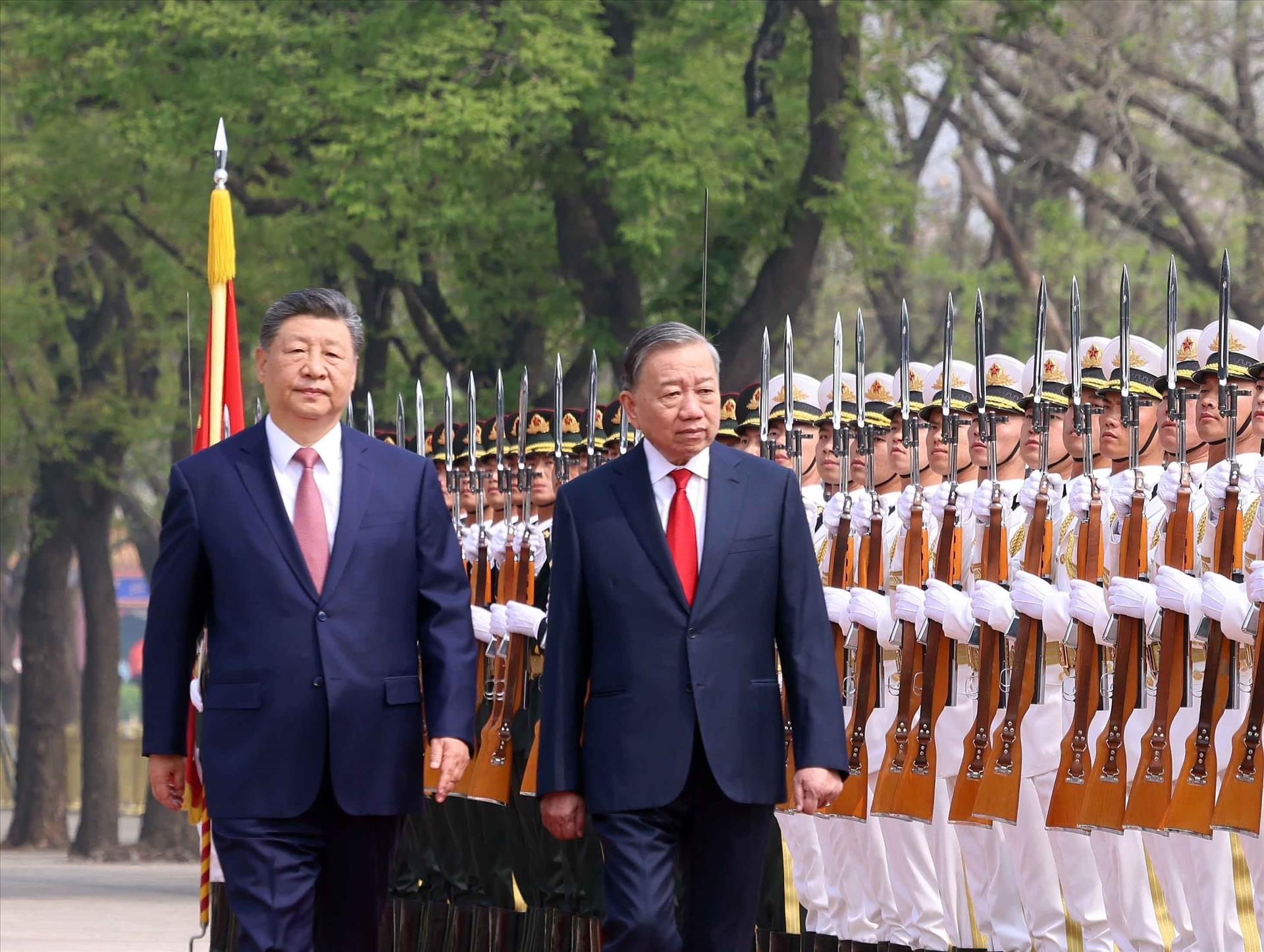
The “comrades and brothers” friendship between China and Vietnam continues to be deepened through close neighbourly ties, while the strategic importance of the China–Vietnam community with a shared future has become increasingly prominent within the framework of comprehensive strategic cooperation.
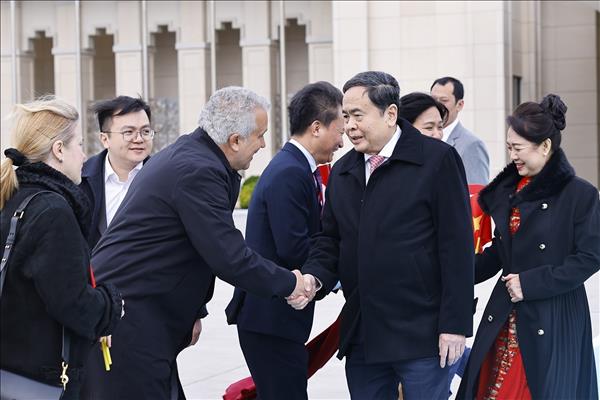
The remarks were made by scholar Yang Yang, Director of the Institute of Vietnamese Studies under the School of Southeast Asian Studies at Guangxi Minzu University, in a recently published article in the Global Times, a publication of the People’s Daily - the official newspaper of the Communist Party of China, on the occasion of the April 14-17 state visit of General Secretary of the Communist Party of Vietnam (CPV) Central Committee and State President To Lam to China.
The author noted that in recent years, China and Vietnam have jointly advanced their paths toward modernisation, making continuous progress in infrastructure connectivity. In December 2025, Phase 1 of the Lao Cai–Hanoi–Hai Phong standard-gauge railway project, with a total length of approximately 390.9 km and an investment of over 8.37 billion USD, was kicked off. Using a standard gauge of 1,435 mm in line with Chinese standards, the railway is designed for a maximum speed of 160 km/h and is expected to be completed by 2030. Planning studies for other standard-gauge railways, including Dong Dang–Hanoi and Mong Cai–Ha Long–Hai Phong, are also being carried out simultaneously under bilateral cooperation. At the local level, progress is also accelerating.
Also in December 2025, the Chongzuo–Pingxiang section of the Nanning–Pingxiang high-speed railway was put into operation, adding another high-speed rail link connecting Guangxi directly with border cities between China and Vietnam. The fastest travel time for cargo transport from Nanning Station (China) to Yen Vien Station (Vietnam) has been shortened to 14 hours, enabling goods to be dispatched, delivered, and cleared within the same day. The number of container shipping routes between Guangxi’s Beibu Gulf Port and Vietnam has reached 35. With the completion and opening of the Pinglu Canal, a new waterway transport corridor for China–Vietnam cooperation will be established. A comprehensive connectivity network integrating “road, sea, and air” is rapidly taking shape, laying a solid foundation for deeper integration of the two countries’ industrial and supply chains.
According to Yang, connectivity aims to promote trade and economic exchange, bringing benefits to the people of both countries. In recent years, China–Vietnam economic and trade cooperation has demonstrated strong growth in both scale and quality. For more than 20 consecutive years, China has remained Vietnam’s largest trading partner, while Vietnam is China’s largest trading partner within ASEAN and its fourth largest globally.
In March 2026, the China–Vietnam Steering Committee for Bilateral Cooperation held its 17th meeting, during which both sides reaffirmed their commitment to expanding practical cooperation, promoting railway connectivity, and enhancing collaboration in key sectors such as agriculture, electricity, finance, critical minerals, and technological innovation, while jointly safeguarding the multilateral trading system.
From “hard connectivity” in infrastructure to “soft connectivity” in trade rules, and further to “deep connectivity” in industrial synergy, the scope and depth of practical cooperation between China and Vietnam continue to expand, he noted.
He stated while economic cooperation has progressed substantially, bilateral cultural exchanges have also flourished. The year 2025 marked the 75th anniversary of diplomatic relations between China and Vietnam and was designated the “Year of China-Vietnam Humanistic Exchange.” Exchanges in culture, arts, tourism, and other fields were vibrant.
Last year, Vietnam welcomed 5.28 million Chinese tourists, making China its largest source of visitors. Meanwhile, the number of Vietnamese students studying in China reached a record high of nearly 24,000.
Notably, the ongoing “Red Study Tour” programme for Vietnamese youth in China has organised eight themed study camps across 10 provinces, cities, and autonomous regions in China, with more than 1,000 Vietnamese participants. This initiative has not only deepened young people’s understanding of revolutionary spirit and strengthened their awareness of the friendly neighbourly relationship between the two countries, but also promoted exchanges and connections among youth, fostering shared perspectives and practices in personal development and socialist modernisation.
Regarding political and security cooperation, Yang said China and Vietnam have established a “3+3” strategic dialogue mechanism covering diplomacy, defence, and public security. This pioneering global platform for strategic communication represents an important strategic initiative. The first ministerial-level meeting of this mechanism was recently held in Hanoi, where both sides reached broad consensus.
The significance of substantive cooperation between China and Vietnam extends well beyond the bilateral level. This year marks the 5th anniversary of the comprehensive strategic partnership between China and ASEAN. In the coming two years, China and Vietnam will successively host the APEC Economic Leaders’ Meetings, while Vietnam will also serve as co-chair of the Mekong–Lancang Cooperation.
Amid rising global uncertainties and the resurgence of unilateralism and protectionism, China and Vietnam will continue to uphold the banner of peace, development, cooperation, and mutual benefit, while actively coordinating positions within multilateral frameworks such as the United Nations, APEC, China–ASEAN Cooperation, and Mekong–Lancang Cooperation, he added.
The Chinese scholar affirmed that regardless of changes in the international situation, China will always regard Vietnam as a priority in its neighbourhood diplomacy. China and Vietnam will continue to uphold their traditional friendship, promote practical bilateral cooperation, achieve new breakthroughs in emerging fields, and accelerate the building of the China–Vietnam community with a shared future at a higher level of strategic alignment, becoming an important force for regional peace, stability, and development./.