
Cooperation between China and Vietnam is advancing to a new level, driven by shared strategic interests, development needs and a common responsibility for regional stability, according to a Chinese scholar.
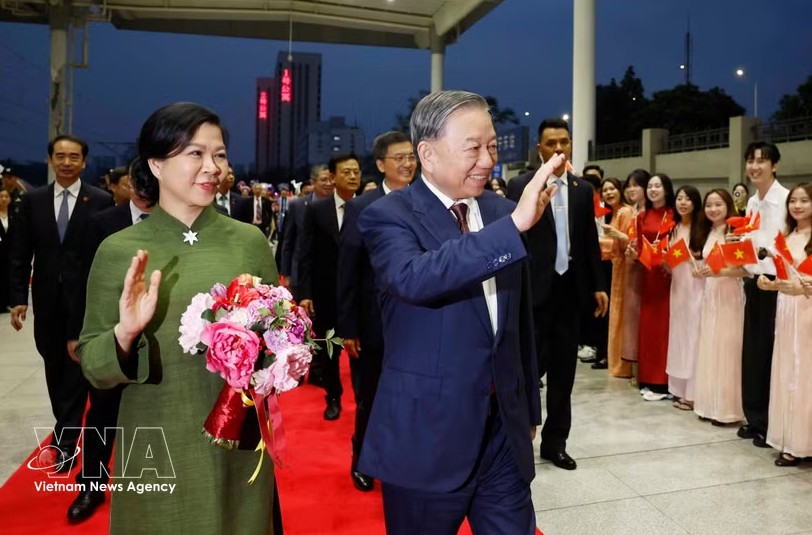
Writing in the Global Times, a publication affiliated with the People's Daily, Lei Xiaohua, a researcher at the Guangxi Academy of Social Sciences, highlighted the outcomes of the recent state visit to China by General Secretary of the Communist Party of Vietnam Central Committee and State President To Lam from April 14–17.
During the visit, the two countries issued a joint statement on further deepening the Vietnam-China Comprehensive Strategic Cooperative Partnership and advancing the building of a China–Vietnam community with a shared future that carries strategic significance at a higher level, signaling an acceleration of bilateral ties into a new phase.
According to the author, profound changes in the international environment, marked by rising unilateralism and protectionism, shifts in global supply chains, intensifying geopolitical competition, and growing uncertainties, have made regional stability and strategic cooperation more critical than ever. In this context, enhancing strategic exchanges and deepening cooperation between the two countries is both necessary for their respective modernisation efforts and essential for addressing shared challenges.
The article identifies four key dimensions underpinning the elevation of bilateral cooperation. First, political trust has reached a higher level. The joint statement underscores shared aspirations and a common future, stating that the development of China–Vietnam relations carries strategic, comprehensive, and historical significance. It also affirms that “building the China–Vietnam community with a shared future that carries strategic significance at a higher level” as the general orientation for bilateral relations in the new phase. This indicates that upgrading China–Vietnam cooperation begins with further strengthening the positioning of the relationship and mutual strategic trust.
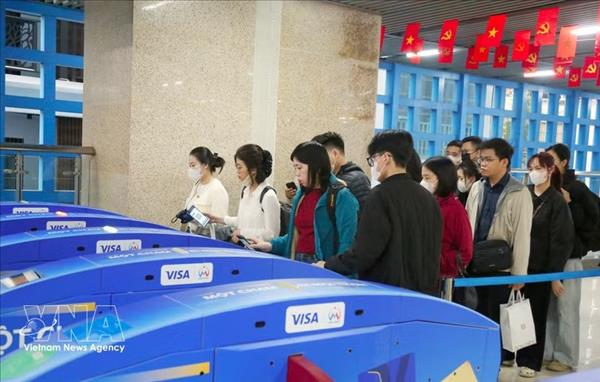
Second, strategic connectivity has been enhanced. The joint statement outlines concrete pathways, including aligning the Belt and Road Initiative with the “Two Corridors, One Economic Belt” framework, boosting bilateral trade connectivity with infrastructure, logistics and market linkages, and accelerating cross-border transport connectivity. Railway cooperation, in particular, is expected to become a new highlight of strategic collaboration.
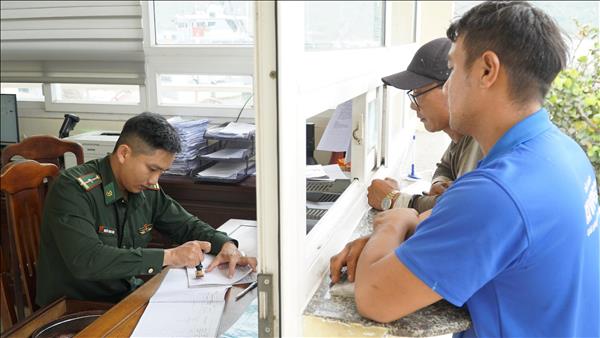
Third, cooperation content has expanded in both scope and quality. A total of 32 cooperation agreements were signed during this visit across sectors such as economy, supply chains, customs, science and technology, human resources and social development. The emphasis is shifting from scale expansion to quality enhancement and modernisation, with science, technology and innovation identified as key drivers.
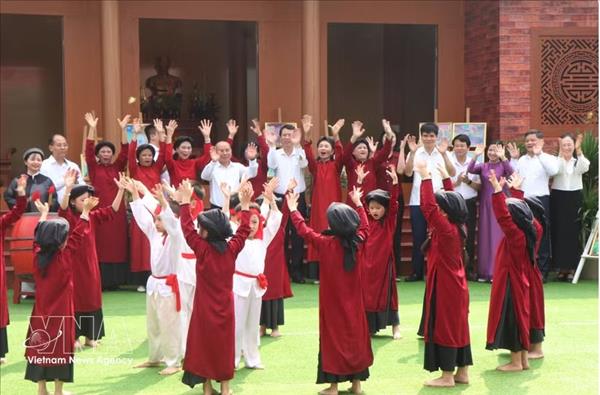
Fourth, public support has been strengthened. Both sides are promoting people-to-people exchanges through initiatives such as youth programmes, cultural forums and tourism cooperation, with a view to transforming traditional friendship into broader, more stable and sustainable social consensus, Lei wrote.
The researcher further noted that the elevation of China–Vietnam relations carries broader significance. It contributes to regional peace and stability, reinforces commitment to multilateralism and an international order centred on the United Nations, and makes important contributions to regional stability and prosperity amid global uncertainties.
In conclusion, the article emphasised that elevating bilateral cooperation is an inevitable choice to meet global shifts, regional dynamics and the evolving needs of both countries. With continued high-level guidance, deeper strategic trust, expanded mutually beneficial cooperation and stronger public support, the building of the China–Vietnam community with a shared future is expected to make steady and substantive progress./.