Deputy Prime Minister Nguyen Chi Dung has highlighted Vietnam’s push for science – technology development and the potential for its cooperation with Germany during a working visit to the European nation from March 22 to 25.
The trip is part of efforts to advance the effective implementation of the Party’s resolutions on international integration in the new context, as well as breakthroughs in science – technology development, innovation and national digital transformation.
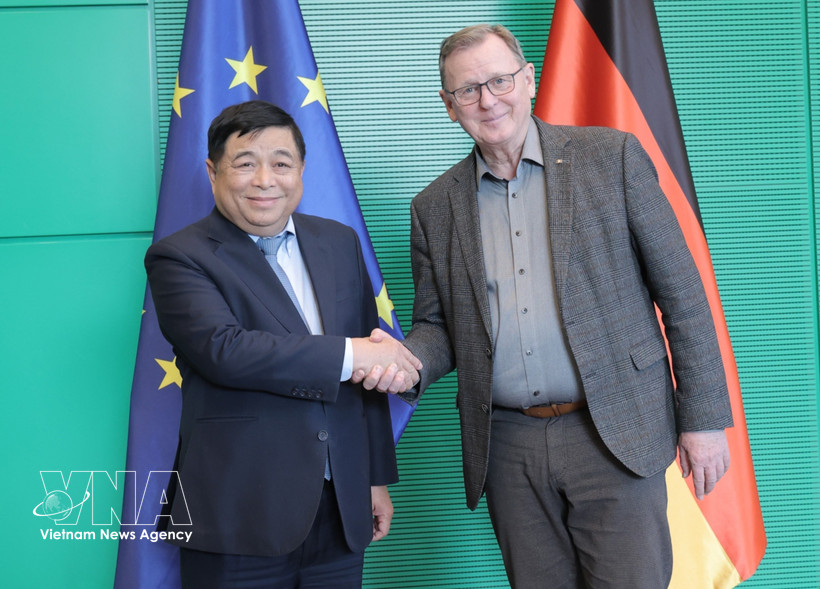
During the meeting with Vice President of the German Bundestag Bodo Ramelow in Berlin, Deputy PM Dung reaffirmed that Vietnam always attaches importance to Germany’s leading role and position in Europe and the world, and highly values the potential for bilateral cooperation.
He briefed the German side on Vietnam’s socio-economic development and its key orientations and strategies, particularly in economic development, science – technology, and innovation.
The official underscored Vietnam’s policy of encouraging German enterprises to expand cooperation in areas matching Germany's strengths and Vietnam's demand, including green transition, digital transformation, and high technologies such as automation, smart manufacturing and artificial intelligence.
He also called on German authorities to continue creating favourable conditions for the Vietnamese community of around 300,000 people to continue growing, contribute to the host country, and serve as a bridge for bilateral ties.
For his part, Ramelow stated that his country always values Vietnam’s role and standing in the region and the world, congratulating the Southeast Asian nation on the success of its 14th National Party Congress and voicing confidence in its important development strategies for the coming period.
The two sides agreed to strengthen coordination at multilateral forums and mechanisms, and reiterated the importance of upholding and ensuring the implementation of the UN Charter and international law, particularly the 1982 United Nations Convention on the Law of the Sea (UNCLOS).
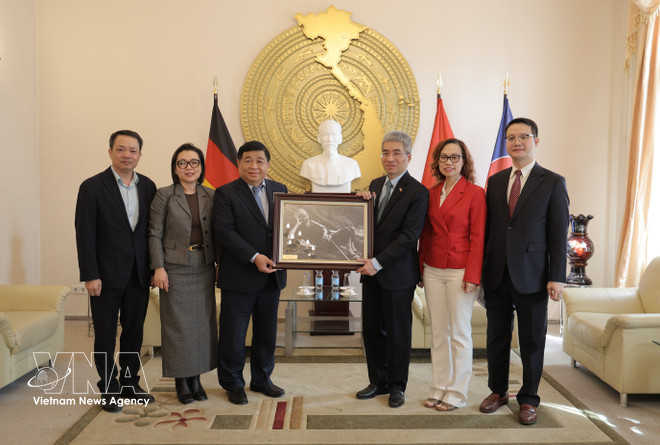
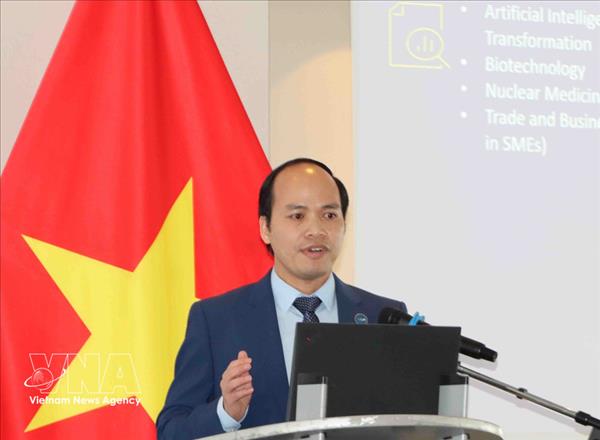
On March 22, the Deputy PM met with staff of the Vietnamese Embassy in Berlin, members of the Vietnam – Germany Innovation Network (VGI), and Vietnamese intellectuals, experts and entrepreneurs from across Europe.
During the event, the overseas Vietnamese shared Germany’s experience in developing AI and its applications in construction, health care, high-speed rail and energy storage while proposing mechanisms to better connect Vietnamese intellectuals and entrepreneurs around the globe. Deputy PM Dung emphasised the Party and State's consistent policy of encouraging overseas Vietnamese intellectuals to contribute to national development.
On March 24, Deputy PM Dung toured the Centre for Entrepreneurship (CfE) under the Technical University of Berlin (TU Berlin). He applauded CfE’s pioneering role in building the startup ecosystem in Germany, and suggested stronger cooperation between CfE and Vietnam’s National Innovation Centre (NIC) to support Vietnamese universities, research institutes, and organisations in training and scientific research.
Following this, NIC and CfE signed a memorandum of understanding on March 24 to boost partnerships in innovation, entrepreneurship and strategic technologies.
During the trip, the Vietnamese delegation also held working sessions with major German corporations, including SAP, Siemens Healthineers, Bosch, and Trumpf.
At these meetings, the Deputy PM stressed Vietnam’s efforts to remove bottlenecks and implement the three strategic breakthroughs in institutional frameworks, infrastructure and human resources. Besides, science – technology, innovation and digital transformation are identified as the foundation for enhancing its economy's competitiveness and efficiency.
He invited the German firms to expand investment and business in Vietnam and, especially, consider establishing research and development (R&D) and innovation centres in the Southeast Asian nation.
The visit also included engagements with the Executive Board of the German-Vietnamese Society and the Asia Bridge organisation, encouraging them to further promote their role in strengthening economic ties, attracting German investment to Vietnam, advancing cooperation in science – technology and innovation, and fostering connections among experts, researchers and intellectuals of the two nations./.