
The Ministry of Agriculture and Environment, in collaboration with UNICEF Vietnam, on March 21 launched a major environmental campaign to mark World Water Day 2026, World Meteorological Day 2026, and Earth Hour 2026.
The event also kicked off the programme “Children and youth acting for clean air and a sustainable future.”
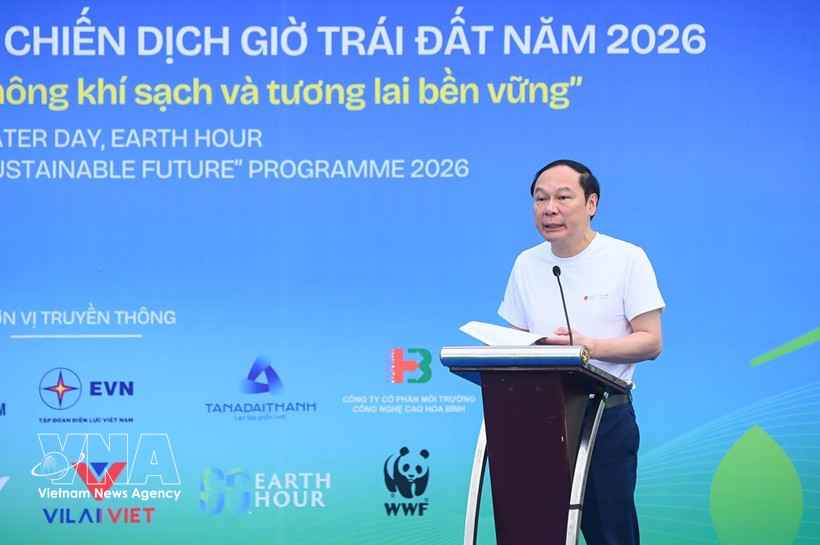
Speaking at the event, Deputy Minister of Agriculture and Environment Le Cong Thanh underscored that water, climate, and energy are fundamental pillars of sustainable development. In Vietnam, water resources and weather patterns influence every aspect of life, from food and water security to livelihoods, ecosystem stability, and economic growth, he said.
However, climate change is intensifying challenges. Rising water demand, pollution, and ecosystem degradation are placing growing pressure on infrastructure and daily life. Meanwhile, extreme weather events such as storms, heavy rainfall, droughts, saltwater intrusion, and landslides are becoming more frequent and severe.
“These challenges call for urgent action to strengthen water governance, improve forecasting, enhance disaster preparedness, and advance green and sustainable development,” Thanh said.
The ministry called for concerted action across all sectors, including government, businesses, and the public. Key priorities include developing a national natural resources database, applying technology in environmental monitoring, and integrating climate adaptation into sectoral and local planning.
The community’s engagement remains central. Efforts should focus on energy conservation, water protection, and promoting gender equality, particularly the role of women and children in water management. Businesses are encouraged to drive innovation, adopt circular economy models, develop low-carbon solutions, and improve resource efficiency. Individuals can contribute through simple actions such as saving energy and water, reducing waste, and embracing sustainable habits.
A highlight of the event was the launch of the youth-focused programme aimed at empowering young people to take practical environmental action in schools and communities.
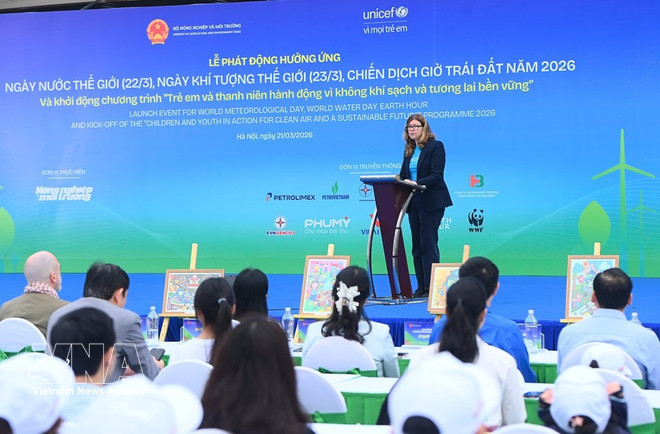
UNICEF Representative in Vietnam Silvia Danailov emphasised the vulnerability of children to climate risks.
“Nearly 26.2 million children in Vietnam, or 99.5%, are exposed to environmental and climate risks at varying levels,” she said. “Their voices must be heard and translated into meaningful action.”
Experts noted that young people are not only beneficiaries but also key drivers of change, and require support from schools, authorities, businesses, and society to maximise their impact.
This year’s global campaigns highlight shared responsibility. World Water Day focuses on “Water and gender equality”, drawing attention to the role of women and children. World Meteorological Day, themed “Observe today, protect tomorrow”, underscores the importance of monitoring systems in disaster forecasting. Earth Hour 2026, under the theme “Green innovation, green future”, promotes energy conservation and sustainable lifestyles.
The launch featured a range of interactive activities, including a water protection exhibition, an environmental creativity contest, a “60-minute walk for a green future,” and tree planting.
Thanh stressed that action must not be delayed, noting that safeguarding water resources, protecting the environment, and improving air quality are shared responsibilities.
He added that collective efforts are key to building a greener, cleaner, and more sustainable Vietnam./.